
Table of Contents
- Residential Window Washing: DIY vs. Hiring a Professional
- The Best Tools for Window Washing at Home
- Step-by-Step Residential Window Washing Process
- Understanding Professional Window Cleaning Cost
- Ladder Safety and High Windows
- Creating a Window Cleaning Maintenance Schedule
- When to Call a Professional
- Frequently Asked Questions
Last Updated: September 8, 2026
Residential Window Washing: DIY vs. Hiring a Professional
Crystal-clear windows can transform how your home looks, both from the street and from inside looking out. Residential window washing is the process of cleaning interior and exterior glass, frames, sills, and tracks to remove dirt, hard water buildup, and chemical residue. Many homeowners ask whether they should tackle this chore themselves or hire a professional, and the honest answer depends on your home’s size, your comfort with heights, and the time you can dedicate to the task. We have compiled this guide to help you make the right choice.
The decision between DIY and professional service comes down to three factors: accessibility, time, and desired results. Ground-floor windows with simple frames are a reasonable weekend DIY project. Two-story homes, skylights, and delicate window types carry real risk and often produce disappointing results when attempted without proper equipment. Below, we will walk through the tools you need, a step-by-step residential window washing process, what professional window cleaning cost actually involves, and safety protocols for high windows.
The Best Tools for Window Washing at Home
Professional-grade results start with the right equipment, but the ‘best’ tool is often the one that fits your specific window type and cleaning philosophy. While a standard kit includes a squeegee, scrubber, and bucket, the material choices matter more than most DIY guides suggest. For example, a brass or copper scrubber is excellent for removing hard water spots from glass without scratching, but it should never be used on tinted windows, where it can cause micro-abrasions. Similarly, a squeegee with a 14-inch brass channel is a favorite among pros for its balance of rigidity and weight, while a lighter plastic model is easier for beginners to control.
Your DIY kit should include these essentials:
- A squeegee with a replaceable rubber blade: The blade is what prevents streaks. Look for one that is not too soft; a medium-hardness blade glides smoothly without chattering.
- A lint-free microfiber cloth: Use a 300-400 GSM (grams per square meter) cloth for detailing edges and sills. A higher GSM means more absorbency and less lint.
- A scrubber: A lambswool or microfiber scrubber holds more water and soap than a standard sponge, reducing the number of dips you need.
- A bucket with a bucket grid: This simple tool lets you wring out your scrubber without splashing, keeping your solution cleaner for longer.
- Distilled water: Unlike tap water, which contains minerals that can leave a film, distilled water is pure and will not spot or streak.
A Unique Angle: Eco-Friendly and Non-Toxic Cleaning Solutions
Most cleaning guides default to a few drops of dish soap, but for homes with pets, children, or sensitive gardens, a plant-based approach is a high-value alternative. A simple, effective solution uses 1/4 cup of castile soap (such as Dr. Bronner’s) mixed with 1/2 cup of white vinegar in a gallon of distilled water (PubMed). Castile soap is derived from plant oils and is fully biodegradable, while vinegar cuts through grease and hard water minerals without leaving a toxic residue. For a truly non-toxic option, you can also use a commercial product like Seventh Generation Free & Clear Dish Liquid, which is plant-based and has no synthetic fragrances or dyes. These solutions are safe for your family, your pets, and your lawn, and they perform just as well as traditional detergents on standard grime.
Squeegee technique matters more than the brand you buy. The key is to keep a consistent angle, typically 30 degrees from the glass, and to wipe the blade dry after every pass. This is the difference between glass clarity and frustrating streaks.
Step-by-Step Residential Window Washing Process
The professional residential window washing process follows a specific order that prevents streaks and saves time. Start by removing window screens and dusting the frame and sill. Then wet the glass with your cleaning solution using the scrubber, working from top to bottom to avoid drips on already-cleaned areas.
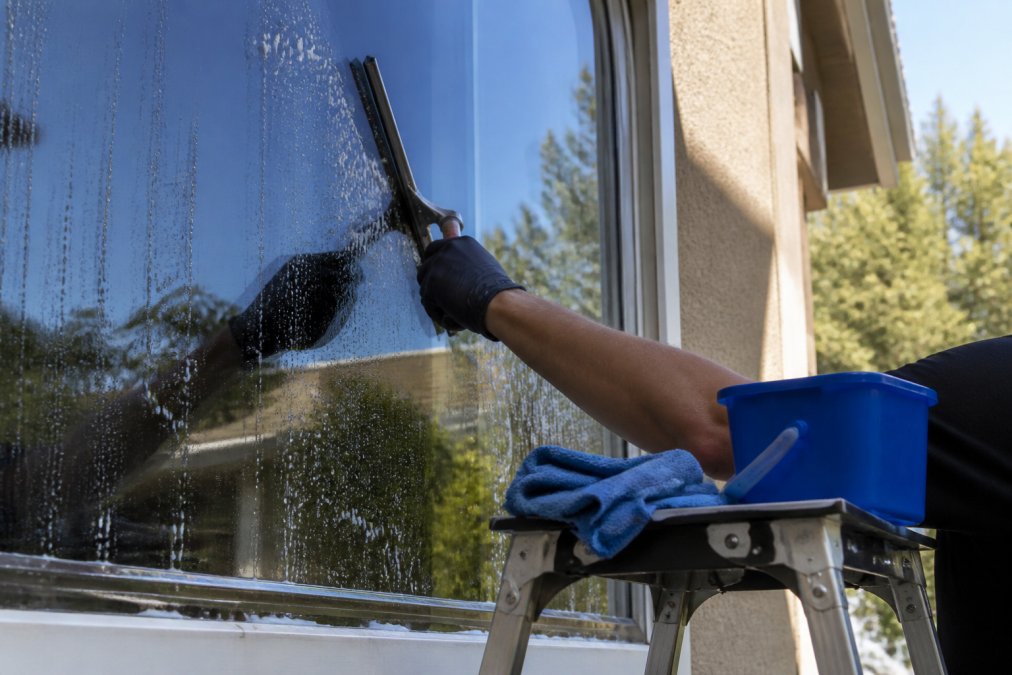
Pull the squeegee across the glass in a straight line, starting at the top. Wipe the blade with your microfiber cloth after each pass to remove dirty water. Overlap each stroke by about an inch to avoid leaving a line of soapy water. Finish by detailing the edges and corners with the cloth.
A simple summary of the process:
| Step | Action | Pro Tip |
|---|---|---|
| 1 | Remove screens and dust frames | Dust before wetting to avoid mud streaks |
| 2 | Scrub glass with solution | Avoid direct sunlight so the solution does not dry fast |
| 3 | Squeegee top to bottom | Wipe the blade after every pass |
| 4 | Detail edges and sills | Use a dry microfiber cloth for a lint-free finish |
Avoid washing windows in direct sunlight. Heat causes the cleaning solution to evaporate before you can squeegee, leaving chemical residue and streaks. Overcast days are ideal for residential window washing.
Troubleshooting Common Window Damage During Cleaning
Cleaning is the best time to inspect your windows for issues that, if left unaddressed, can lead to costly repairs. As you wipe down frames and glass, look for these signs:
- Seal Failure: If you notice condensation or a foggy film between the panes of a double-pane window, the insulating seal has failed. This is not a cleaning issue; the window will need to be replaced or repaired by a professional. Cleaning the interior glass will not fix the fog.
- Frame Rot: On wood frames, press gently on the bottom corners with a screwdriver. If the wood feels soft or spongy, it is likely rotting. This is often caused by trapped moisture from clogged weep holes, the small drainage holes at the bottom of the frame. Use a thin wire to clear these holes to prevent future rot.
- Hard Water Etching: If you have mineral deposits that do not dissolve with vinegar, the glass may be etched. This is permanent damage caused by prolonged exposure to hard water. A professional can sometimes polish it out, but often the pane must be replaced.
- Loose or Missing Glazing: On older windows, check the putty (glazing) that holds the pane in place. If it is cracked or missing, water can seep behind the glass and cause rot. Re-glazing is a simple DIY fix using a tube of glazing compound.
Cleaning Window Tracks and Screens
The glass is only half the job. Window tracks accumulate dust, pollen, and even mold, which can be tracked into your home. To clean them effectively:
- Vacuum the tracks with a crevice tool to remove loose debris.
- Scrub with a stiff nylon brush dipped in a solution of warm water and a few drops of dish soap.
- Rinse with a spray bottle filled with clean water, then wipe dry with a microfiber cloth.
- Lubricate the tracks with a silicone-based spray (not oil, which attracts dirt) to keep windows sliding smoothly.
Screens should be cleaned separately. Lay them flat on a tarp, spray with a hose, and gently scrub with a soft brush and soapy water. Rinse thoroughly and let them dry completely before reinstalling to prevent mold.
Understanding Professional Window Cleaning Cost
Professional window cleaning cost varies widely based on the number of windows, their size, the number of stories, and whether screens and tracks are included. Pricing depends on quantity, dates, and delivery, and most reputable companies provide a free estimate before any work begins.
A professional quote typically factors in the square footage of glass, the accessibility of each window, and the condition of the frames. Windows with hard water buildup or heavy mineral deposits require more time and specialized cleaning solutions, which raises the estimate. Many homeowners find that the time savings and safety benefits justify the expense, especially for two-story homes.
Request a virtual quote whenever possible. Many professional services now assess your property remotely using photos or video, giving you an accurate price without an in-person visit.
For homes with a mix of accessible and high windows, ask whether the company charges per window or per hour. This clarity prevents surprises on the final invoice.
Ladder Safety and High Windows
Ladder safety is the most overlooked aspect of residential window washing. According to the Consumer Product Safety Commission on ladder-related injuries, falls from ladders cause tens of thousands of emergency room visits each year in the United States. Most of these incidents happen during routine home maintenance tasks like window cleaning.
Follow these safety protocols when working at height:
- Place the ladder on firm, level ground and extend it three feet above the roofline
- Maintain three points of contact at all times
- Never overreach to the side, which is the leading cause of ladder tip-overs
- Use a ladder stabilizer for gutters and rooflines
- Work with a partner who can steady the base
Never clean second-story windows by leaning out of an upper-floor window while holding the frame. This maneuver accounts for a significant share of serious falls. If you cannot reach the glass safely from the ground or a properly positioned ladder, this is the clearest sign you should hire a professional.
The reality is that some windows are simply too high or awkwardly positioned for safe DIY cleaning. Recognizing this limit is not a failure; it is smart home maintenance.
Creating a Window Cleaning Maintenance Schedule
A window cleaning maintenance schedule keeps your glass clear and prevents the buildup that makes each cleaning harder than the last. Most homes benefit from a full residential window washing twice per year, once in spring and once in fall.
Seasonal maintenance matters because different seasons create different problems. Spring cleaning removes the pollen and dust of early bloom, while fall cleaning addresses the film left by summer irrigation and prepares windows for winter light. Homes near busy roads or under large trees may need quarterly attention.
Beyond the glass itself, include these tasks in your schedule:
- Clean window tracks and sills each time you wash the glass
- Inspect and replace worn squeegee blades annually
- Check screens for tears and re-fit them properly
- Look for seal failures or condensation between double-pane glass
Frame maintenance is equally important. Wipe down vinyl and aluminum frames with a mild detergent to prevent oxidation, and touch up painted wood frames where chipping occurs. Consistent maintenance extends the life of your windows and keeps your home looking its best.
When to Call a Professional
DIY residential window washing works well for single-story homes with accessible windows, but several situations clearly call for professional help. If you have two-story windows, skylights, or a conservatory roof, the risk of working at height outweighs the cost savings of doing it yourself.
You should also call a professional when you notice hard water buildup that standard vinegar solutions cannot remove, or when windows show mineral deposits etched into the glass. Professionals use specialized tools like water-fed poles and professional-grade cleaning agents that dissolve deposits without scratching the surface.
The line between DIY and professional is drawn by safety and results. If you cannot reach the glass safely or if standard cleaning leaves streaks and residue, a professional service delivers better outcomes with zero risk to you.
At Simply Superior Window Cleaning, our technicians undergo rigorous classroom and on-the-job training, and our team holds monthly safety meetings to ensure every job is performed to the highest standard. We provide residential window washing for properties of all sizes, including buildings up to four stories tall, and we offer flexible maintenance schedules to fit your needs. Our virtual on-site quote capability lets you get an accurate estimate without an in-person appointment, and our 24/7 maintenance services cover windows, solar panels, gutters, and pressure washing. Schedule a free quote today.
Frequently Asked Questions
What is the average price to have your windows cleaned?
The professional window cleaning cost varies based on the number of windows, their size, accessibility, and whether you need interior or exterior cleaning. A two-story home costs more than a single-story ranch. Instead of relying on averages, request a detailed quote. Many companies, like Simply Superior Window Cleaning, offer virtual on-site quotes so you get an accurate price without an in-person visit.
What is the difference between window cleaning and window washing?
The terms are often used interchangeably, but there is a subtle distinction. Window washing typically refers to the process of using water and a cleaning solution to remove dirt and grime from the glass surface. Window cleaning is a broader service that includes washing the glass, detailing the frames and sills, wiping down tracks, and cleaning the screens. Professional residential window washing services usually include this full scope.
How often should you have residential windows washed?
For most homes, a professional cleaning twice a year keeps windows in good shape. If you live near the coast, under trees, or in a dusty area, you may need a seasonal cleaning. A window cleaning maintenance schedule of every three to four months is ideal for preserving clarity and preventing hard water buildup on the glass.
Can you use dish soap for residential window washing?
Yes, a few drops of a mild dish soap, like Dawn, mixed with water is an effective cleaning solution. It cuts through grease and grime without leaving a heavy film. Avoid detergents with added moisturizers or dyes, as these can leave a residue. Always follow up with a squeegee technique and a lint-free cloth for a streak-free finish.
Getting your residential window washing right comes down to matching the job to your skills, your tools, and your comfort with heights. For ground-floor windows, a quality squeegee and the right technique deliver professional-looking results. For anything higher, or when time is tight, a trained professional team saves you the risk and the hassle while delivering glass clarity that lasts. Get started with Simply Superior Window Cleaning and schedule your free quote for windows that truly shine.