Table of Contents
- What to Look for in Pressure Washing Companies
- Service Comparison: Residential and Commercial Pressure Washing
- Soft Washing vs Pressure Washing: Which Do You Need?
- Understanding Commercial Pressure Washing Cost
- Surface-Specific Damage Prevention: What Pros Do Differently
- DIY vs. Professional: A Cost-Benefit Analysis
- Creating a Pressure Washing Maintenance Schedule
- Seasonal Maintenance and Environmental Considerations
- Frequently Asked Questions
Last Updated: September 9, 2026
Choosing the right pressure washing companies can mean the difference between a home that looks brand new and one with damaged siding, stained concrete, or a voided roof warranty. The exterior cleaning industry has grown quickly, but that growth has brought a mix of highly skilled operators and under-equipped amateurs charging similar rates. At Simply Superior Window Cleaning, we understand the importance of professional exterior cleaning across Ventura and North LA Counties. This guide breaks down exactly what separates professional pressure washing companies from the rest, how to compare residential and commercial services, and when you should skip the DIY route entirely.
The most important thing to understand is that exterior cleaning is not a single service. High-pressure washing, soft washing, surface-specific techniques, and biodegradable detergents all serve different purposes. Hiring a company that treats every job the same is how you end up with etched glass, lifted shingles, or streaks on your stucco. Below, we walk through the credentials, equipment, and safety protocols that define a trustworthy operation, then help you decide between pressure washing and soft washing for your specific surfaces.
What to Look for in Pressure Washing Companies
The first filter should be credentials and safety protocols, not price. A professional operation carries general liability insurance, follows OSHA safety standards, and trains technicians on proper equipment handling before they ever touch your property. Many homeowners assume every company with a truck and a wand is insured, but that assumption has led to costly repair bills when a contractor damages siding or hits a gas line. Ask for proof of insurance and a written safety plan before allowing anyone to work on your home.
A contractor who cannot provide proof of insurance is a liability you should not accept. If they damage your roof, break a window, or injure themselves on your property, you could be the one paying for it.
Credentials and Safety Protocols
Licensing requirements vary by state and municipality, so verify that the company holds the proper business license for your area. Beyond that, look for evidence of ongoing training. Technicians who attend monthly safety meetings and complete classroom instruction before field work are far less likely to make costly errors. This level of rigor matters especially on multi-story buildings, where ladder work and pressure control carry real risk.
Equipment and Cleaning Solutions
Not all pressure washing equipment is created equal. Professional companies use machines with adjustable pressure settings, typically ranging from 500 PSI for delicate surfaces up to 3,000+ PSI for concrete, along with a selection of nozzle tips for different tasks. They also carry biodegradable detergents that break down mold, mildew, and algae without harming your landscaping or local waterways. If a company shows up with a single nozzle and no cleaning solutions, they are not equipped to handle your property safely.
Service Comparison: Residential and Commercial Pressure Washing
Residential and commercial pressure washing require different approaches, and the best companies handle both with distinct protocols. Residential work focuses on curb appeal and preventative maintenance: house washing, driveway cleaning, patio restoration, and gutter debris removal. Commercial work, by contrast, prioritizes brand image and safety compliance for storefronts, parking lots, and building exteriors, often on a recurring schedule.
| Service Type | Primary Focus | Typical Surfaces | Frequency |
|---|---|---|---|
| Residential | Curb appeal and property value | Siding, driveways, decks, roofs | 1-2 times per year |
| Commercial | Brand image and safety | Storefronts, sidewalks, parking lots | Quarterly or monthly |
The equipment differs too. Commercial jobs often require higher flow rates and longer hoses to cover large areas efficiently, plus water recovery systems where runoff regulations apply. Residential work demands more precision to avoid damaging landscaping and home finishes. A company that excels at commercial parking lot cleaning is not automatically the right choice for your two-story home’s siding, so ask about their experience with your specific property type.
Soft Washing vs Pressure Washing: Which Do You Need?
Soft washing is the safer choice for most vertical surfaces, and it is the technique professional companies use to protect your home. Soft washing companies apply biodegradable detergents at low pressure, typically under 500 PSI, to kill mold, mildew, and algae at the root rather than blasting them off the surface. This method is ideal for roof shingle care, painted siding, stucco, and any surface where high-pressure cleaning would cause damage.
Pressure washing, using high-pressure cleaning at 1,500 to 3,000+ PSI, is reserved for hard surfaces that can withstand the force: concrete driveways, brick walkways, stone patios, and commercial sidewalks. The high-pressure stream removes ground-in dirt, oil stains, and chewing gum that detergents alone cannot lift. Using a pressure washer on your roof or siding is one of the fastest ways to void a warranty or cause thousands in damage. When in doubt, ask the company which method they recommend for each surface and why.
A reliable company will walk your property and recommend soft washing for your roof and siding, then pressure washing for your driveway and walkways. If they quote one method for everything, get a second opinion.
Understanding Commercial Pressure Washing Cost
Commercial pressure washing cost varies widely based on square footage, surface type, soil level, and frequency of service. A small storefront walkway cleaning might be a few hundred dollars, while a multi-story building exterior with heavy mold removal could run into the thousands. Most reputable companies provide free estimates after assessing the property, and many now offer virtual quotes using photos and video to minimize on-site visits.
The pricing model matters as much as the number. Some companies charge by the square foot, others by the hour, and some quote a flat project rate. For recurring commercial maintenance, a monthly or quarterly contract often secures a lower per-visit rate than one-off calls. The U.S. Small Business Administration guidance on maintenance contracts notes that predictable maintenance agreements help businesses budget more effectively than reactive repairs. Always request a detailed written quote that itemizes each surface to be cleaned, the method used, and any additional services like gutter cleaning or sealing.
Surface-Specific Damage Prevention: What Pros Do Differently
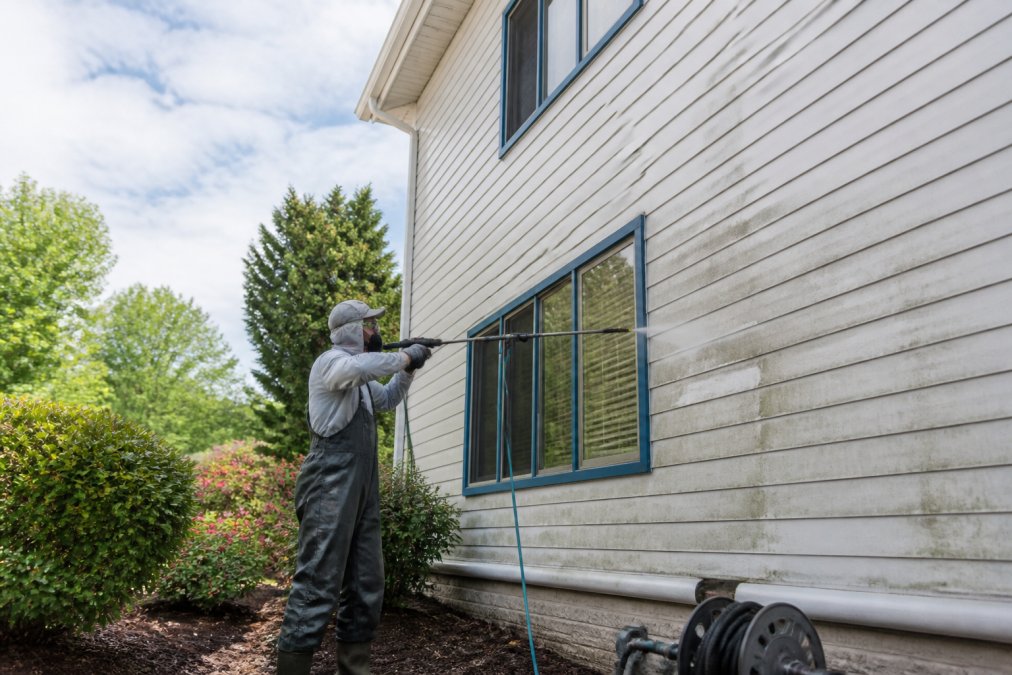
The biggest difference between professional pressure washing companies and amateurs is how they handle different surfaces. A pro knows that concrete cleaning requires a different PSI, nozzle tip, and detergent than wood deck restoration, and that roof cleaning demands yet another approach entirely. Getting this wrong is not a minor issue; it can cause surface damage that costs more to repair than the cleaning itself.
Here is what professionals account for on each major surface:
- Roof shingles: Soft washing only, using low pressure and a sodium hypochlorite solution to kill algae without lifting granules. High pressure will strip the protective granules and void the shingle warranty.
- Wood decks and fences: Low pressure with a wood-safe detergent, followed by rinsing with the grain. Too much pressure etches the wood and forces water into the grain, leading to premature rot.
- Concrete driveways: High pressure (2,500+ PSI) with a rotating nozzle to remove oil stains and embedded dirt. Sealing after cleaning extends the results.
- Painted siding: Soft washing to avoid stripping paint. A pressure washer will blast paint off older homes in seconds.
- Windows and glass: Never direct high pressure at windows. Pros mask or avoid glass entirely, since the stream can crack seals and cause fogging.
The correct approach is always surface-specific. A professional adjusts pressure, nozzle, and detergent for every material, and they will tell you when a surface should not be pressure washed at all.
DIY vs. Professional: A Cost-Benefit Analysis
The DIY route looks cheaper on paper, and for a small concrete patio, a rented machine might be enough. But the math changes quickly when you factor in equipment costs, the risk of surface damage, and the time involved. A consumer-grade electric pressure washer like the Sun Joe SPX3000-XT1 reviewed by Forbes runs around 2,200 PSI and costs a few hundred dollars, which is fine for light-duty tasks. However, that same machine can easily damage wood siding, soft brick, or asphalt shingles if you use the wrong nozzle or hold the wand too close.
The hidden costs of DIY are the mistakes. Etched concrete from holding the wand too close, ripped siding from a narrow nozzle tip, or a roof leak from forcing water up under the shingles are all expensive outcomes. Professional pressure washing companies carry the right equipment, the training to use it, and the insurance to cover accidents. They also have commercial-grade machines that clean faster and more thoroughly than anything you can rent. For a one-time deep cleaning of your entire exterior, the professional route is almost always the better value.
Creating a Pressure Washing Maintenance Schedule
A pressure washing maintenance schedule protects your property value and prevents small issues from becoming expensive repairs. Most homes benefit from a full exterior cleaning once or twice per year, but the timing depends on your climate and surroundings. Homes near the coast or under heavy tree cover may need more frequent cleaning due to salt spray, pollen, and algae growth.
A practical schedule looks like this:
- Spring: House washing, driveway cleaning, and patio restoration to remove winter grime and prepare for outdoor entertaining.
- Summer: Deck and fence cleaning, plus spot treatment for mold or mildew that appears in humid months.
- Fall: Gutter debris removal and roof cleaning to prevent clogs and algae buildup before winter rains.
- Winter: Minimal cleaning, but address any urgent stains or moss growth before they set.
Commercial properties benefit from a more frequent schedule, often quarterly, to keep storefronts and walkways presentable year-round. Regular cleaning also extends the life of your exterior surfaces, reducing the frequency of repainting, resealing, or replacing materials.
Seasonal Maintenance and Environmental Considerations
Environmental regulations around pressure washing are tightening, and professional companies in the United States must account for runoff. The Environmental Protection Agency guidance on stormwater runoff explains that wash water containing detergents, dirt, and chemicals can pollute local waterways if it flows untreated into storm drains. Professional companies manage this by using biodegradable detergents, minimizing water usage, and where necessary, containing and recovering runoff on commercial jobs.
Seasonal timing also affects the quality of your results. Soft washing is most effective when applied on a dry day with no rain in the forecast for at least 24 hours, giving the cleaning solution time to kill mold and algae. Pressure washing concrete is best done in mild temperatures; extreme heat causes the cleaning solution to evaporate too quickly, leaving streaks. Scheduling your exterior cleaning in spring or fall typically delivers the best results and the longest-lasting finish.
Choosing the right pressure washing companies comes down to verifying credentials, understanding the difference between soft washing and pressure washing, and insisting on surface-specific techniques. The cheapest quote is rarely the best value when it comes to protecting your home or commercial property.
Choosing the right pressure washing companies protects your property, your budget, and your peace of mind. The team at Simply Superior Window Cleaning brings rigorous training and safety standards to exterior cleaning, as well as to every window, gutter, and solar panel we touch. Our technicians complete classroom and on-the-job training, attend monthly safety meetings, and use industry-leading equipment to deliver pristine results on properties up to four stories tall. Schedule a free quote today and let us show you the difference professional exterior care makes.
Frequently Asked Questions
How much should a pressure washing job cost?
Costs vary significantly based on property size, surfaces being cleaned, and your location. For an accurate estimate, contact pressure washing companies directly. Most reputable companies, like Simply Superior Window Cleaning, offer free virtual quotes, which allow them to assess the scope of work without an in-person visit. Pricing depends on the square footage of your home or building, the number of stories, and the specific services needed, such as driveway cleaning or roof treatment.
What is the difference between pressure washing and soft washing for commercial buildings?
The main difference is water pressure. Pressure washing uses high-pressure water to blast away dirt and grime, making it suitable for hard surfaces like concrete driveways and walkways. Soft washing uses low-pressure washing combined with specialized, biodegradable detergents to clean delicate surfaces like roofs, siding, and stucco. For commercial buildings, soft washing is often preferred for exterior walls to prevent water damage and remove mold and mildew without harming the building’s materials.
How often should commercial properties schedule pressure washing services?
A good rule of thumb is to create a pressure washing maintenance schedule that includes a full exterior cleaning one to two times per year. High-traffic areas like storefront walkways, entryways, and dumpster pads may need more frequent attention, perhaps quarterly, to manage oil stains, gum, and dirt buildup. Regular cleaning prevents grime from becoming deeply embedded and keeps your property looking professional, which directly impacts customer perception and property value.
What insurance requirements should I look for in pressure washing companies?
You should only hire pressure washing companies that are licensed and insured. At a minimum, they should carry general liability insurance to protect your property in case of accidental damage, and workers’ compensation insurance to cover their employees while on your site. Ask for proof of insurance and verify it is current. Professional companies like Simply Superior Window Cleaning prioritize safety with rigorous training and monthly safety meetings, reducing the risk of property damage and injury.