
Table of Contents
- Why Professional Window Cleaning Lasts Longer
- How Often Should Windows Be Cleaned for Lasting Results
- Professional Window Cleaning Tools That Make the Difference
- Benefits of Professional Window Cleaning Beyond Appearance
- Glass Etching, Hard Water Stains, and Chemical Interactions
- Seasonal Maintenance Schedules for Year-Round Protection
- Warranty Preservation and Professional Standards
- DIY vs. Professional Cleaning: Why Results Differ
Last Updated: August 29, 2026
Why Professional Window Cleaning Lasts Longer
Professional window cleaning lasts longer because it addresses glass chemistry and water quality. Professional cleaners use deionized water, specialized squeegees, and methods designed to prevent mineral deposits and hard water stains from returning quickly. When you clean windows yourself, you’re likely using tap water filled with minerals that redeposit on glass as the water dries. A professional understands glass etching, silica buildup, and oxidation, the invisible culprits that make windows look dirty again within weeks.
The real value extends beyond making windows pristine today. It protects your window seals and hardware, maintains curb appeal and energy efficiency, and extends the lifespan of your glass.
How Often Should Windows Be Cleaned for Lasting Results
Professional-grade window cleaning typically stays visibly clean for 4-6 weeks in most climates, compared to 2-3 weeks for DIY cleaning (peer-reviewed research). This difference comes down to water quality and technique.
Tap water contains dissolved minerals, calcium, magnesium, silica, that remain on glass after evaporation. Professional cleaners use deionized water, which has had these minerals removed through ion exchange. When deionized water dries, it leaves no mineral residue, meaning your windows stay clearer longer.
Frequency depends on your environment. Homes near the coast or in areas with hard water should schedule professional cleaning every 4-6 weeks. Inland areas with softer water might extend to 6-8 weeks. Commercial properties typically benefit from monthly maintenance to preserve curb appeal and brand image.
More frequent professional cleaning actually costs less over time than sporadic DIY attempts followed by professional restoration. A seasonal maintenance schedule prevents the buildup that requires intensive glass restoration.
| Cleaning Frequency | Best For | Expected Duration |
|---|---|---|
| Every 4 weeks | Coastal areas, hard water regions | 4-6 weeks visibility |
| Every 6-8 weeks | Moderate climates, soft water | 6-8 weeks visibility |
| Every 3 months | Low-traffic residential areas | 2-3 months visibility |
| Monthly | Commercial properties, high-visibility storefronts | Consistent appearance |
Professional Window Cleaning Tools That Make the Difference
The tools professionals use are engineered to prevent the damage and mineral redeposition that makes DIY results fade quickly.
Water Quality and Glass Chemistry
Deionized water is the foundation of lasting results. This water has been processed to remove ions and minerals that cause hard water stains. Standard tap water deposits minerals that bond to glass over time and become increasingly difficult to remove.
Hard water stains form when calcium and magnesium ions interact with glass surfaces. These minerals oxidize and etch into the glass itself. Once etching occurs, no amount of cleaning removes it completely. Professional cleaners prevent this by using deionized water systems, often fed from reverse osmosis filters or ion-exchange tanks.
Silica, another common mineral in tap water, creates a hazy film that accumulates with each cleaning cycle. Professionals eliminate this problem entirely by starting with water that contains zero dissolved minerals.
Squeegee Technique and Streak Prevention
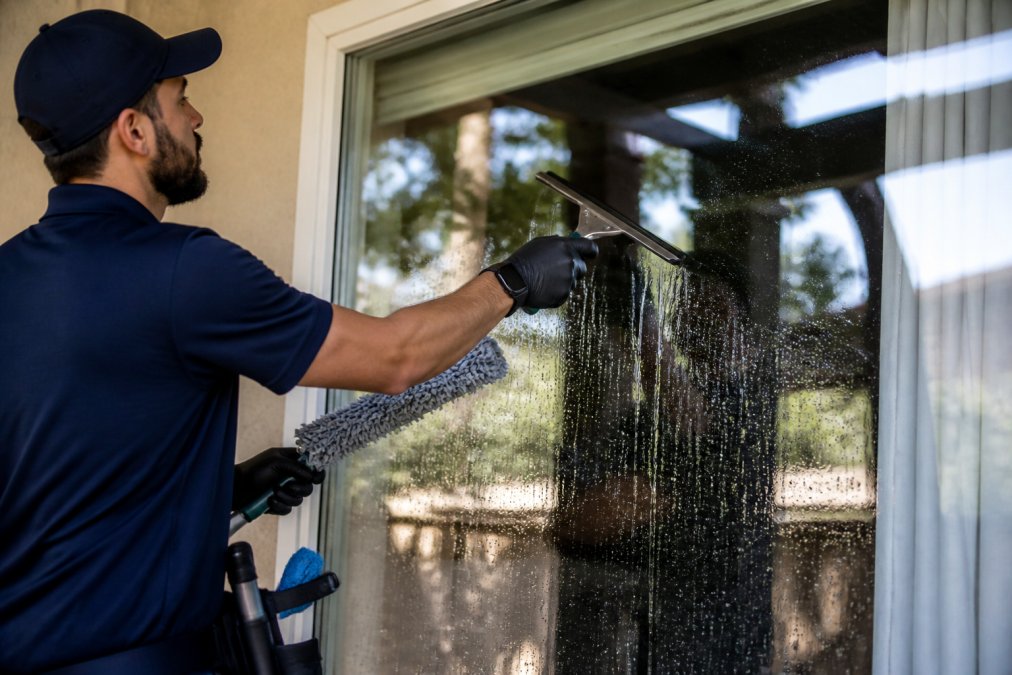
A professional squeegee is precision equipment with specific edge angles, flexibility ratings, and handle balance designed to move water off glass in a single, continuous motion without leaving trails or puddles.
A professional pulls the squeegee in one fluid stroke, maintaining consistent pressure and angle. This removes water completely from the glass surface. DIY cleaners often use back-and-forth motions, which redeposits water and minerals across the glass, creating streaks.
Professional-grade squeegees have softer, more flexible rubber that conforms to glass without skipping. The handle is weighted and balanced to reduce hand fatigue and allow for precise control. These tools deliver a streak-free finish that lasts because the glass is left completely dry and mineral-free.
Benefits of Professional Window Cleaning Beyond Appearance
Professional window cleaning protects your investment in ways that DIY cleaning cannot.
Window seals and hardware degrade when exposed to mineral deposits and environmental pollutants. Hard water stains can etch into the glass itself, causing permanent damage that reduces window lifespan. Professional cleaning removes these contaminants before they cause permanent damage, effectively extending the life of your windows by years.
Energy efficiency improves with clean windows. Mineral deposits and debris reduce natural light entering your home and reduce thermal performance. Clean windows allow more solar heat gain in winter and better visibility for passive cooling. For homes with solar panels, clean glass surfaces directly impact energy production, dirty panels can lose 15-25% of efficiency.
Curb appeal is the most visible benefit. For homes on the market, professional window cleaning can be the difference between a property that shows well and one that appears neglected.
Schedule professional cleaning before major life events, home sales, family gatherings, or seasonal transitions. This prevents the situation where you need last-minute cleaning and end up paying premium rates for rush service.
Glass Etching, Hard Water Stains, and Chemical Interactions
Glass etching is permanent damage caused by prolonged exposure to mineral deposits and acidic compounds. Unlike surface stains that can be removed, etching actually changes the structure of the glass itself. Once etching occurs, the only solution is glass replacement.
Hard water stains develop when minerals in tap water dry on glass and begin to bond chemically. Calcium carbonate and magnesium silicate form deposits that become increasingly difficult to remove over time. After months of accumulation, the glass may appear permanently cloudy even after professional cleaning.
Professional cleaners prevent etching by using deionized water and maintaining regular cleaning schedules before mineral buildup becomes severe. They also understand which cleaning solutions are safe for different glass types. Some glass coatings, like Low-E thermal coatings or UV-protective finishes, can be damaged by harsh chemicals. Professional-grade cleaning uses pH-neutral solutions that remove contaminants without damaging protective coatings.
Environmental pollutants including tree sap, bird droppings, industrial fallout, and oxidation can chemically bond to glass. Professional cleaners have the knowledge and equipment to identify contaminants and apply the correct treatment without causing damage.
Never use vinegar or acidic cleaners on windows with special coatings. While vinegar works on mineral deposits, it can damage Low-E coatings and void manufacturer warranties. Professional cleaners know which solutions preserve glass integrity while removing contaminants.
Seasonal Maintenance Schedules for Year-Round Protection
A seasonal approach to window maintenance prevents the accumulation that leads to permanent damage and costly restoration.
Spring cleaning removes winter debris, tree pollen, dust, and salt spray. Spring is also the ideal time to inspect window seals and hardware for winter damage before the high-heat summer months.
Summer maintenance focuses on preventing UV damage and oxidation. The intense sun accelerates the breakdown of protective glass coatings. Professional cleaning removes abrasive particles that can scratch glass under direct sunlight.
Fall cleaning removes leaf debris, tree sap, and prepares windows for winter weather. This is critical because winter moisture can trap contaminants against glass, accelerating etching and corrosion of window hardware.
Winter maintenance is minimal in most climates, but coastal areas benefit from salt spray removal. Salt deposits accelerate corrosion of aluminum frames and hardware.
Simply Superior Window Cleaning recommends aligning your maintenance schedule with seasonal transitions, typically every 6-8 weeks for most homeowners, with additional cleaning in spring and fall. This approach prevents the buildup that requires intensive restoration and keeps windows performing at peak efficiency year-round.
Warranty Preservation and Professional Standards
Many window manufacturers include warranties that cover defects in glass and hardware for 10-15 years. These warranties often include specific maintenance requirements. Using harsh chemicals, abrasive tools, or improper cleaning techniques can void your warranty.
Professional cleaners understand manufacturer requirements and follow protocols that preserve your warranty coverage. They use approved cleaning solutions, appropriate water quality, and techniques that won’t damage protective coatings. When you hire a professional service, you have documentation that maintenance was performed to manufacturer standards.
DIY cleaning carries warranty risk. If you use the wrong cleaner or technique and damage your glass or coating, the manufacturer may deny warranty claims. Professional cleaning typically costs a fraction of window replacement and protects your warranty investment.
Industry standards for professional window cleaning include regular equipment maintenance, staff training, and safety protocols. Simply Superior Window Cleaning maintains rigorous training for all technicians, with monthly safety meetings to ensure every cleaning is performed to the highest standard.
Professional window cleaning preserves your manufacturer’s warranty, which can save thousands in potential glass replacement costs. This alone justifies the investment in professional service for high-value windows.
DIY vs. Professional Cleaning: Why Results Differ
The gap between DIY and professional results comes down to three factors: water quality, equipment, and technique.
DIY cleaning uses tap water, which contains 100-300 parts per million of dissolved minerals depending on your water hardness (usgs.gov). These minerals remain on glass after evaporation. Professional cleaning uses deionized water with fewer than 5 parts per million of dissolved minerals, eliminating this problem entirely.
Equipment differences are significant. A professional squeegee is designed for precision. A typical hardware store squeegee is designed for general use. The difference in edge quality, flexibility, and balance translates directly into streak-free results versus streaky, uneven drying. Professional equipment also includes water-fed poles for high windows, reducing safety risks associated with ladders.
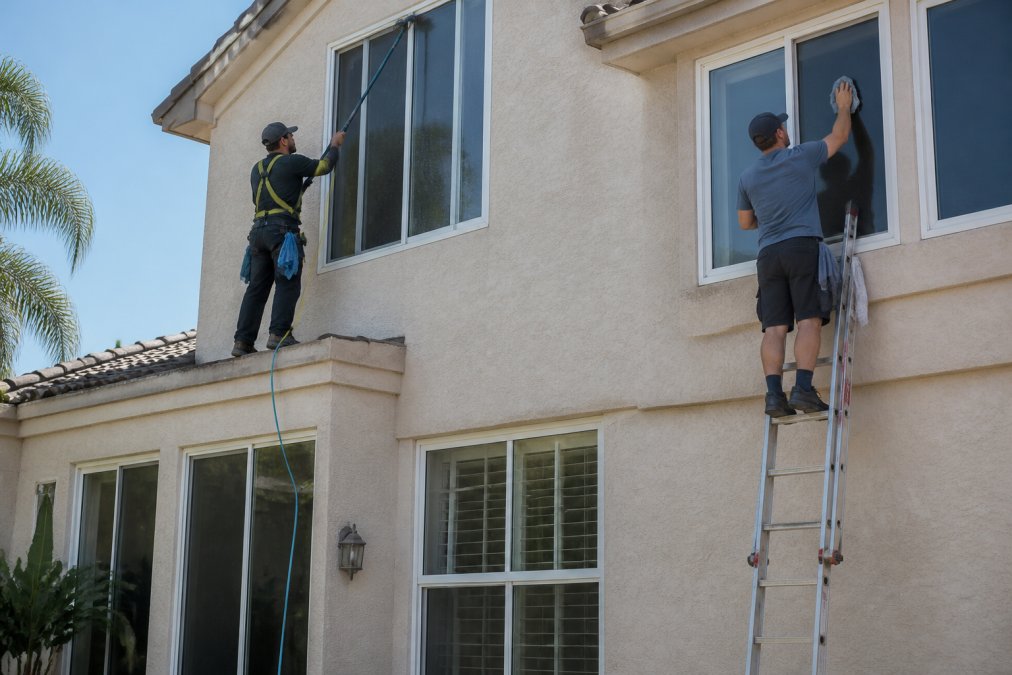
Technique separates professionals from DIY attempts. A professional uses a single continuous squeegee stroke to remove water completely from the glass. They understand the relationship between water temperature, mineral content, and drying patterns. A DIY cleaner typically uses multiple passes, redeposits water, and may use solutions that leave residue or damage coatings.
Safety is another critical difference. Windows above the first floor require proper equipment and training to access safely. A professional uses water-fed poles, harnesses, and safety protocols that prevent falls and injuries. According to the Occupational Safety and Health Administration safety guidelines, falls from ladders are among the most common residential injuries.
The cost comparison often favors professional service when you factor in time, equipment investment, and the cost of redoing work that didn’t meet expectations. A homeowner might spend 3-4 hours cleaning windows and achieve results that fade within 2-3 weeks. A professional completes the same work in 1-2 hours with results lasting 4-6 weeks, freeing your time for priorities that matter more.
Professional window cleaning makes sense for homes with high windows, hard water issues, special glass coatings, or when you value your time. DIY cleaning might work for single-story homes with soft water and low-traffic windows, but results will fade faster and safety risks increase with height.
Professional window cleaning lasts longer because it addresses the root causes of window degradation: mineral deposits, hard water stains, environmental pollutants, and glass etching. Simply Superior Window Cleaning delivers pristine results using deionized water systems, professional-grade equipment, and proven techniques that extend the lifespan of your windows while protecting your investment in home maintenance. Schedule a free quote today and discover why professional results last longer and cost less over time than repeated DIY attempts.
Frequently Asked Questions
Is it worth it to get windows professionally cleaned?
Yes. Professional window cleaning prevents glass etching, hard water stains, and oxidation that reduce clarity and home value. Professionals use deionized water and proper techniques that DIY methods cannot replicate, extending the lifespan of your windows and reducing the frequency of deep cleaning needed. The cost-effective investment protects your windows from premature replacement and maintains curb appeal for resale value.
How often should your window cleaner come for optimal results?
Most homeowners benefit from professional cleaning every 6-12 months, depending on environmental factors. Coastal areas and regions with hard water may require quarterly service to prevent mineral deposits and oxidation. A professional can assess your specific situation during an initial inspection and recommend a seasonal maintenance schedule tailored to your climate and exposure to environmental pollutants.
What do professional window cleaners use in their water that makes results last longer?
Professionals use deionized water, which removes minerals and silica that cause hard water stains and glass etching. This chemical-free approach prevents residue buildup and oxidation that trap dirt faster. Combined with professional-grade squeegee technique and safety protocols, deionized water delivers a streak-free finish that resists environmental debris and pollutants longer than tap water or soap-based solutions.
Why do DIY window cleaning methods attract dirt faster?
DIY methods typically use tap water containing minerals, hard water deposits, and soap residue that leave a film on glass. This film acts as an adhesive for abrasive particles and environmental pollutants, causing dirt to accumulate quickly. Professional techniques eliminate this residue entirely, allowing your windows to maintain glass clarity and resist debris buildup for weeks longer than DIY cleaning.
This article was written using GrandRanker