
Last Updated: October 29, 2026
Quick Summary
Vinegar, citric acid, and dedicated mineral removers dissolve hard water deposits without harming glass, while ammonia-based cleaners do little against minerals and abrasive powders can scratch. Dilute white vinegar one-to-one with water for most household cases, then rinse and repeat on stubborn spots rather than scrubbing harder.
- White vinegar diluted one-to-one with water dissolves calcium and magnesium carbonate films on glass.
- Let diluted vinegar sit on spotted areas for two to three minutes before scrubbing gently.
- Never combine an acid cleaner with chlorine bleach, which releases toxic chlorine gas.
- Rinse with distilled water and dry immediately to prevent spots from forming.
- Clear weep holes before washing glass so mineral-laden water does not worsen clogs.
Table of Contents
- Why Hard Water Damages Windows and What It Leaves Behind
- Safe Window Cleaning Products for Hard Water Areas
- How to Remove Hard-Water Stains From Windows Step by Step
- The Best Cleaner for Hard-Water Spots on Glass
- A Safe Window Cleaner for Tinted Glass
- How to Prevent Water Spots on Windows After Cleaning
- Frames, Weep Holes, and Other Spots Hard Water Attacks
- When to Call a Professional for Hard-Water Stain Removal
- Frequently Asked Questions
Why Hard Water Damages Windows and What It Leaves Behind
Hard water leaves mineral deposits on glass every time it dries. Those white, chalky spots are calcium and magnesium, and they bond to glass faster than most homeowners expect.
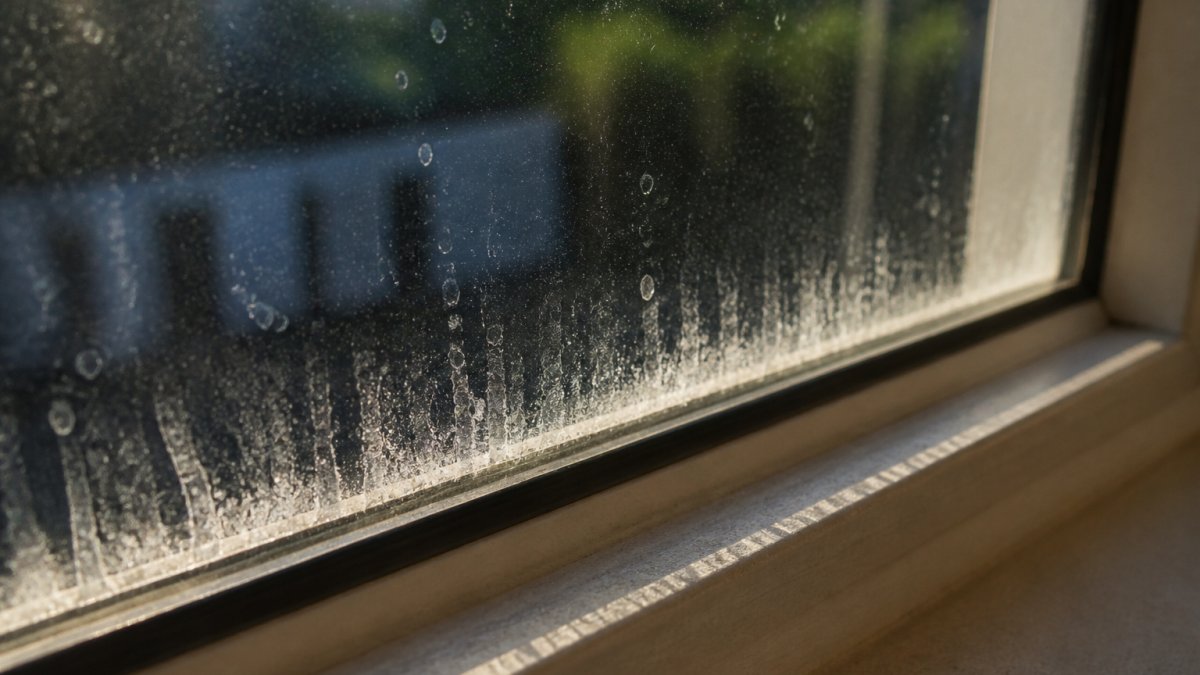
The damage happens in stages. First comes the water spot, a thin mineral film that wipes away easily.
- Stage one: fresh spots that come off with a damp cloth
- Stage two: hazy patches that need a mild acid cleaner
- Stage three: etched glass that only polishing or replacement fixes
The U.S. Geological Survey’s water hardness overview explains why some water supplies carry more dissolved minerals than others. Harder water means faster buildup.
That progression matters because prevention costs far less than repair. The Centers for Disease Control and Prevention’s guidance on household water quality notes that hardness varies widely by source, so two neighbors on different systems can face very different risks.
Safe Window Cleaning Products for Hard Water Areas
Vinegar, citric acid, and dedicated mineral removers dissolve deposits without harming glass. Ammonia-based cleaners help with grease but do little against minerals, and abrasive powders can scratch.
Here is a short list of common options, with the mechanism behind each one:
- White vinegar (acetic acid), Diluted one-to-one with water, it dissolves calcium and magnesium carbonate films on glass. It is safe on most clear glass but can dull some anodized aluminum and painted frames if left to sit, so keep it on the pane and rinse frames promptly.
- Citric acid solution, A powder mixed with water makes a stronger, less pungent mineral remover than vinegar. It is the active ingredient in many commercial hard-water removers.
- Baking soda paste, Mildly abrasive and alkaline, it lifts stubborn patches on frames and sills.
- pH-neutral dish soap, Cuts routine grime and road film without attacking glass coatings or frame finishes. It does not dissolve minerals, so pair it with an acid step on spotted panes.
- Distilled water, Contains no dissolved minerals, so it leaves no spots when it dries.
What to Use and What to Avoid on Glass
Soft cloths and squeegees are generally gentler on glass than abrasive tools. Avoid mixing vinegar with bleach.
Watch out: mixing vinegar and bleach releases a toxic gas. Keep them in separate buckets and rinse tools between uses.
Never combine an acid cleaner with a chlorine bleach product in the same bucket or spray bottle, even in small amounts. The reaction produces chlorine gas. Rinse and dry tools between steps if you switch products.
Product Compatibility and Safety Cautions
A few rules keep a safe product from becoming an unsafe one:
- Test first. Apply any new cleaner to an inconspicuous corner of glass or frame, wait a few minutes, and check for hazing, dulling, or color change before doing the whole window.
- Ventilate. Acid cleaners and commercial mineral removers give off fumes. Open windows and run a fan when working indoors.
- Wear gloves and eye protection. Citric acid and commercial removers can irritate skin and eyes, especially in concentrated form.
- Do not mix cleaners. Beyond the vinegar-and-bleach hazard, combining an acid with an ammonia-based cleaner can create irritating vapors. Use one product at a time and rinse between.
- Match the product to the surface. Acid cleaners are for glass and most frames; they can dull anodized aluminum and damage some painted or powder-coated finishes if left on. pH-neutral soap is the safer default for frames and hardware.
- Check the label on coated and tinted glass. Some low-e and film-coated panes carry manufacturer warnings against acidic or abrasive cleaners. Follow the glass or film maker’s guidance over any general rule.
Some experienced cleaners keep separate buckets for soap and for diluted acid to reduce accidental mixing.
How to Remove Hard-Water Stains From Windows Step by Step
Work top to bottom, keep the glass wet, and let the acid do the work instead of your elbow.
- Rinse the pane with plain water to lift loose dirt.
- Wash with soapy water and a soft cloth.
- Apply diluted vinegar to the spotted areas.
- Let it sit for two to three minutes.
- Scrub gently with a non-scratch pad.
- Rinse thoroughly with clean water.
- Dry with a microfiber cloth or squeegee.
For a deeper walkthrough of this exact task, see our guide on how to remove hard water stains from glass windows.
Tools and Supplies You’ll Need
Gather these before you start: a spray bottle, white vinegar, a soft-bristle brush, microfiber cloths, a squeegee, a bucket, and distilled water for rinsing. A narrow crevice tool helps on tracks and corners.
The Best Cleaner for Hard-Water Spots on Glass
A diluted acid solution is commonly used for hard-water spots on glass. White vinegar mixed one-to-one with water handles most household cases.
Apply it, wait, and rinse. Repeat on stubborn spots rather than scrubbing harder. Scrubbing too hard dulls the glass and makes future spotting worse.
A Safe Window Cleaner for Tinted Glass
A safe window cleaner for tinted glass is ammonia-free and non-abrasive. Use a pH-neutral soap or diluted vinegar instead.
Check the film manufacturer’s guidance before trying anything new. Test a small corner first, then wait a day to confirm no hazing appears.
How to Prevent Water Spots on Windows After Cleaning
Prevention comes down to drying fast and rinsing clean. Minerals only leave spots when water evaporates on the glass. Remove the water before it dries, and the spots never form.
- Rinse with distilled water for a spot-free finish
- Dry immediately with a squeegee or microfiber cloth
- Clean on cloudy days to slow evaporation
- Wipe frames and sills so runoff stays clean
- Repeat every two to four weeks in hard water areas
For the streak-free technique in detail, read our article on how to get streak-free windows with hard water.
Frames, Weep Holes, and Other Spots Hard Water Attacks
Frames take a beating that glass often escapes. Mineral scale builds on sills, tracks, and hardware, and it can stain anodized aluminum finishes. Weep holes clog with grit and scale, which traps water against the frame.
Frame Care by Material
Not every frame tolerates the same cleaner. Match the method to the material:
- Vinyl (PVC) frames, The most forgiving. pH-neutral soap and water handle routine grime, and a diluted vinegar wipe removes light scale. Avoid solvent-based cleaners and strong acids, which can dull or discolor the surface over time.
- Wood frames, Water is the enemy. Use a barely damp cloth with mild soap, dry immediately, and never let an acid cleaner sit on the wood or seep into joints. Re-seal or touch up paint as needed, since hard water can lift finishes.
- Aluminum frames, Anodized aluminum can stain or dull when acidic cleaners sit on it. Use pH-neutral soap for routine cleaning and rinse any acid that contacts the frame promptly. Bare or painted aluminum may need touch-up if scale has etched the finish.
- Fiberglass frames, Generally durable, but abrasive pads can scratch the gel coat. Use soft cloths and mild soap; a diluted acid is fine for light scale if rinsed well.
Clearing Weep Holes and Drainage Openings
Weep holes let water drain out of the frame instead of pooling against it. When they clog, water backs up, scale builds faster, and frames can rot or corrode.
- Locate the openings. They are usually small slots on the bottom edge of the frame or track, sometimes covered by a small flap.
- Loosen debris first. Use a soft-bristle brush or a vacuum with a crevice tool to lift grit away from the opening rather than pushing it in.
- Clear gently. A narrow crevice tool or a pipe cleaner works; avoid sharp probes that can scratch or widen the hole.
- Flush with water. A slow stream from a spray bottle or a cup of water confirms the hole drains freely.
- Dry the area. Wipe the sill and track dry so minerals do not re-form.
Clear weep holes before you wash the glass, not after. Rinsing first pushes mineral-laden water into the openings and makes clogs worse.
Troubleshooting After Cleaning
If a window still sticks, leaks, smells, or collects water after cleaning, the problem may be more than grime:
- Still sticking, Check for swollen wood, worn rollers, or misaligned tracks. Cleaning removes grit, but damaged hardware may need repair.
- Leaking or pooling water, Recheck weep holes and the seal around the frame. Persistent leaks often point to failed weatherstripping or caulk, not dirt.
- Musty smell or dark residue, This can indicate mold or mildew in the track or frame, which routine cleaning may not fully address. Distinguish it from ordinary grime before assuming a cleaner will fix it.
- Recurring scale, If spots return within days, the water itself is the issue. A final distilled-water rinse and faster drying help more than stronger cleaners.
Our guide on how to clean window tracks and frames covers the full method for these areas.
| Problem Spot | Safe Approach | What to Avoid |
|---|---|---|
| Glass panes | Diluted vinegar, soft cloth | Abrasive pads |
| Anodized frames | pH-neutral soap | Acid cleaners left to sit |
| Wood frames | Damp cloth, mild soap, dry fast | Soaking, acid cleaners |
| Weep holes | Soft brush, crevice tool, flush | Sharp probes |
| Sills and corners | Baking soda paste | Steel wool |
When to Call a Professional for Hard-Water Stain Removal
Consider a professional when spots survive a vinegar treatment or the glass looks cloudy from inside, especially for etching, baked-on film, and higher windows. Before booking, read about how professional window cleaning protects glass integrity.
Our technicians undergo classroom and on-the-job training, and we hold monthly safety meetings. We serve residential and commercial properties, including buildings up to four stories.
Frequently Asked Questions
What is the safest cleaner for windows with hard-water spots?
A diluted white vinegar solution (equal parts vinegar and warm water) is the safest everyday option for most glass. For tougher mineral buildup, a paste of baking soda and water applied with a soft cloth lifts deposits without scratching. Avoid abrasive powders, steel wool, and razor blades on coated or tinted glass. Always test any cleaner on a small corner first and follow the window manufacturer’s guidance.
Can vinegar remove hard-water stains from glass?
Yes, distilled white vinegar dissolves the calcium and magnesium in hard water. Mix equal parts vinegar and warm water in a spray bottle, apply to the stain, let it sit a few minutes, then wipe with a microfiber cloth. For stubborn spots, make a baking soda paste and gently scrub with a soft-bristle brush. Rinse and dry the glass completely to avoid new streaks.
Are ammonia-based window cleaners safe for tinted glass?
No. Ammonia and other harsh solvents can break down the adhesive and film on aftermarket window tint, causing bubbling, discoloration, or peeling. Use a pH-neutral or vinegar-based cleaner labeled safe for tinted glass, apply it to a microfiber cloth rather than spraying directly, and wipe gently. Check the tint manufacturer’s care instructions before using any new product.
How do you prevent hard-water spots from coming back after cleaning?
Dry glass immediately with a clean squeegee or microfiber cloth instead of letting it air dry. A rinse with filtered or deionized water helps, and applying a glass sealant creates a barrier that stops minerals from bonding. Clean frames and weep holes so water drains properly, and schedule maintenance cleaning two to four times a year in hard-water areas.
Hard water will keep testing your windows every season. The right products and a steady cleaning schedule keep glass clear and frames intact. Simply Superior Window Cleaning brings trained technicians, flexible maintenance plans, and virtual quotes to homes and businesses across the area. Get started with Simply Superior Window Cleaning and protect your windows from mineral damage.