
Table of Contents
- Understanding Hard Water Stains on Glass
- DIY Cleaning Solutions for Hard Water Stains
- Best Hard Water Stain Remover for Glass
- Step-by-Step Cleaning Process
- How to Prevent Hard Water Stains on Windows
- Professional Window Cleaning Hard Water Removal
- Environmental Impact and Safe Cleaning Practices
- Frequently Asked Questions
Last Updated: September 24, 2026
Understanding Hard Water Stains on Glass
Learning how to remove hard water stains from glass windows starts with understanding that these stains are mineral deposits left behind when tap water containing calcium and magnesium dries on glass. The minerals remain while water evaporates, creating cloudy, white, or chalky spots on windows, shower doors, and surfaces exposed to sprinkler overspray or rain (Hardness of Water). The longer minerals sit on glass, the more stubborn they become.
Surface Spots vs. Etched Glass: The Critical Diagnostic Step
The critical difference is between removable mineral deposits and permanent etching. Many homeowners waste hours scrubbing damage that cannot be reversed.
Surface spots are mineral deposits on top of glass that feel smooth and respond to cleaning solutions. Etched glass has been chemically damaged by acidic minerals that eat into the glass, creating permanent microscopic pits that no cleaner can restore.
How to Test for Etching Before You Clean
Test for etching before cleaning: Run your fingernail across the spot, roughness or pits indicate etching. Drop distilled water on it, water beading means surface deposits; spreading water means etching. Check the spot’s age, stains present for months or years in hard water areas are more likely etched.
Why Etching Happens
Etching occurs when acidic minerals sit on glass for extended periods, gradually dissolving the glass layer. It’s common on windows near sprinklers, in coastal areas, on south-facing windows, and on windows rarely cleaned. Once etching begins, it accelerates as pitted surfaces trap more minerals.
What to Do If Your Glass Is Etched
If glass is etched, cleaning won’t restore clarity. Options include accepting the appearance (it’s purely cosmetic), replacing the glass, applying protective coatings to mask mild etching, or preventing further damage through maintenance.
Prevention Is Your Only Remedy
Prevention is critical since etching cannot be reversed. Clean windows every 2-4 weeks in high-risk zones to remove mineral deposits before they etch.
DIY Cleaning Solutions for Hard Water Stains
When learning how to remove hard water stains from glass windows, most stains respond to acidic solutions. Vinegar and baking soda are the two most effective DIY options, breaking down mineral buildup for easy removal.
White Vinegar and Distilled Water Method
White vinegar dissolves mineral deposits without damaging glass. Mix one part white vinegar with one part distilled water in a spray bottle. Use distilled water, not tap water, to prevent new spots from forming as the solution dries.
Spray the solution generously on the stained area and let it sit for 10-15 minutes to allow the acid to work. Wipe with a microfiber cloth using circular motions. For stubborn spots, repeat. Open windows if sensitive to the vinegar smell.
Baking Soda Paste Application
Mix baking soda with water to create a thick paste. Apply to stained glass, let sit 5-10 minutes, then gently scrub with a soft cloth. Rinse thoroughly with distilled water. For best results, apply vinegar first, then use baking soda paste on remaining spots.
Best Hard Water Stain Remover for Glass
Commercial hard water stain removers work faster than DIY solutions with stronger acids. Look for products labeled specifically for hard water stains and test on a small area first. Follow product instructions exactly, dwell time, application, and rinsing all matter.
When to call a professional: If stains cover large areas, multiple stories, or you’re uncomfortable with heights, professional window cleaning saves time and prevents accidents. Simply Superior Window Cleaning handles hard water stains on residential and commercial properties. Our highly trained technicians utilize industry-leading equipment and proven techniques to restore clarity without damaging your glass.
Step-by-Step Cleaning Process
Success depends on having the right tools and following a logical sequence. Rushing through steps or skipping preparation leads to streaks, missed spots, and wasted effort.
Tools and Safety Precautions
Gather these items before starting:
- Spray bottle for your cleaning solution
- Microfiber cloth (lint-free and safe for glass)
- Squeegee for large windows
- Soft sponge or non-abrasive scrubber
- Bucket of distilled water for rinsing
- Gloves to protect your hands
- Eye protection if working overhead
Safety comes first when cleaning windows. Never lean out of an open window or overreach. Use a stable ladder if working on upper floors. For windows higher than one story, hire professionals. Falls cause serious injuries.
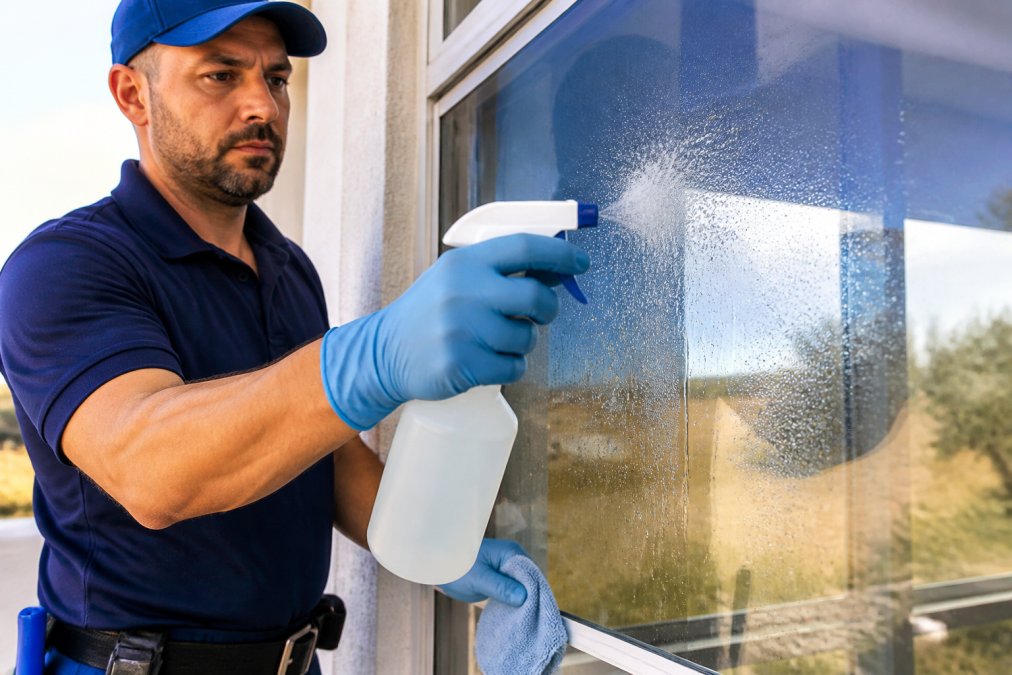
Wear gloves when using vinegar or commercial cleaners. They can dry out skin with repeated exposure. Ensure good ventilation, especially with commercial products.
Execution and Buffing for Streak-Free Results
Start at the top and work downward. Apply solution liberally and let it sit 10-15 minutes, dwell time is essential. Wipe with firm circular motions using a damp microfiber cloth. For stubborn spots, reapply and wait another 10 minutes. Rinse thoroughly with distilled water, then buff dry with vertical strokes to prevent water spots.
How to Prevent Hard Water Stains on Windows
Prevention is always easier than removal. Once you’ve cleaned your windows, keeping them clean requires a maintenance strategy. High-risk areas need more frequent attention.
Maintenance Schedules for High-Risk Areas
Windows exposed to sprinkler overspray need cleaning every 2-4 weeks during irrigation season. This prevents mineral buildup from becoming thick and stubborn. Frequent light cleaning beats occasional heavy scrubbing.
South-facing windows get more sun and heat, which speeds mineral deposit formation. Check these monthly and clean as needed.
Coastal areas with salt spray face additional challenges. Salt combines with minerals to create harder deposits. Monthly cleaning is standard for coastal properties.
Establish a routine that fits your climate and water hardness. Hard water areas need more frequent attention than soft water regions. If your tap water is visibly cloudy or leaves deposits on faucets, you have hard water.
Protective Barriers and Hydrophobic Coatings
Glass sealants create a protective barrier that repels water. Water beads up and runs off rather than sitting on the surface. This prevents mineral deposits from forming in the first place.
Hydrophobic coatings work similarly. They reduce surface tension, so water doesn’t cling to the glass. Apply these annually for best results.
These protective treatments are preventive, not curative. Apply them to clean glass.
Professional Window Cleaning Hard Water Removal
While DIY methods work for most homeowners, professional window cleaning is the right choice in specific situations. Professionals have access to equipment, products, and expertise that outperform consumer solutions, and more importantly, they can work safely on windows DIY methods cannot reach.
When to Hire a Professional
Consider professional cleaning for:
Multi-story buildings and high-reach windows. Windows on the second story or higher require ladders, extension poles, or specialized equipment. Falls from ladders are among the most common home injuries, with the Consumer Product Safety Commission reporting over 500,000 ladder-related injuries annually in the United States. If your windows are higher than one story, professional service eliminates this risk entirely.
Professional Equipment and Techniques
Water-fed poles. These telescoping poles (typically 20-60 feet) allow cleaners to reach high windows from the ground, eliminating ladder risk. Water flows through the pole to a brush head that scrubs and rinses simultaneously. This method is safer and faster than traditional ladder cleaning.
Safety Considerations for DIY High-Reach Windows
Ladder safety. Use a ladder rated for your weight plus equipment (typically 250 pounds minimum). Place it on level ground, never on boxes or unstable surfaces. Maintain three points of contact (two hands and one foot, or two feet and one hand) when climbing. Never lean sideways; reposition the ladder instead.
Cost-Benefit Analysis
While this is more than the $10-$20 cost of DIY supplies, consider the trade-offs:
- Time saved. Professionals complete the job in 1-2 hours. DIY can take a full day or multiple sessions.
- Safety. Professional equipment eliminates ladder risk.
- Results. Professional-grade tools and techniques deliver streak-free clarity that DIY methods often cannot match.
- Maintenance value. Regular professional cleaning (quarterly or semi-annually) prevents etching and keeps windows clearer longer, reducing total cleaning frequency.
Environmental Impact and Safe Cleaning Practices
Vinegar and baking soda are environmentally friendly alternatives to harsh chemicals. They break down naturally without toxic residue. When you rinse them away, they enter the water system as harmless compounds.
Frequently Asked Questions
Can hard water stains permanently etch glass windows?
Hard water stains and etching are different problems. Surface stains from mineral deposits like calcium and magnesium sit on top of the glass and can be removed with acidic solutions like white vinegar or commercial hard water removers. Etching occurs when minerals chemically bond to the glass surface, creating permanent pitting. You can distinguish between them by running your fingernail over the spot, if it catches, the glass is etched. Surface stains feel smooth. Once etching occurs, it cannot be reversed, which is why prevention and early treatment are critical.
What do professional window cleaners use on hard water stains?
Professional window cleaning hard water removal typically involves specialized acidic cleaning solutions designed to dissolve mineral deposits without damaging the glass. Technicians apply these solutions with proper dwell time (allowing the product to sit on the glass), then use appropriate tools like squeegees, microfiber cloths, or soft-bristle brushes to remove the deposits. Professionals also assess whether stains are cleanable spots or permanent etching before selecting their approach. They follow up with a final rinse using distilled water to prevent new mineral buildup and ensure streak-free results.
Does vinegar damage glass windows?
White vinegar is safe for glass when diluted properly with distilled water. A standard ratio of one part white vinegar to one part distilled water creates a mildly acidic solution that dissolves mineral deposits without harming the glass surface. Undiluted vinegar can leave streaks and may be too strong for repeated use. Avoid vinegar on natural stone, wood frames, or certain coatings. Always test on a small area first, and rinse thoroughly with distilled water after cleaning to prevent mineral redeposition and ensure a streak-free finish.
How often should I clean windows to prevent hard water stains?
Maintenance schedules depend on your water quality and climate. In areas with hard water and frequent sprinkler overspray or rainfall, monthly cleaning prevents mineral deposits from accumulating and becoming harder to remove. High-risk areas like south-facing windows or those near sprinkler systems may need more frequent attention. Quarterly cleaning works for most homeowners in moderate climates. Regular maintenance prevents the need for aggressive abrasive cleaners and reduces the risk of permanent etching. Consider a protective hydrophobic coating after professional cleaning to extend the time between cleanings.