
Last Updated: October 29, 2026
Quick Summary
To clean window tracks, open the window fully, brush out loose debris, then scrub stuck-on grime with warm soapy water or a vinegar mix. Wipe the track dry with a microfiber cloth and clear any weep holes. Clean tracks every two to four months, depending on your environment.
- Vacuum or brush out loose dirt before scrubbing with warm, soapy water.
- Use a soft brush and cotton swabs to reach tight corners and grooves.
- Dry the track fully so water does not sit in the grooves.
- Clear weep holes with a dry cotton swab or soft bristle to prevent pooling.
- Clean coastal or humid areas every three months and quiet locations two to four times a year.
Table of Contents
- Window Track Cleaning Tools You Need Before Starting
- How to Clean Window Tracks Without a Vacuum
- Cleaning Window Frames by Material Without Damaging Them
- Clearing Weep Holes and Drainage Channels
- How Often to Clean Window Tracks by Environment
- How to Make Window Tracks Slide Smoothly After Cleaning
- Booking a Professional Window Track Cleaning in Ventura or North LA
- Frequently Asked Questions
Sliding windows can stop gliding when grime builds up in the track and gets packed into the grooves.
Dirt, sand, and pet hair collect in the track every time the window opens. Over time, that debris hardens into a gritty paste.
Here is what dirty tracks usually cause:
- Sticking or jerky movement when you open or close the window
- Scratches on the metal track and on the window’s rollers
- Wear on the rollers, which can lead to replacement costs
- Water pooling in the track, which can stain the sill
- Musty smells and mildew growth in damp corners
A common mistake is ignoring the track until the window starts to stick. By then, the grit has already worn the rollers down.
Frames suffer too.
Window Track Cleaning Tools You Need Before Starting
Most window track jobs need only a handful of basic tools. You likely have many of them already.
- A vacuum with a narrow crevice attachment
- A soft-bristle brush for loose grime
- A firm-bristle or detailing brush for stuck-on dirt in corners
- Two or three microfiber cloths
- A spray bottle with warm water
- A small amount of mild dish soap or diluted white vinegar
- Baking soda for stubborn spots
- Cotton swabs or a toothpick for tight corners
The vinegar mix is simple. Combine equal parts warm water and white vinegar in the spray bottle. For tougher spots, make a paste of baking soda and a little water.
Watch out: Avoid harsh solvents, bleach, or abrasive pads on finished frames. They can strip paint, cloud vinyl, and damage anodized aluminum. Test any new cleaner on a hidden spot first.
How to Clean Window Tracks Without a Vacuum
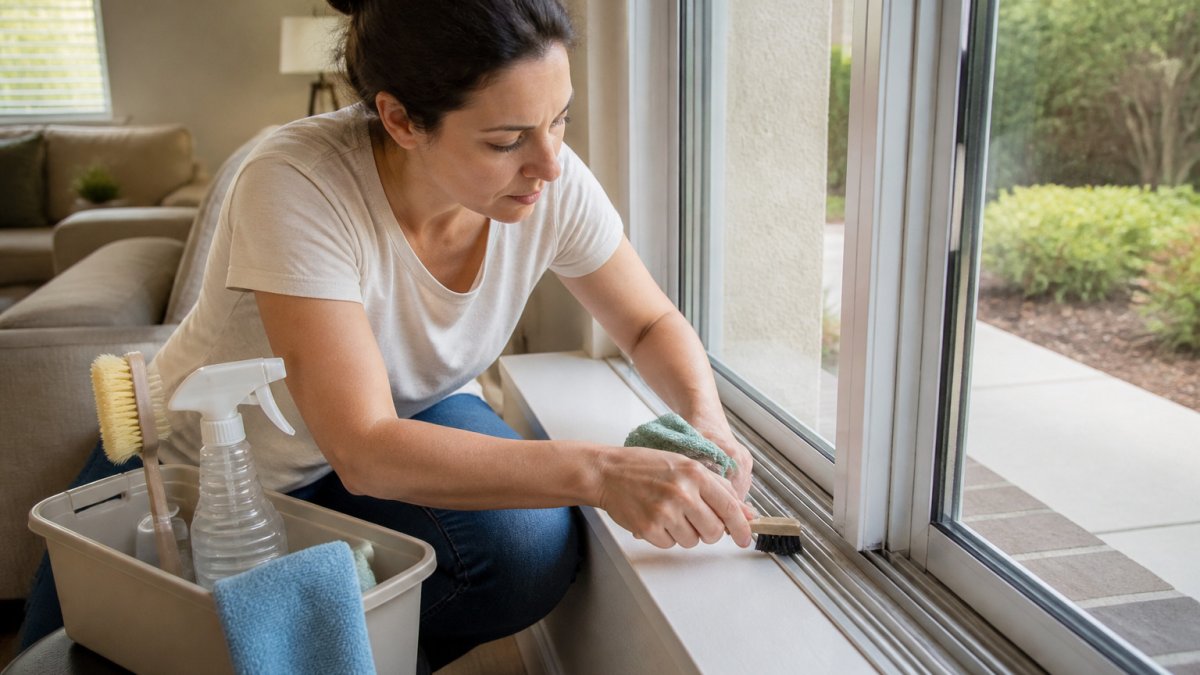
You can clean most tracks without a vacuum. A brush and a cloth do the job well. Here is the basic process:
- Open the window fully. Clear the sash so you can reach the whole track.
- Scrape loose debris. Use a dry soft brush to sweep dirt toward one end.
- Pick up what you loosened. Dab the debris with a dry cloth or a folded paper towel.
- Scrub stuck-on grime. Dip the firm brush in warm, soapy water and scrub the grooves and corners.
- Wipe the track. Run a damp microfiber cloth along the full length of the track.
- Clean the corners. Wrap a cloth around a cotton swab to reach the tight ends.
- Dry the track. Use a dry cloth so water does not sit in the grooves.
Work slowly and go back over stubborn spots. Two or three passes beat one hard scrub.
Next, you can handle the window frame. The method changes with the material.
Cleaning Window Frames by Material Without Damaging Them
Frames come in different materials, and each one reacts differently to water, cleaners, and scrubbing. Using the wrong product can leave permanent marks, cloud a finish, or swell wood. Match the method to the material before you start.
Vinyl Frames
Vinyl is the most forgiving frame material, but it is not indestructible. Use warm water with a few drops of mild dish soap and a soft cloth or microfiber rag.
Avoid abrasive pads, steel wool, and solvents such as acetone or paint thinner. These can dull the surface or leave scratches that trap dirt. Most vinyl manufacturers publish care instructions; check yours if you are unsure about a specific cleaner.
Painted Wood Frames
Painted wood is the most water-sensitive common frame. Use a barely damp cloth with mild soap, and dry the surface right away. Excess water can swell the wood, soften the paint, and cause peeling along the edges and joints.
Do not spray cleaner directly onto painted wood. Spray it onto the cloth first so you control the amount of moisture.
Aluminum and Anodized Frames
Aluminum frames are tough but not indestructible. Anodized finishes have a thin protective layer that abrasive scrubbing can wear through, leaving a chalky or blotchy look. Stick to a mild soap solution and a soft cloth. Skip steel wool, harsh powders, and acidic cleaners on anodized surfaces.
Bare or painted aluminum can oxidize where the finish is chipped. Wipe those spots dry and touch up paint when possible to slow corrosion.
Fiberglass Frames
Fiberglass frames resist moisture and rot better than wood, but the gel coat or paint on the surface can chalk and stain. Wash with mild soap and water, rinse well, and dry with a soft cloth. Avoid abrasive cleaners that scratch the finish, and avoid solvents that can break down the resin.
If the surface feels chalky after cleaning, a non-abrasive fiberglass restorer can help, but test it on a hidden area first.
Never mix cleaners. Combining bleach with vinegar or ammonia produces dangerous fumes (the CDC). Use one product at a time, ventilate the room, and wear gloves when handling stronger solutions.
Test Before You Treat
Whatever the material, test any new cleaner on an inconspicuous spot such as the bottom edge or the back of the frame. Wait a few minutes, then check for dulling, discoloration, or softening. If the finish changes, stop and use plain soap and water instead.
Clearing Weep Holes and Drainage Channels
Weep holes are tiny openings at the bottom of the track or frame. They let rainwater and condensation drain out. When they clog, water backs up and spills into the room.
Look for small slots or holes along the track floor. Clear them with a dry cotton swab or a soft bristle.
Check the weep holes after heavy rain. If water still pools in the track, a blockage is likely. Clearing it now prevents stains, mildew, and rot in the sill.
How Often to Clean Window Tracks by Environment
Cleaning frequency depends on where your home sits. Most homes do well with a cleaning two to four times a year. Use this as a rough guide:
- Coastal or humid areas: Every three months, since salt air and moisture speed up buildup
- Dusty or windy areas: Every two to three months
- Homes with pets or open windows often: Every two months
- Quiet, sheltered locations: Two to four times a year
A simple test helps you decide. If a window feels stiff or leaves grit on your fingers, it is time to clean.
How often you should clean your window tracks depends on your environment, as summarized below.
| Environment | Suggested frequency | Why |
|---|---|---|
| Coastal or humid areas | Every three months | Salt air and moisture speed up buildup |
| Dusty or windy areas | Every two to three months | More dirt and debris reach the track |
| Homes with pets or frequently open windows | Every two months | Pet hair and open-window debris accumulate |
| Quiet, sheltered locations | Two to four times a year | Less debris builds up |
How to Make Window Tracks Slide Smoothly After Cleaning
Clean tracks usually slide well on their own. A light lubricant can help after cleaning, but use the right kind and apply it correctly.
- Wipe the track completely dry first.
- Apply a thin line of silicone spray or a dry lubricant made for tracks.
- Open and close the window several times to spread it evenly.
- Wipe away any excess so dirt does not stick to it.
Avoid heavy grease or oil. These attract dust and turn into the same gritty paste you just removed.
If the Window Still Sticks
If the window still sticks after cleaning and lubricating, work through the likely causes in order:
- Dirty or worn rollers. Rollers collect grit and can flat-spot over time. Clean them with a soft brush, and replace them if they wobble, grind, or no longer roll freely.
- Misaligned sash or track. A sash that rubs on one side may need adjustment rather than more cleaning. Check that the sash sits evenly in the track.
- Bent or damaged track. Small dents or debris in the channel can catch the rollers. Straighten minor bends carefully, or call a professional if the track is deformed.
- Swollen wood frame. Wood frames that have absorbed water can bind against the sash. This is a repair issue, not a cleaning one.
If Water Still Pools in the Track
Pooling water after cleaning usually points to a clogged weep hole or a blocked drainage channel. Clear the openings with a dry cotton swab or soft bristle, and check again after the next rain. If water still backs up, the drainage path may be blocked deeper in the frame, which may require a technician to clear.
If Odors or Mildew Return
A musty smell that comes back after cleaning can mean mildew is growing in a damp corner or under the sill. Clean the area with a mild soap solution, dry it thoroughly, and improve ventilation. If the smell persists or you see fuzzy growth, the problem may be a leak or trapped moisture that needs repair.
Cleaning solves most sticking and grime problems. If a window still sticks, leaks, smells, or pools water after a thorough cleaning, the cause is likely mechanical or moisture-related and may need repair rather than another scrub.
Booking a Professional Window Track Cleaning in Ventura or North LA
Simply Superior Window Cleaning offers professional window cleaning for homes and commercial buildings throughout Ventura and North LA Counties. Our technicians are trained in both classroom and on-the-job settings.
Not sure what a professional cleaning costs? Request a quote from Simply Superior Window Cleaning to get an estimate.
Many homeowners want to know what residential window cleaning typically costs before booking. Read the cost of residential window cleaning services guide for an overview. See our best window cleaning services in Ventura County guide.
Learn more in our guide to how virtual window cleaning quotes work. If you want broader step-by-step guidance on cleaning residential windows, the complete how-to guide covers the full process.
Before you hire anyone, confirm they carry insurance. Our seven risks of hiring uninsured window cleaners explains what can go wrong.
Schedule a free quote today.
Frequently Asked Questions
What is the best way to remove dirt from window tracks?
Start by vacuuming loose dirt and debris with a crevice attachment, then loosen stuck-on grime with a soft-bristle brush. Wipe the channel with a damp microfiber cloth, and use a cotton swab or small detailing brush for the corners. A diluted solution of warm water and a small amount of mild dish soap or white vinegar works well for stubborn buildup. Dry the track fully so dirt does not stick to moisture.
How do you clean window tracks without a vacuum?
Remove loose debris by hand, or with a dry paintbrush, then sweep it out with a stiff brush or a folded paper towel. Next, brush stuck-on grime loose with a firm-bristle brush, and wipe the track with a damp cloth. Baking soda mixed into a paste can lift stubborn dirt from corners. Rinse the cloth often, and finish by drying the track so it does not grow mildew.
How often should you clean window tracks and frames?
Most homes benefit from cleaning window tracks two to four times a year. Homes near busy roads, in dusty areas, or with pets and open windows often need cleaning more frequently. Check tracks each season for debris, and clean them sooner if a window starts to stick. Frames can usually be cleaned on the same schedule as the tracks.
Can you use vinegar to clean window tracks?
Yes, diluted white vinegar is effective on the grime and light mildew that build up in window tracks. Mix equal parts vinegar and warm water in a spray bottle, apply it to the track, let it sit briefly, then scrub and wipe. Avoid using vinegar on natural stone or unfinished wood frames. Rinse the track with a damp cloth and dry it completely afterward.