
Quick Summary
Winter roof maintenance is the set of checks that catch small roof problems before cold weather and snow turn them into costly leaks. Most of the inspection can be done from the ground with binoculars, covering shingles, flashing, pipe boots, valleys, gutters, and the attic. Doing these checks before the first storm is far cheaper than repairing water damage in spring.
- Inspect shingles, flashing, pipe boots, and valleys from the ground using binoculars first.
- Clear gutters and downspouts so meltwater drains instead of backing up under the shingles.
- Keep soffit vents open and add attic insulation to prevent ice dams.
- Use a roof rake from the ground and never walk a snowy or icy roof.
- Stop and call a professional immediately if you see sagging, cracking sounds, or new ceiling cracks.
Table of Contents
- Why Winter Roof Maintenance Matters Before the First Storm
- Roof Inspection Checklist for Homeowners: Shingles, Flashing and Penetrations
- Cleaning Gutters Before Winter to Prevent Water Damage
- How to Prevent Ice Dams Through Attic Ventilation and Insulation
- Roof Snow Removal Safety: When to Clear It and When to Stop
- DIY Versus Professional: Knowing When to Call a Roofer
- Booking Your Winter Property Check with Simply Superior
- Frequently Asked Questions
Last Updated: November 16, 2026
Snow on a roof looks harmless until it isn’t. A heavy, wet load can stress framing, pull on gutters, and push water under shingles, and the damage often stays hidden until a spring leak shows up on the ceiling.
Winter roof maintenance is about catching small problems while they are still cheap to fix. A cracked shingle or a clogged downspout costs little to repair in October.
Why Winter Roof Maintenance Matters Before the First Storm
Cold weather makes existing roof problems worse. Water gets into small gaps, freezes, expands, and widens them. Then the next thaw lets more water in.
Start with these basics:
- Water damage is the most common result of poor winter maintenance
- Freeze-thaw cycles widen cracks in shingles and sealant
- Snow adds weight that loose or damaged materials cannot handle well
A quick check now gives you time to schedule repairs before the weather turns.
Roof Inspection Checklist for Homeowners: Shingles, Flashing and Penetrations
Work through these items from the ground with binoculars first. Only climb onto the roof if the surface is dry, you have proper footing, and someone knows where you are.
- Shingles: Look for missing, cracked, lifted, or curling shingles. Gaps show dark underlayment or bare patches.
- Flashing: Check the metal strips around chimneys, vents, and skylights. Look for rust, gaps, or loose edges.
- Roof penetrations: Inspect pipe boots and vent collars. Cracked rubber boots are a common leak source.
- Valleys: Remove leaves and debris from roof valleys so water can drain freely.
- Ceiling and attic: Look for water stains, damp insulation, or daylight coming through the roof boards.
A common mistake is checking only the front of the house. Leaks often start on the north side or near chimneys, where snow lingers longest.
Cleaning Gutters Before Winter to Prevent Water Damage
Gutters carry snowmelt and rain away from your foundation. When they fill with leaves, the water backs up under the shingles at the roof edge. Ice then forms there, which is the start of many ice dam problems.
To clear gutters and downspouts:
- Scoop out leaves and debris by hand or with a small plastic trowel
- Flush the gutter with a garden hose to check that water flows toward the downspout
- Clear blockages at the downspout using a plumber’s snake or a hose on low pressure
Clearing gutters is a quick task, and the steps and their purpose are summarised below. If you are weighing DIY cleaning against protective covers, compare gutter cleaning versus gutter guards for California homes. If you find clogs at the downspout, follow this step-by-step guide to clearing downspout clogs to clear them completely.
| Step | What to do | Note |
|---|---|---|
| Remove debris | Scoop out leaves by hand or with a small plastic trowel | Avoid metal tools |
| Test flow | Flush the gutter with a garden hose | Water should move toward the downspout |
| Clear downspouts | Use a plumber’s snake or hose on low pressure | Clears blockages at the downspout |
| Secure gutters | Tighten loose hangers | Keeps the gutter sloped properly |
How to Prevent Ice Dams Through Attic Ventilation and Insulation
Ice dams form when heat escapes from the attic, melts snow on the roof, and the meltwater refreezes at the cold eaves. Proper attic ventilation and insulation keep the roof surface cold and even, which stops this cycle.
Focus on these steps:
- Check that soffit vents are open and not blocked by insulation
- Add insulation to the attic floor if it looks thin or uneven
- Seal gaps around light fixtures, pipes, and the attic hatch
Ice dams are hard to remove safely, so prevention is the better strategy. Our guide on preventing ice dams in gutters explains the steps in more detail.
Roof Snow Removal Safety: When to Clear It and When to Stop
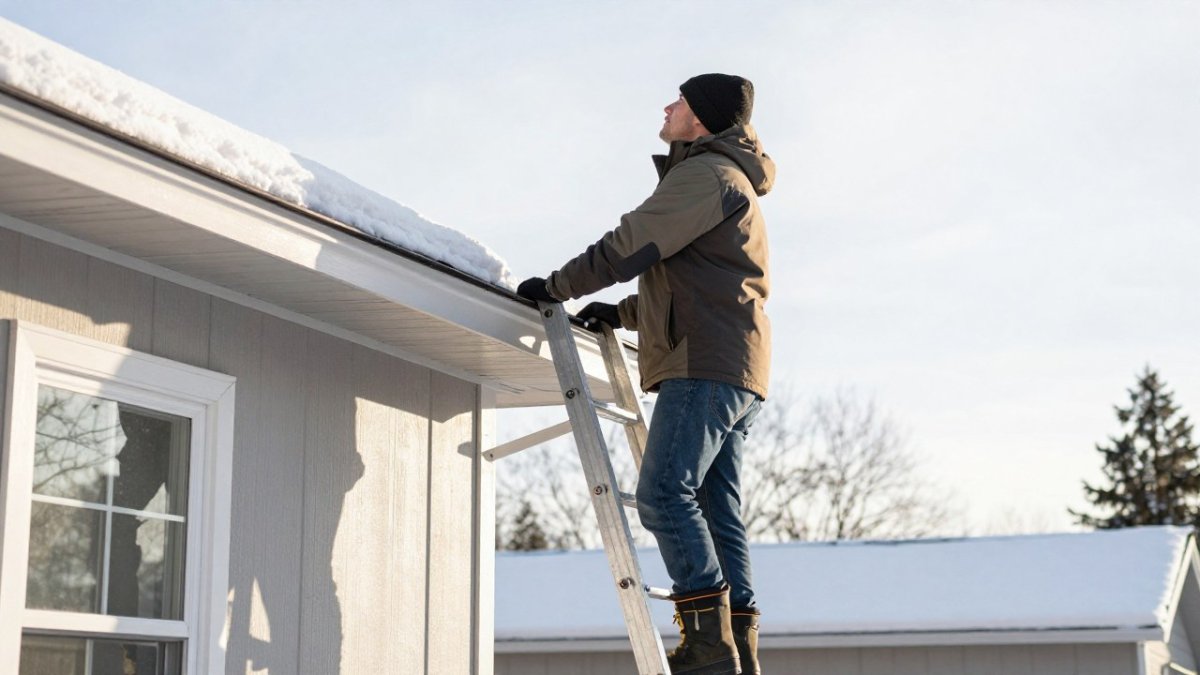
Snow removal is the part of winter roof maintenance where homeowners most often get hurt. The goal is not a bare roof. The goal is to keep the load within what the roof was designed to carry and to keep meltwater moving off the edge. A roof in good repair is generally able to handle typical seasonal snow, and climbing onto a snowy roof carries real risk.
How snow load actually stresses a roof
Snow weight depends on depth and water content, not just how deep it looks. A light, dry snowfall is far lighter per inch than the heavy, wet snow that falls near freezing or the refrozen crust that builds up after a thaw. That is why a roof can look fine after a foot of powder and then sag after a few inches of wet, dense snow.
When clearing may be warranted
Consider removal only when one or more of these conditions is present:
- Snow depth on the roof is well beyond what your area typically sees, or the snow is visibly wet and heavy
- A deep drift has formed against a wall, chimney, or dormer and is not shedding on its own
- Ice is building up at the eaves and water is backing up under the shingles
How to remove snow without getting hurt
- Use a roof rake with an extended handle and stand on the ground, well back from the drip line
- Pull snow from the edge inward in small passes; do not try to move the whole load at once
- Keep the rake head above the shingles so you do not catch and lift tabs
Watch out: Never stand on a ladder placed on snow or ice, and never walk a snowy or icy roof. A fall from eave height is the most common serious injury in winter roof work, and no amount of saved snow removal is worth it.
Structural warning signs that mean stop and call
Stop any work and call a licensed roofer or structural professional immediately if you notice:
- A sagging or bowed ridgeline
- Rafters that appear bowed from inside the attic
- Cracking, popping, or groaning sounds from the framing
Warning Signs and Urgency Levels
Use this tiering to decide how fast to act. When in doubt, treat the issue as more urgent, not less.
- Call now (same day): Visible sagging, cracking or popping sounds, ceiling bulges, or water actively running into the house
- Call within days: Active leaks or ceiling stains that are growing, large sections of missing shingles, or an ice dam that is already forcing water inside
- Schedule soon (within a few weeks): Minor shingle damage, loose or lifted flashing, clogged gutters, or small ice dams that have not yet caused interior moisture
A simple inspection schedule
Split the work so each task lands at the right time:
- Before winter: Clear gutters and valleys, check flashing and boots, confirm attic ventilation and insulation, and photograph the roof from the ground
- During winter: After each heavy snow or thaw, check from the ground for ice dams, drifting, and gutter separation; check the attic for new stains or frost
- After storms: Look for missing or lifted shingles, dented or loose flashing, and granule loss in the gutters
Keep a simple maintenance log, date, what you saw, a photo, and what you did, so you can spot a recurring leak or a shingle problem that keeps coming back in the same spot. Early detection is what keeps a small repair from becoming a ceiling replacement.
DIY Versus Professional: Knowing When to Call a Roofer
Most winter roof maintenance is safe for a homeowner who stays on the ground. The trouble starts when a routine check turns into a ladder climb on a cold, wet, or icy surface. A useful rule: if the task requires you to leave the ground, it is a professional task. That single line resolves most of the DIY-versus-pro question.
Safe for most homeowners (ground level and attic)
- Inspecting the roof from the yard with binoculars
- Checking the attic for stains, damp insulation, frost, and daylight through the roof boards
- Confirming that soffit vents are open and not blocked by insulation
Professional-only work
- Walking or kneeling on any roof, especially a steep pitch or one that is wet, icy, or snow-covered
- Replacing shingles, flashing, pipe boots, or vent collars
- Diagnosing and repairing an active leak
What to ask before you hire
- Confirm the roofer is licensed and insured for roof work in your state
- Ask for the manufacturer’s warranty terms on materials and whether labor is covered
- Get the scope in writing: what will be repaired, what will be inspected, and what is excluded
Watch out: A quote that is far below the others, or a contractor who knocks on your door after a storm and offers to “inspect for free,” is a common pattern in roof repair scams. Get at least two written quotes and never pay the full amount up front.
Climate and roof-type differences that change the checklist
One checklist does not fit every home. Adjust the emphasis based on your situation:
- Heavy snow areas: Prioritize snow load, drift zones, and ice dam prevention; plan for roof rake use and keep the rake accessible before the first storm
- Freeze-thaw areas: Focus on flashing, sealant, and shingle condition, since repeated freezing widens small gaps
- Mild or rainy climates: Emphasize gutter flow, drainage away from the foundation, and debris in valleys
Turning maintenance into cost prevention
Routine checks are cheaper than emergency repairs because they catch problems while they are still small. A cracked pipe boot or a loose flashing edge is a minor repair in fall; the same defect can soak insulation and drywall by midwinter. Keep a log of inspection dates, photos, repairs, and any issue that keeps returning in the same spot. That record helps a roofer diagnose the cause instead of patching the symptom, and it gives you a clear history if you ever file an insurance claim.
Booking Your Winter Property Check with Simply Superior
If you would rather not climb ladders or check a roof in cold weather, Simply Superior Window Cleaning offers gutter maintenance across Ventura and North LA Counties. You can schedule commercial gutter cleaning service or learn how gutter cleaning timing protects your home before winter arrives. Request a free quote and get your winter prep done before the first storm.
Frequently Asked Questions
How often should a roof be inspected?
Most homeowners should have their roof inspected at least once a year, ideally in late fall before the rainy and snowy season starts. Inspect again after any major storm, high wind event or hail, since damage can be hard to spot from the ground. A winter roof maintenance checklist covers the basics, but a professional inspection can catch problems such as lifted shingles, failing flashing and worn sealant that a quick look may miss.
Should I remove snow from my roof?
Removing a light layer of snow is usually unnecessary, but heavy snow accumulation can add significant load to a roof and increase the risk of leaks or structural stress. Use a roof rake from the ground or a sturdy ladder, and never climb onto a snowy or icy roof. If snow depth is large or the roof shows sagging, cracking sounds or new leaks, contact a professional rather than working on it yourself.
How can I prevent ice dams from forming on my roof?
Ice dams form when heat escaping from the attic melts snow, and the meltwater refreezes at the cold eaves. The most effective prevention is improving attic insulation and ventilation so the roof deck stays uniformly cold. Sealing air leaks around ceiling fixtures and attic hatches also helps, and keeping gutters clear allows meltwater to drain properly.
When should I call a roofing professional about a winter roof problem?
Call a licensed roofing professional if you see active leaks, water stains spreading on ceilings, sagging areas, missing or damaged shingles after a storm, or a large ice dam that is backing water under the shingles. Safety is the main reason: winter roof work on ice or steep pitches is dangerous, and a professional has the equipment and training to handle it. Ask for proof of licensing and liability insurance before hiring anyone.