
Table of Contents
- Clear Downspout Clogs Effectively: Start With a Diagnosis
- Gutter Downspout Cleaning Tools You Actually Need
- Step 1: Clear the Gutter Outlet and Downspout Opening
- Step 2: Flush the Downspout With a Garden Hose
- How to Clean Underground Gutter Drains
- Downspout Drain Backing Up? When to Stop and Call a Professional
- Downspout Clog Prevention and Seasonal Maintenance
- Safety Precautions and Tool-Specific Risks
- Frequently Asked Questions
Last Updated: October 17, 2026
Clear Downspout Clogs Effectively: Start With a Diagnosis
A downspout clog is a blockage inside the vertical pipe that carries roof water from your gutter to the ground or an underground drain.
Below, we walk through how to clear downspout clogs effectively, from the first symptom to a full flush and a prevention plan. The key is to diagnose before you grab a tool. Most people skip that step and end up pushing a clog deeper.
Signs and Symptoms of a Clogged Downspout
Water spilling over the gutter edge during rain is the clearest sign. Others include:
- Water streaks or stains on siding below the gutter line
- Downspouts that drip at the joints instead of flowing at the bottom
- A gutter that sags or pulls away from the fascia
If you see several of these at once, the blockage is probably near the gutter outlet or the top elbow.
Common Causes of Downspout Clogs
Leaves and twigs are the usual suspects, but they are not the only ones. A common mistake is assuming every clog is debris when the real problem is a crushed pipe or a bad slope.
- Leaves and twigs collect at the top elbow first.
- Roof grit and sediment wash down and settle at the bottom elbow.
- Birds and insects build nests inside open downspouts.
Gutter Downspout Cleaning Tools You Actually Need
You need fewer tools than most guides suggest. A garden hose with a nozzle, a sturdy stepladder, work gloves, and a bucket cover most above-ground clogs. Add a drain auger or plumbing snake for underground blockages, and a pressure sprayer or gutter-cleaning kit only if the debris is packed hard.
Skip the leaf blower for wet debris. It makes a mess and rarely moves a soaked clog. Here is the short list:
- Garden hose with a high-pressure nozzle
- Stepladder rated for your height
- Work gloves and eye protection
Run water through the downspout before you climb up. If water flows freely at the bottom, the clog is in the gutter, not the pipe. That one test saves a lot of ladder time.
Step 1: Clear the Gutter Outlet and Downspout Opening
Start at the top. Remove the debris sitting in the gutter outlet and the mouth of the downspout first.
Check the opening for a strainer or screen. If one is fitted, lift it out and rinse it.
Once the opening is clear, look down the pipe with a flashlight. If you can see daylight at the bottom, the pipe is open and you can move to the flush step.
Step 2: Flush the Downspout With a Garden Hose
Flush the downspout by feeding a garden hose into the top opening and turning the water on at full pressure. Work the hose down slowly as the water pushes debris ahead of it. Watch the bottom outlet.
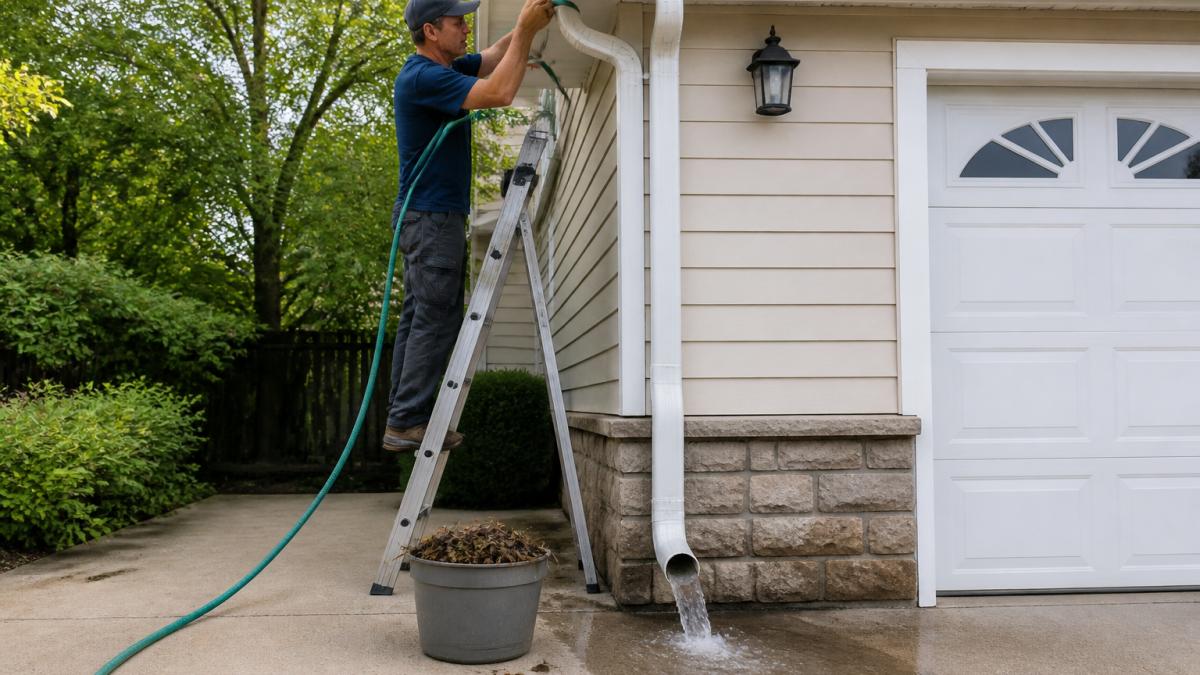
A few rules make this work:
- Feed the hose down gently. Forcing it can crack a joint.
- Use a nozzle that gives a straight, strong stream.
- Have a helper watch the bottom and signal you.
If the hose will not pass a certain point, you have hit a solid blockage. Do not keep pushing. Move to the auger method below.
How to Clean Underground Gutter Drains
Underground gutter drains fail differently from above-ground downspouts, and the biggest time-waster is snaking a buried line when the real clog is still in the downspout. Before you disconnect anything, run a two-minute diagnosis to isolate the blockage.
Diagnostic Decision Tree: Above-Ground vs. Underground
Work through these tests in order. Stop at the first one that fails.
- Test the downspout alone. Disconnect the bottom elbow from the buried drain and run water through the downspout. If water flows freely out the elbow, the downspout is clear and the clog is underground. If it backs up, repeat the hose-flush step above.
- Test the buried line from the outlet. If you can reach the discharge point (pop-up emitter, dry well, or curb outlet), feed a hose backward into the buried line. If water backs up at the outlet, the clog is between the outlet and the downspout connection.
- Check for surface clues. Water surfacing in the yard above the buried run, a sunken strip of lawn, or a soft spot after rain points to a crushed or separated pipe rather than a debris clog. No auger will fix that.
- Confirm the discharge point is open. Soil, mulch, or a plugged emitter can mimic a buried clog. Clear the outlet and retest before you snake.
This sequence keeps you from disassembling a clear downspout or snaking a line that is actually crushed.
Material Considerations Before You Snake or Flush
Pipe material changes what is safe to do. Most practitioners find that the wrong tool does more damage than the clog.
- PVC (rigid schedule 40): tolerates a hand auger and moderate hose pressure. Avoid high-pressure sprayers, which can crack fittings at glued joints.
- Corrugated plastic (black flexible tile): the ribs catch auger heads and tear the inner wall. Use a hose flush first; if you snake, use a small head and feed slowly. High pressure can blow a fitting apart underground.
- Metal (galvanized or aluminum): seams and elbows are the weak points. A kinked auger cable can crease the pipe. Keep water pressure moderate and stop at any hard resistance.
If you do not know the material, start with the least aggressive method: a garden hose flush from the outlet end.
Checking the Discharge Point and Disconnecting the Downspout
Clear any debris or soil covering the discharge opening. Then disconnect the downspout from the underground drain at the bottom elbow. This separates the two systems so you can test each one.
Run water through the downspout alone. If it flows out the bottom elbow, the downspout is clear and the blockage is in the buried pipe. If it backs up, the clog is still in the downspout and you should repeat the hose-flush step.
Using a Drain Auger or Plumbing Snake
Feed a drain auger into the underground drain opening and turn the crank as you push. The auger breaks up sediment and pulls back roots or packed debris.
For a long buried run, a plumbing snake with a larger head works better. Stop if the auger jams hard. That often means a crushed pipe, and no amount of snaking will fix it.
Never pour chemical drain cleaner into a gutter drain. It can harm plants, damage pipe joints, and does not solve a debris clog. Mechanical clearing is the safe fix.
Downspout Drain Backing Up? When to Stop and Call a Professional
A downspout drain backing up after you have cleared the top and flushed the pipe usually points to a buried problem. Stop and call a professional if:
- Water still backs up after a full flush and auger pass
- The auger hits a hard stop that will not clear
- You see a collapsed or separated pipe section
Those signs point to a crushed line, a broken joint, or root intrusion. A pro can camera the line and tell you whether it needs repair or replacement. Pushing further on your own risks damaging the pipe and the siding around it.
Downspout Clog Prevention and Seasonal Maintenance
Prevention is where most homeowners save the most money, but a vague “clean twice a year” rule misses the seasonal triggers that actually cause clogs. Tie maintenance to leaf fall, storm cycles, and routine gutter cleaning, and add a plan for handling the debris you pull out.
Seasonal Maintenance Schedule
- Early spring: Clear gutters and downspout openings after winter debris and shingle grit. Rinse screens and strainers. Confirm the underground drain outlet is open before spring rains.
- Late spring: After heavy pollen and seed drop, check the top elbows and strainers. Seeds and pollen bind into a paste that blocks flow.
- Late summer: Inspect joints and seams for leaks after the first heavy storms. Check that downspouts discharge away from the foundation.
A simple log, date, what you cleared, and any leaks spotted, turns this into a repeatable plan instead of a guess.
Safe Handling and Disposal of Removed Debris
What you pull out of a downspout has to go somewhere, and how you handle it matters for your lawn, your storm drain, and your foundation.
- Catch debris in a bucket or tarp. Do not drop it onto the roof or lawn, where it washes back into the gutter or stains siding.
- Keep debris out of storm drains. Leaves and grit flushed into a curb inlet contribute to municipal blockages and can carry pollutants. Bag and compost or dispose of debris according to local yard-waste rules.
- Manage runoff at the discharge point. Direct water at least several feet away from the foundation onto a splash block or gravel bed. Standing water at the outlet is a sign the discharge point needs regrading or an extension.
The cheapest clog is the one you prevent. A seasonal schedule tied to leaf fall and storms, plus disciplined debris handling, stops most blockages before they start.
If ladder work or roof height makes you uneasy, a maintenance crew can handle the gutters, downspouts, and window cleaning in one visit. Simply Superior Window Cleaning offers flexible maintenance schedules and virtual quotes, so you can keep the whole exterior on track without climbing a ladder yourself. Reach out through our free quote request to get started.
Safety Precautions and Tool-Specific Risks
Safety comes first, because most downspout injuries happen on the ladder, not in the pipe. Set the ladder on level ground, keep three points of contact, and never overreach.
Tool risks matter too:
- Hoses: high pressure can spray debris into your eyes. Wear eye protection.
- Augers: the cable can kink or snap under load. Feed it slowly.
- Pressure sprayers: too much force can crack plastic pipe or loosen joints.
- Leaf blowers: wet debris flies back at the operator. Keep your distance.
Stop work in high wind or on a wet roof. If a downspout runs more than one story up, or the roof pitch is steep, leave it to a trained crew.
Photograph each downspout joint before you disconnect it. Reassembly is faster when you have a reference, and you will spot a worn gasket before it leaks.
Clearing downspout clogs is a diagnosis job first and a muscle job second. Find the blockage, pick the right tool, and know when to stop. Do that, and your gutters will move water the way they should.
Frequently Asked Questions
Can a garden hose unclog a downspout?
A garden hose clears most above-ground downspout clogs, especially loose leaves, twigs, and dirt packed near the top opening. Feed the hose down from the top and let water pressure push debris through. If water backs up at the top instead of draining, the blockage is likely below the reach of the hose or inside an underground drain pipe, which calls for a drain auger or a professional inspection.
Why is my downspout drain backing up?
A downspout drain backing up usually means debris has collected at the gutter outlet, inside the downspout run, or in the underground drain pipe. Sediment, roof grit, and shingle granules settle at elbows and seams, narrowing the pipe over time. Disconnect the downspout from the underground drain and test each section separately to find where the water stops moving.
How can you tell whether a downspout clog is underground?
If water flows freely out of the downspout when you disconnect it from the drain but backs up when reconnected, the clog sits in the underground pipe. Another sign is water pooling or soggy ground near the discharge point. Test with a garden hose at low pressure first, then escalate to an auger if the pipe run stays blocked.
When should you call a professional to clear a downspout?
Call a professional when an auger cannot reach the blockage, when the pipe run has collapsed or separated at a joint, or when clearing requires working from a ladder at height you are not comfortable with. Recurring clogs in the same spot often point to a damaged drain pipe that needs repair, not another round of flushing.
Water backing up at the foundation is a problem you want to solve before the next storm, not after. Simply Superior Window Cleaning handles gutter maintenance, window cleaning, and exterior care for homes and commercial buildings up to four stories, with flexible schedules and virtual quotes that save you a site visit. Get started with Simply Superior Window Cleaning and keep your downspouts flowing all season.