
Last Updated: November 14, 2026
Quick Summary
Commercial exterior cleaning for multi-tenant buildings means routinely washing shared surfaces such as facades, windows, rooflines, walkways, and parking areas on a schedule that protects both appearance and materials. The right method depends on the surface, so glass and painted facades suit soft washing while concrete walkways suit pressure washing.
- Match the cleaning method to each surface rather than applying one approach across the whole building.
- High pressure can strip paint or force water behind siding, so check the material first.
- Walk the property and list every surface, its material, and its condition before scheduling.
- Notify tenants in writing with dates, hours, and blocked areas, and keep entrances usable throughout.
- Glass and storefronts need cleaning every one to three months, while facades and walkways need two to four times a year.
Table of Contents
- Why Exterior Cleaning Matters for Multi-Tenant Buildings
- Commercial Building Exterior Cleaning: What the Work Covers
- Soft Washing vs. Pressure Washing: Choosing the Right Method
- Commercial Pressure Washing for Concrete, Walkways and Parking Areas
- Cleaning an Occupied Building Without Disrupting Tenants
- Setting a Commercial Building Maintenance Schedule
- Booking Your Exterior Cleaning Plan With Simply Superior
- Frequently Asked Questions
Why Exterior Cleaning Matters for Multi-Tenant Buildings
Exterior cleaning is one of the few maintenance tasks that every tenant sees, every day.
In a multi-tenant building, the stakes are higher. Dirt, algae, and staining rarely affect one unit alone.
Most property managers do not need a one-time deep clean. They need a plan that keeps the exterior presentable through every season while disturbing tenants as little as possible.
Commercial Building Exterior Cleaning: What the Work Covers
A commercial exterior cleaning job usually covers more than the glass people notice first. A thorough scope typically includes:
- Storefront and office windows, inside the frames and along the sills
- Building facades, including brick, stucco, metal panels, and painted surfaces
- Rooflines, eaves, and gutters where dirt and debris collect
- Entrances, canopies, awnings, and signage
- Sidewalks, walkways, and parking lots
Each surface reacts differently to water pressure and cleaning solution. Glass tolerates a gentle approach well, while concrete and masonry often need more force. Painted and stucco surfaces can be damaged by aggressive methods, which is why method selection matters.
A useful first step is to walk the property and list every surface, noting its material, its condition, and how visible it is from the street. That list becomes the basis for a scope of work and a realistic schedule.
Soft Washing vs. Pressure Washing: Choosing the Right Method
Soft washing and pressure washing are both common in commercial work, but they suit different jobs. Soft washing uses low pressure and a cleaning solution to remove organic growth such as algae, mold, and mildew. Pressure washing uses high-pressure water to strip away dirt and grime from hard surfaces. On a multi-tenant building, the right choice depends on four variables: facade material, soil type, height, and surface condition.
Step 1: Identify the Material
Material sets the hard limits. Glass, painted metal, stucco, and painted wood tolerate low pressure well and can be damaged by high pressure. Concrete, pavers, and unpainted masonry can take more force. Brick is the tricky one: the face is durable, but mortar joints and older, soft-fired brick can erode under a direct high-pressure stream.
Step 2: Identify the Soil
Soil type determines the chemistry as much as the pressure. Organic growth, algae, mold, mildew, and the green film that spreads across north-facing walls, responds to a cleaning solution and dwell time, not force. Mineral staining, rust, and efflorescence need different treatments. Oil, tire marks, and gum on concrete need heat, degreaser, or focused pressure. Matching the solution to the soil prevents repeat passes and reduces the chance of damage.
Step 3: Factor In Height and Access
Height changes the method. Work above roughly one story usually requires a lift or extended wand, and the higher the surface, the more the crew must control overspray and runoff. Upper facades and rooflines are often soft washed because pressure at height is harder to control. Ground-level concrete is where pressure washing earns its place.
Step 4: Assess Condition
Condition decides whether a surface is a candidate for cleaning at all. Cracked stucco, loose paint, failing sealant, and damaged mortar should be repaired before washing, not after. Washing a failing surface can force water behind the finish and turn a cleaning job into a repair job.
Method Comparison by Surface
| Surface | Best Method | Why |
|---|---|---|
| Glass storefronts and windows | Soft washing | Gentle, leaves no streaks when rinsed well |
| Painted or stucco facades | Soft washing | Avoids stripping paint and forcing water behind finishes |
| Concrete walkways and parking areas | Pressure washing | Removes oil, gum, and heavy staining |
| Brick and masonry | Either, depending on condition | Soft washing for growth, pressure for hard grime |
| Roof and gutter lines | Soft washing | Removes algae without damaging shingles or seams |
| Metal panels and painted doors | Soft washing | Prevents chipping and water intrusion at seams |
Many properties need both methods on the same visit. The key is matching the method to each surface rather than applying one approach across the whole building.
Watch out: high pressure on a painted facade can strip paint or force water behind siding, and low-pressure soft washing on heavy concrete staining may leave marks behind, both failures usually trace back to skipping the material and soil checks above.
What Drives the Price
Pricing for commercial exterior cleaning depends on the building’s size, height, number of surfaces, access requirements, and how often the work is scheduled. Pricing depends on the building’s size, height, and scope.
Several factors reliably push the price up:
- Building height, since taller work requires lifts or extended equipment
- Total surface area and the number of separate facades
- Heavy staining, growth, or buildup that needs extra passes
- Limited access, such as tight parking or restricted loading areas
- Scheduling outside normal business hours
- Water access and containment needs, which may require a water source or recovery equipment on site
Property managers who compare quotes should confirm that each one covers the same scope, the same methods, and the same frequency. A low quote that assumes one method for the whole building is not the same job as a quote that matches methods surface by surface.
Commercial Pressure Washing for Concrete, Walkways and Parking Areas
Concrete walkways, entrances, and parking areas collect oil, tire marks, gum, and debris. These areas shape how visitors judge the property the moment they arrive, so they deserve regular attention.
Pressure washing works well on these hard surfaces. The right pressure setting matters, though. Too much force can etch concrete, scar pavers, or damage expansion joints.
Keep these areas clear before work begins. Move vehicles, signs, and loose items so the crew can reach the full surface.
Cleaning an Occupied Building Without Disrupting Tenants
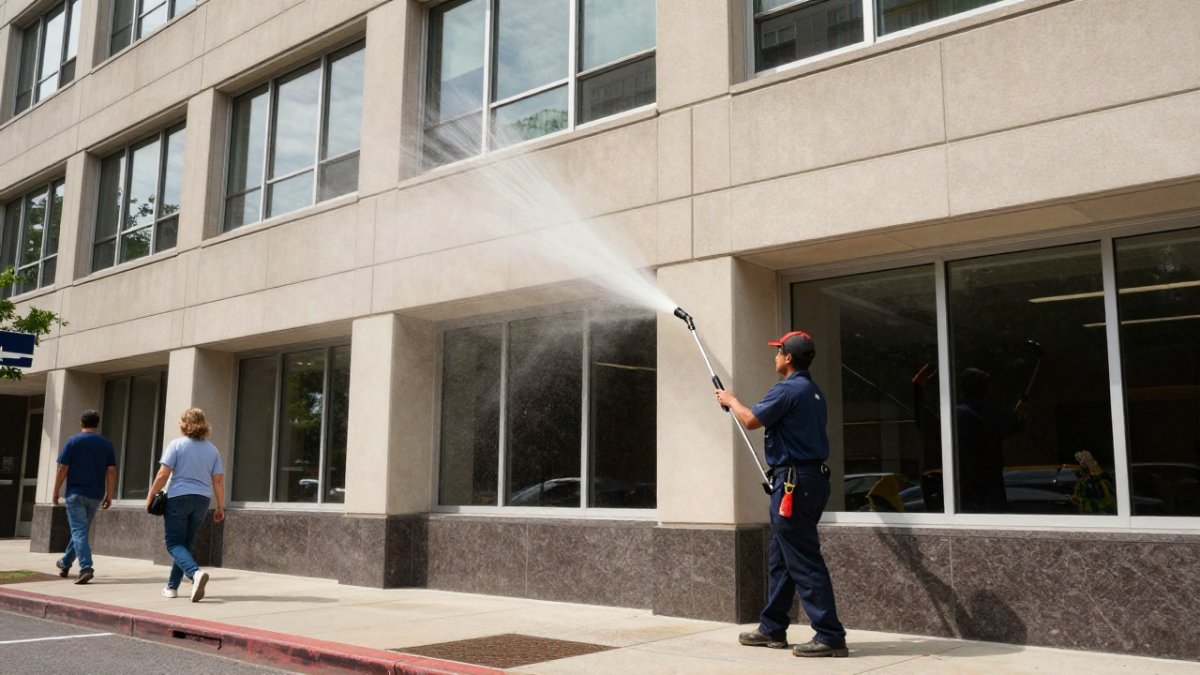
Cleaning an occupied building takes planning. Tenants are working, customers are coming and going, and nobody wants to be splashed or blocked in. The properties that run smoothly treat the job as a phased workflow rather than a single visit, and they coordinate access before the crew arrives.
Phase 1: Inspect and Scope
Walk the property before scheduling. List every surface, note its material and condition, and flag anything that needs repair first. Identify entrances, loading docks, emergency exits, outdoor seating, signage, and landscaping that the work will affect. This walk-through becomes the scope of work and the basis for the tenant notice.
Phase 2: Notify Tenants and Confirm Access
Send a written notice that describes the work, the dates, the hours, and any areas that will be temporarily blocked. Give tenants a contact for questions and a deadline to flag conflicts such as deliveries, events, or customer appointments. For buildings with many tenants, a short pre-work meeting with the property manager and the crew lead catches most scheduling conflicts before they become complaints.
Phase 3: Schedule Around Operating Hours
Match the schedule to how each tenant uses the space. Early morning or late afternoon often works best for entrances and storefronts. Weekend work can suit office buildings. Retail and food-service tenants usually need their frontage clear during business hours, so plan those surfaces for before opening or after closing. Stagger the work by zone so no single tenant loses access to every entrance at once.
Phase 4: Control the Work Zone
Protect pedestrians and vehicles with cones, signage, and clear work zones at all times. Keep emergency exits, loading docks, and at least one tenant entrance usable throughout the job. Choose low-impact methods near occupied spaces: soft washing near open windows and doors keeps water and solution where they belong. Cover or move outdoor furniture, signage, and anything that could be splashed.
Phase 5: Manage Water, Runoff, and Chemicals
Plan for runoff before the first drop lands. Confirm where water and cleaning products will drain, and keep them out of storm drains, landscaping, and areas where they should not go. Protect plants and grass with covers or barriers, and follow label directions for dilution and disposal. Containment and recovery equipment may be needed where drains are sensitive.
Watch out: washing without checking drain routes can send cleaning solution into storm drains or plant beds, which creates both environmental and landscaping problems that outlast the cleaning job.
Phase 6: Post-Work Check and Sign-Off
Walk the property with the property manager after the crew finishes. Confirm that every surface in the scope was cleaned, that no damage occurred, and that access areas are clear. Photograph the results and file them with the inspection record. A short sign-off at each visit prevents disputes and builds the history that informs the next schedule.
The goal is simple: tenants should notice the results, not the work.
Setting a Commercial Building Maintenance Schedule
Exterior cleaning works best on a schedule rather than in reaction to complaints. Most multi-tenant buildings do well with a plan that combines routine service with seasonal attention. Typical frequencies include:
- Glass and storefront windows: every one to three months, depending on traffic and exposure
- Facades and walkways: two to four times a year
- Gutters and rooflines: at least twice a year, and after heavy seasonal debris
- Parking areas: quarterly or as needed for oil and staining
Many property managers consider a recurring maintenance contract because it keeps the building consistently presentable. Simply Superior Window Cleaning offers flexible maintenance schedules.
Keep a simple inspection checklist for each visit. Record the condition of each surface, note any damage or staining that needs attention, and review the list with the cleaning provider each quarter. Over time, this record shows where cleaning frequency should increase and where it can be reduced.
Booking Your Exterior Cleaning Plan With Simply Superior
A clean exterior protects your building, your tenants’ impression, and your property value. The right method, a sensible schedule, and a crew that respects occupied spaces make the difference between a building that looks maintained and one that looks neglected.
Simply Superior Window Cleaning provides commercial and residential window cleaning across Ventura and North LA Counties, with trained technicians, monthly safety meetings for staff, and the capacity to handle contracts of all sizes. Virtual quote options are available to start the process.
Frequently Asked Questions
What does commercial exterior cleaning include?
Commercial exterior cleaning typically covers building facades, storefronts, windows, entrances, rooflines, walkways, parking areas and dumpster pads. On multi-tenant properties, providers often also clean shared common areas and signage. The exact scope should be defined in writing before work begins so property managers know which surfaces are covered and which are excluded. Current pricing depends on the building and scope, so contact us directly for a quote.
How often should a commercial building exterior be cleaned?
Most multi-tenant buildings benefit from exterior cleaning on a recurring schedule, with storefront glass and entrances often serviced more frequently than upper facades. Frequency depends on local conditions such as dust, traffic, coastal air, shade from trees and how visible the building is to customers. Many property managers set a quarterly or semi-annual cycle and add targeted cleanings before peak leasing seasons. Simply Superior offers flexible maintenance schedules.
What is the difference between pressure washing and soft washing?
Pressure washing uses high water pressure and works well on hard, durable surfaces such as concrete, walkways and parking lots. Soft washing uses low pressure combined with a cleaning solution to remove algae, mold, mildew and grime from delicate surfaces like stucco, painted siding and building facades without damaging them. Many commercial jobs use both methods, with soft washing on the building and pressure washing on hardscape. The right choice depends on the material being cleaned.
How should property managers prepare tenants for exterior cleaning?
Give tenants written notice ahead of the service window, explaining which areas will be affected, when work will happen and whether entrances or parking will be temporarily restricted. Ask tenants to move vehicles from work zones and close or cover outdoor furniture or equipment. Coordinate with tenants who have early opening hours or customer-facing entrances so cleaning can be scheduled around their needs. Clear communication reduces complaints and keeps business operations running smoothly.