
Last Updated: November 7, 2026
Quick Summary
Professional solar panel maintenance is worth the cost only when the value of the electricity recovered by cleaning exceeds the price of the visit. Compare your lost production against your electricity rate and the cleaning quote; if the visit pays back within a season, clean, and if it stretches past a year, wait.
- A professional visit combines cleaning with a basic inspection of panels, racking, wiring, and inverter readouts.
- A low-dust home with regular rain may need one cleaning a year, while dusty or tree-heavy homes may need two or three.
- Clean when you see visible buildup and monitoring shows a sustained dip against a comparable clean period.
- DIY cleaning risks falls, scratches, and warranty issues, so use a soft brush and plain water only.
- Many panel warranties exclude damage from improper cleaning, so read your warranty before any DIY attempt.
Table of Contents
- The Real Question Behind Solar Panel Maintenance Costs
- What Professional Solar Panel Maintenance Includes
- Solar Panel Maintenance Cost Per Year: What to Budget
- Solar Panel Cleaning Cost and the Break-Even Math
- Your Solar Panel Maintenance Checklist
- DIY Cleaning Versus Hiring Solar Panel Maintenance Companies
- Warranties, Service Exclusions, and Maintenance Contracts
- Schedule a Free Solar Panel Cleaning Quote
- Frequently Asked Questions
The Real Question Behind Solar Panel Maintenance Costs
Most homeowners want a straight answer: does paying someone to clean your panels actually save you money, or is it a service you can skip? The honest answer depends on your soiling, your power rates, and how much output you’re losing. Solar panel maintenance is the routine work of keeping panels clean and the rest of the system checked so electricity generation stays close to its rated capacity. This guide breaks down what cleaning costs, what it recovers, and when professional solar panel maintenance is worth the cost.
The core idea is simple. Panels lose output when dust, pollen, and bird droppings block sunlight. Cleaning restores some of that lost production. If the recovered electricity is worth more than the service call, cleaning pays. If not, it doesn’t. That break-even math is what most guides skip, so we’ll walk through it.
What Professional Solar Panel Maintenance Includes
A professional visit covers more than a rinse. It combines cleaning with a basic inspection of the solar array.
Here’s what a typical service includes:
- A visual inspection of panels, racking, and wiring for damage
- Cleaning with a soft brush and low-pressure rinse, no abrasives
- A check of hard-to-reach panels and roof access points
- A look at the inverter and monitoring readouts
- Notes on any debris, cracks, or hot spots to flag for a licensed tech
Cleaning Versus Broader System Maintenance
Cleaning is one piece of solar panel maintenance, not the whole thing. Cleaning handles surface soiling. Broader maintenance covers electrical checks, inverter health, and mounting hardware.
Cleaning is generally handled by trained crews. Inverter or wiring work should go to a licensed electrician. Knowing the difference keeps you from overpaying for the wrong service.
A typical professional visit combines cleaning with a basic inspection of the array.
| Task | What it covers |
|---|---|
| Visual inspection | Panels, racking, and wiring checked for damage |
| Cleaning | Soft brush and low-pressure rinse, no abrasives |
| Hard-to-reach check | Hard-to-reach panels and roof access points |
| Inverter check | Inverter and monitoring readouts reviewed |
| Notes | Debris, cracks, or hot spots flagged for a licensed tech |
Solar Panel Maintenance Cost Per Year: What to Budget
Your solar panel maintenance cost per year depends on how often you clean and whether you add a contract. Pricing varies by panel count, roof pitch, and access, so it is best to request a quote for your home.
Budget for two things:
- Cleaning visits based on your local soiling and rainfall
- Occasional inspections or electrical checks as the system ages
A low-dust home with regular rain may need one cleaning a year. A home near fields, trees, or a busy road may need two or three. Ask for a written quote that lists what each visit covers.
Solar Panel Cleaning Cost and the Break-Even Math
Here’s the part most guides leave out. Cleaning pays off only when the value of recovered electricity beats the cost of the visit. You can estimate this yourself with a short calculation, and you can sanity-check the result against your monitoring data before you book anything.
The break-even test:
- Note your system size in kilowatts and your recent production from monitoring. Use a clean, sunny stretch as your baseline, not a cloudy week.
- Estimate your production loss from soiling. A common rule of thumb is a small single-digit percentage for light dust, more for heavy soiling, pollen crust, or bird droppings. If you are unsure, use a conservative low-end figure first and see whether the math still works.
- Multiply lost production by your electricity rate to get the monthly dollar loss. If your utility uses tiered rates or time-of-use pricing, use the rate that applies to the hours your panels actually produce.
- Compare that to the cleaning cost. If recovered value exceeds the price within a reasonable window, clean. If it takes more than a season or two to recover the cost, wait.
A worked pattern looks like this. Suppose a system loses a modest percentage of output to soiling, the homeowner pays a residential electricity rate, and a cleaning quote comes in for a small array. Multiply the lost kilowatt-hours by the rate to get the monthly value of the lost production, then divide the cleaning price by that monthly value to see how many months of recovered production it takes to pay back the visit. If the answer is a few months, cleaning is easy to justify. If the answer stretches past a year, the soiling is probably light and rain is doing most of the work already. Run the numbers with your own quote and your own monitoring data rather than borrowing someone else’s example.
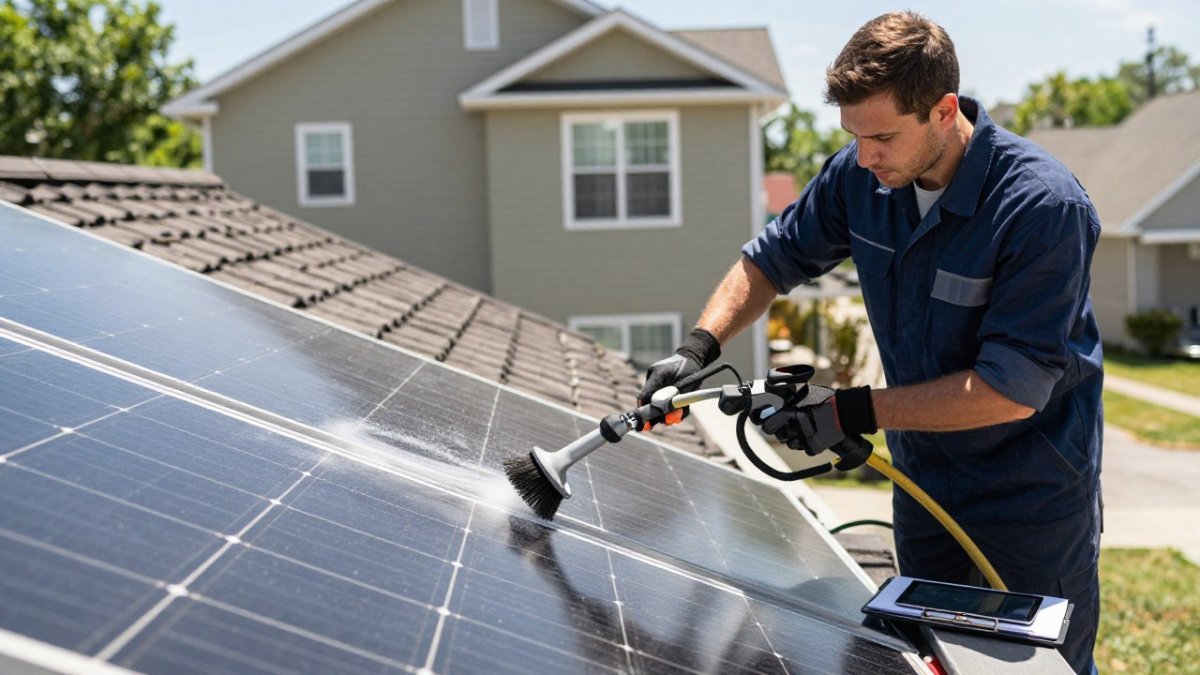
For a system with a modest loss and a high power rate, cleaning can pay back within a season. For a lightly soiled array in a rainy area, the math may say wait. The calculation is only as good as the loss estimate, so treat the first pass as a screen, not a verdict.
Watch out: soiling losses are easy to overstate. Shading from a new tree, a failing inverter, a tripped breaker, or seasonal sun-angle changes can all look like dirt on a production chart. Before you attribute a dip to soiling, confirm you can see buildup on the glass and that the drop lines up with a dry, dusty stretch rather than an equipment fault.
Using Monitoring Data to Separate Dirt From Other Losses
Your inverter or monitoring app is the cheapest diagnostic you own. Compare current production to a clean baseline from a similar sunny period, same month, similar weather, similar sun angle. If output has dropped and you can see soiling on the panels, cleaning is the likely fix. If output is steady and panels look clear, hold off. If output dropped but the panels look clean, the cause is probably shading, equipment, or seasonal variation, and a cleaning visit will not recover it.
A practical decision rule: clean when you can see visible buildup and monitoring shows a sustained dip against a comparable clean period; investigate before cleaning when the dip appears without visible soiling; and skip cleaning when panels look clear and output tracks the season. Signs your solar panels need professional cleaning include visible buildup, a steady output dip, and droppings that rain won’t wash away.
Your Solar Panel Maintenance Checklist
A simple solar panel maintenance checklist keeps you ahead of problems. Run through it each season.
- Check monitoring output against last month and last year
- Look for visible dust, pollen, or bird droppings
- Confirm no new shade from growing trees
- Note any cracked glass or loose wiring
- Clear leaves and debris from around the array
- Schedule cleaning when output drops or soiling is heavy
- Book an inspection if the inverter shows a fault
Monitoring Data and the Decision Rule for Cleaning
Let your monitoring system make the call. Compare current production to a clean baseline from a similar sunny period.
If output has dropped and you can see soiling on the panels, clean. If output is steady and panels look clear, hold off. Signs your solar panels need professional cleaning include visible buildup, a steady output dip, and droppings that rain won’t wash away.
DIY Cleaning Versus Hiring Solar Panel Maintenance Companies
You can clean panels yourself if they’re easy to reach and lightly soiled. For steep roofs, tall arrays, or heavy soiling, solar panel maintenance companies are the safer call.
The trade-offs:
- DIY: lower cost, but real risk of falls, scratches, and warranty issues
- Professional: higher upfront cost, but safer access, proper tools, and a documented visit
Safe DIY Boundaries and Damage Prevention
If you clean your own panels, stick to these rules:
- Use a soft brush and plain water, never abrasives or harsh soaps
- Rinse with low pressure, never a pressure washer on the glass
- Stay off steep or wet roofs
- Clean early or late, not in peak heat
A common mistake is scrubbing dry panels, which grinds dust into the glass. Another is spraying cold water on hot panels, which can stress them. When in doubt, call a pro.
Warranties, Service Exclusions, and Maintenance Contracts
Before you clean or hire, read your warranty. Many panel warranties exclude damage from improper cleaning or non-approved methods. That’s why how to clean solar panels without voiding warranty matters before any DIY attempt.
A maintenance contract bundles cleaning and inspections on a schedule. Compare coverage, cost, and exit terms with a solar panel maintenance contract benefits review so you know what you’re signing. Contracts suit property managers and larger arrays. One-off visits suit simple residential systems.
Watch out: some contracts lock you in for years with steep exit fees. Read the fine print first.
Schedule a Free Solar Panel Cleaning Quote
The fastest way to know if professional solar panel maintenance is worth the cost is to get a real quote for your home. Residential solar panel cleaning services cover the details, and you can schedule a free solar panel cleaning quote to see the numbers for your array.
Simply Superior Window Cleaning offers virtual quotes and flexible maintenance schedules for its services in Ventura and North LA Counties. Get started with Simply Superior Window Cleaning and keep your system producing at its best.
Wondering whether your panels are losing output to soiling? Get a free quote and find out what cleaning would recover for your system.
Frequently Asked Questions
How much does solar panel maintenance cost?
Professional solar panel cleaning usually runs a few hundred dollars per visit depending on panel count, roof pitch, and access, while an annual maintenance contract bundles cleaning with inspection. Because pricing depends on system size and site conditions, ask for a virtual quote rather than relying on national averages. Set your budget against what the system earns: if a cleaning costs less than the value of the electricity production it recovers, the service pays for itself.
Is solar panel cleaning worth it?
It depends on your soiling. Panels in dusty, pollen-heavy, or bird-traffic areas lose more output than panels kept clean by regular rain. Check your inverter or monitoring app for a gradual drop in production that does not match weather, then compare the lost kilowatt-hours against the cleaning price. If the recovered electricity is worth more than the service call, professional cleaning is worth it; if production is steady, you can wait.
Can I clean solar panels myself?
You can handle light rinsing on ground-level or easily reached arrays using a soft brush, plain water, and low pressure. Skip abrasive pads, harsh soaps, and high-pressure washing, which can scratch glass or force water past seals. Stay off steep roofs and away from hard-to-reach panels, since falls are the biggest risk. If your array sits high or your warranty requires documented professional service, hire solar panel maintenance companies instead.
Does cleaning solar panels improve their efficiency?
Cleaning restores output that soiling has already reduced; it does not raise efficiency above the panel’s rated performance. Heavy dust, pollen, leaves, and bird droppings block sunlight and lower electricity generation, so removing them brings production back toward baseline. Monitoring before and after a cleaning shows the actual gain. If your system performance has not dropped, cleaning will not add measurable energy output, which is why a maintenance checklist should always start with your monitoring data.