Table of Contents
- Why Solar Panel Cleaning Matters for System Performance
- Understanding Solar Panel Warranty Exclusions
- How Often to Clean Solar Panels for Optimal Efficiency
- DIY Solar Panel Cleaning Tools and Materials
- Step-by-Step Process for Cleaning Solar Panels Safely
- When to Hire Residential Solar Panel Cleaning Services
- Common Mistakes That Void Warranties and Damage Panels
- Conclusion
Last Updated: August 17, 2026
Why Solar Panel Cleaning Matters for System Performance
Dirty solar panels lose efficiency. Dust, pollen, bird droppings, and mineral deposits accumulate on the surface, blocking sunlight from reaching the photovoltaic modules beneath. Over time, this buildup reduces energy output and forces your inverter to work harder to convert what light does get through. The result is measurable: panels coated with dirt and debris produce noticeably less electricity than clean ones.
The challenge isn’t just performance, though. It’s knowing how to clean solar panels without voiding warranty coverage. Many homeowners hesitate to touch their panels at all, fearing they’ll damage something expensive or trigger a warranty exclusion. Others dive in unprepared and use pressure washers or harsh chemicals that cause real problems. Between these two extremes lies a practical middle ground: understanding what your warranty actually protects, what methods are safe, and when professional help makes sense.
At Simply Superior Window Cleaning, we’ve helped homeowners throughout the region maintain their solar systems while protecting their investment. The approach is straightforward once you know the rules.
Understanding Solar Panel Warranty Exclusions
Your solar panel warranty is not a blank check. Most manufacturers cover defects in materials and workmanship, but they explicitly exclude damage caused by improper maintenance or cleaning. Read your manufacturer specifications carefully, they’re the source of truth for what voids coverage.
Common warranty exclusions include damage from high-pressure washing, abrasive materials, corrosive solvents, and improper handling. Many warranties also require that you follow the manufacturer’s recommended maintenance schedule. If your documentation says "do not use pressure washers above 50 PSI," that’s not a suggestion, it’s a condition of coverage. Exceeding that threshold, even by accident, can void your warranty.
The key phrase in most warranties is "normal wear and tear." Cleaning your panels is considered normal maintenance. What’s not normal is using methods that stress the frame, damage the glass, or introduce moisture where it shouldn’t be. Thermal shock, rapid temperature changes caused by spraying cold water on hot panels, is another common exclusion. If you wash your panels on a hot afternoon and use cold water, you’re creating exactly the stress condition manufacturers warn against.
Document your cleaning method. Keep records of what you used, when you cleaned, and what condition the panels were in. If a manufacturer ever questions whether you voided the warranty, documentation protects you. Take photos before and after cleaning. Note the date and the materials used. This simple practice has saved homeowners from warranty disputes.
How Often to Clean Solar Panels for Optimal Efficiency
The answer depends on your location and weather patterns. In dusty or arid regions, panels accumulate debris faster. In areas with regular rain, natural precipitation handles some of the work. Most manufacturers recommend inspecting panels monthly and cleaning as needed, typically between two and four times per year for most homeowners.
If you live in an area with high pollen counts, frequent dust storms, or significant bird activity, you may need to clean more often. Conversely, if your region gets consistent rainfall and you’re in a relatively clean environment, annual cleaning might be sufficient. The real measure is performance: if your system output drops noticeably, cleaning is overdue.
Don’t confuse "optimal efficiency" with "maximum possible efficiency." Chasing perfect cleanliness every week wastes time and money. The goal is maintaining acceptable performance without overdoing maintenance. Most systems see meaningful output improvement after cleaning when dirt accumulation is visible, but marginal gains beyond that point don’t justify frequent intervention.
Keep a simple log of your cleaning schedule and system output before and after. Over time, you’ll see patterns that tell you the right frequency for your specific situation. This data also proves to warranty administrators that you’re following a reasonable maintenance plan.
DIY Solar Panel Cleaning Tools and Materials
Essential Equipment and Supplies
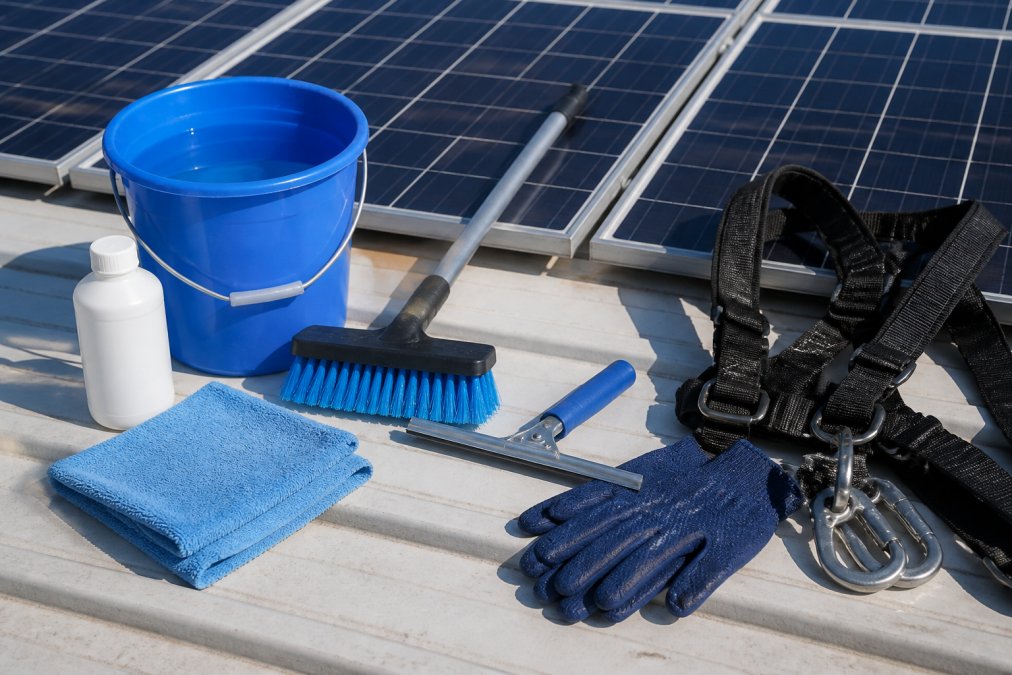
Start with the right tools. You need a long-handled soft-bristled brush or mop, a squeegee, and a bucket. The brush is your primary cleaning tool, soft bristles prevent scratching the glass surface of the photovoltaic modules. A squeegee helps remove water without leaving streaks or mineral deposits.
Water quality matters more than most people realize. Tap water contains minerals that leave spots and residue. Deionized water or distilled water is the standard for solar panel cleaning because it doesn’t leave mineral deposits. If you’re cleaning multiple times per year, investing in distilled water is worthwhile. Some homeowners use a basic water filter to reduce mineral content in tap water, though true distilled water is preferable.
For the cleaning solution, use only mild detergent mixed with water. A small amount of dish soap in a bucket of water works fine. The goal is to loosen dirt without introducing chemicals that could damage seals or leave residue. Mix enough solution to wet the panels thoroughly without oversaturating.
Safety equipment is essential if you’re working on a roof. A sturdy ladder, roof harness, and fall protection are non-negotiable. If you’re uncomfortable with heights or your roof is steep, this is the moment to hire a professional. Roof accidents are serious, and no cleaning job is worth that risk.
Materials to Avoid
Never use a pressure washer on solar panels. Even at lower PSI settings, pressure washers create concentrated force that can damage the frame, crack the glass, or force water into seals where it shouldn’t go. Manufacturer specifications almost universally prohibit pressure washing, and using one will void your warranty.
Abrasive materials are equally problematic. Steel wool, scouring pads, and rough cloths scratch the protective glass coating on panels. Once that coating is compromised, water penetrates more easily and efficiency drops. Stick with soft microfiber cloths and non-abrasive brushes.
Corrosive solvents, bleach, vinegar, ammonia-based cleaners, can damage the frame, degrade seals, and leave chemical residue. The panel’s frame is often aluminum, which reacts poorly to harsh chemicals. Stick to mild detergent and water. That’s genuinely all you need.
Avoid spraying panels when they’re hot. If you must clean on a warm day, do it early morning or late afternoon when panels have cooled. This prevents thermal shock, which stresses the glass and frame. Cold water on a 160-degree panel creates rapid temperature change that manufacturers specifically warn against.
Step-by-Step Process for Cleaning Solar Panels Safely
Safety Precautions for Roof Access
Before you touch anything on the roof, assess whether you should be up there at all. If your roof is steep, high, or you’re uncomfortable with heights, stop here. Call a professional. Roof falls are serious injuries, and they’re preventable.
If you proceed, use proper fall protection. A roof harness connected to a secure anchor point is non-negotiable. Test your harness and anchor before putting weight on it. Wear slip-resistant footwear. Never work alone, have someone on the ground who knows what you’re doing and can call for help if needed.
Choose a safe time to work. Avoid windy days, wet conditions, and times when the roof is hot. Early morning is ideal, panels are cool, the sun is low, and you have better footing. Never work during or immediately after rain when surfaces are slippery.
Inspect your ladder before using it. Make sure it’s stable, properly positioned, and long enough to reach safely without overextending. Three points of contact, two hands and one foot, or two feet and one hand, at all times. Move deliberately. Speed increases accident risk.
The Cleaning Process
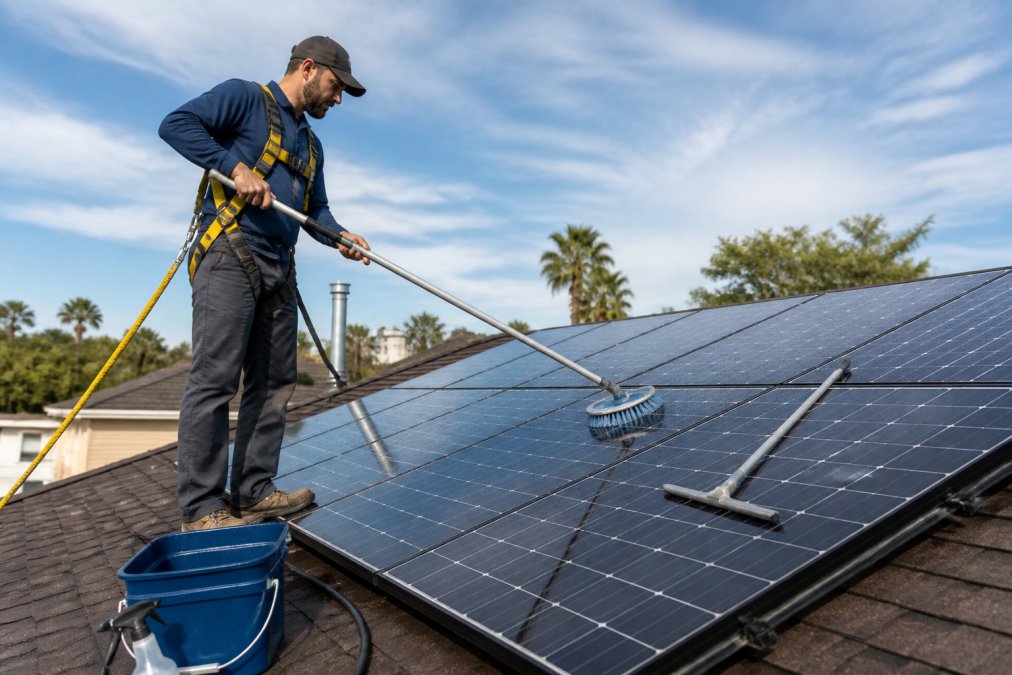
Start by rinsing the panels with water from a hose. This removes loose dust and debris without you touching anything. Use normal water pressure, just enough to wet the surface. Let the water run off and take the loose dirt with it.
Next, apply your mild detergent solution. Use the long-handled soft-bristled brush to gently scrub the panel surface. Work in one direction to avoid pushing dirt back over already-cleaned areas. Don’t scrub hard, gentle, consistent pressure is enough. The goal is to loosen stuck-on dirt, not to scour the glass.
Once you’ve scrubbed the panels, rinse thoroughly with clean water. Use your hose again, letting water cascade over the panels to remove all soap residue. Soap left on the surface will leave streaks and reduce light transmission.
Use the squeegee to remove excess water. Start at the top of each panel and pull downward in one smooth motion. This removes water without leaving mineral deposits. Work methodically across each panel, overlapping your strokes slightly to ensure complete coverage.
Let the panels air dry. Don’t use compressed air or blow them dry, that defeats the purpose of the squeegee. Natural drying prevents streaks and allows any remaining water to evaporate without leaving mineral deposits.
The entire process takes 30 to 60 minutes for a typical residential array, depending on panel count and roof accessibility. Plan for this time and work deliberately rather than rushing.
When to Hire Residential Solar Panel Cleaning Services
Professional cleaning makes sense in several situations. If your roof is steep, high, or you’re uncomfortable working at heights, hire someone. The cost of professional residential solar panel cleaning services is far less than the cost of a roof fall.
If your panels are heavily soiled or you haven’t cleaned them in years, professionals have the equipment to do the job safely and thoroughly. They understand warranty requirements and know how to avoid common mistakes. They also have insurance that covers accidents, which you don’t have if you’re doing the work yourself.
If you live in an area with frequent dust storms, heavy pollen, or significant bird activity, professionals can establish a regular maintenance schedule. They’ll clean on a predictable cycle, which keeps your system running optimally without the burden on you.
Consider professional cleaning if your system is large or complex. A 20-panel array is manageable for a homeowner. A 40-panel array or a system with multiple sections is more challenging and time-consuming. At that scale, professional service becomes economical.
Simply Superior Window Cleaning offers solar panel cleaning throughout the region with technicians trained in warranty-safe methods. Our team understands manufacturer specifications, uses proper safety equipment, and documents every cleaning to protect your warranty. We can provide a virtual quote to discuss your specific needs and schedule.
Common Mistakes That Void Warranties and Damage Panels
The most common mistake is using a pressure washer. Homeowners see pressure washing as a universal cleaning solution, but it’s explicitly prohibited on solar panels. The concentrated force damages frames, cracks glass, and forces water into places it shouldn’t go. This single mistake voids most warranties immediately.
Thermal shock is the second major error. Spraying cold water on hot panels on a sunny afternoon creates rapid temperature change that stresses the glass and frame. Manufacturers warn against this, and it’s easy to avoid by cleaning early morning or late afternoon.
Using abrasive materials, steel wool, scouring pads, rough cloths, scratches the protective coating on the glass. Once scratched, the coating degrades faster and water penetration increases. Stick with soft microfiber cloths and non-abrasive brushes.
Leaving soap residue is a subtle mistake that reduces efficiency. If you don’t rinse thoroughly, soap film blocks light. This isn’t a warranty issue, but it defeats the purpose of cleaning. Rinse until the water runs clear, then use the squeegee.
Climbing on panels is another common error. Your weight stresses the frame and can crack the glass. Walk only on the roof structure, never on the panels themselves. Even if panels are stronger than they look, manufacturers explicitly prohibit standing on them.
Ignoring manufacturer specifications is the umbrella mistake that covers all the others. Your warranty document lists prohibited methods. Follow it exactly. When in doubt, use the gentlest approach: soft brush, mild soap, cool water, squeegee, air dry.
Keeping your solar panels clean is straightforward once you know the rules. The challenge isn’t the cleaning itself, it’s understanding what your warranty allows and avoiding the methods that void coverage. If you’re uncertain about roof safety, uncomfortable with heights, or prefer to have professionals handle maintenance, Simply Superior Window Cleaning provides warranty-safe solar panel cleaning with experienced technicians who understand manufacturer requirements. Contact us for a free quote and let our team handle the details while you enjoy uninterrupted system performance.
Frequently Asked Questions
What voids a solar panel warranty?
Most solar panel warranties are voided by using high-pressure washers, abrasive scrubbers, corrosive solvents, or harsh chemicals. Walking directly on panels without protective padding, using hard water with mineral deposits, and failing to follow manufacturer specifications can also void coverage. Always consult your warranty documentation before cleaning, as terms vary by manufacturer. Professional residential solar panel cleaning services follow these restrictions to protect your investment.
Can you use pressure washers on solar panels?
No. Pressure washers create thermal shock and can damage the protective glass coating, crack cells, and void your warranty. High-pressure water may also force moisture into the panel frame, causing internal corrosion. Instead, use a soft-bristled non-abrasive brush, deionized or distilled water, and a squeegee for streak-free results. This gentle approach protects your system's performance and warranty compliance.
How often should solar panels be professionally cleaned?
Most systems benefit from professional cleaning 2-4 times per year, depending on your environment. Areas with heavy pollen, bird droppings, or dust accumulation may need quarterly cleaning. Monitor your inverter's output; a significant drop suggests dirt is blocking sunlight. Professional residential solar panel cleaning services assess your specific conditions and create a maintenance schedule that keeps your array at optimal efficiency without excessive costs.
Is it safe to clean solar panels yourself?
DIY cleaning is safe only if you follow strict precautions: use a stable ladder, wear a safety harness on steep roofs, avoid walking on panels, and use only soft-bristled brushes and deionized water. Never use pressure washers or abrasive materials. If your roof is higher than one story or steeply pitched, hire a professional. Safety equipment and proper technique are essential, roof falls cause serious injury, and panel damage is costly to repair.
This article was written using GrandRanker