
Last Updated: October 23, 2026
Quick Summary
Professional window cleaning glass removes harmful mineral deposits, acid rain residue, and environmental contaminants before they etch or weaken the surface. Regular professional cleaning prevents permanent damage like etching and scratching that cannot be repaired, protecting your glass integrity and extending window lifespan.
- Hard water minerals and acid rain cause permanent etching that no cleaning can restore once damage occurs.
- DIY cleaning with wrong tools, abrasive pads, or harsh chemicals scratches glass and damages protective coatings.
- Professional cleaning frequency ranges from every 4-6 weeks in hard water areas to every 8-12 weeks in normal conditions.
- Professionals use purified water, soft-bristle brushes, and quality squeegees that protect glass surfaces from damage.
- Documented maintenance plans with inspection records help catch early damage signs and prevent costly glass replacement.
Table of Contents
- How Professional Window Cleaning Protects Glass Integrity
- Understanding Glass Damage: Mineral Deposits, Etching, and Water Spots
- How to Clean Windows Without Scratching Glass
- Window Cleaning Tools and Equipment That Protect Glass
- How Often to Clean Windows for Long-Term Glass Protection
- Professional Window Cleaning Versus DIY: Why Glass Integrity Matters
- Conclusion
- Frequently Asked Questions
How Professional Window Cleaning Protects Glass Integrity
Glass doesn’t clean itself, and when you let dirt, minerals, and environmental contaminants build up, they don’t just look bad, they damage the glass itself, which is why professional window cleaning glass is essential to protect your property.
This guide explains how professional window cleaning protects glass integrity, what damages glass, and why DIY approaches often cause more harm than good. You’ll learn the specific methods that keep glass safe, the tools that matter most, and how often you actually need cleaning to prevent permanent damage.
Understanding Glass Damage: Mineral Deposits, Etching, and Water Spots
Glass damage happens slowly and silently. Most homeowners don’t realize their windows are being damaged until the harm becomes visible and permanent. Understanding the types of damage, and how they differ by glass type, is the first step to preventing them.
Hard Water Stains on Windows and Glass Etching
Hard water leaves mineral deposits on glass. When water sits on the surface and evaporates, it leaves behind calcium, magnesium, and other minerals.
Over time, mineral deposits etch into the glass surface. Learn how to prevent glass etching to protect your windows from this permanent damage. Etching is permanent damage.
Hard water stains develop faster in areas with high mineral content in the water supply. Learn more about how to remove hard water stains from glass windows to understand the specific solutions that work best.
Acid Rain and Surface Deterioration
Acid rain contains sulfuric and nitric acids (the EPA). When it falls on your windows, it leaves behind acidic residue. This residue slowly eats away at the glass surface, weakening it and creating a dull, hazy appearance.
The damage from acid rain is cumulative. One rainstorm won’t destroy your windows, but years of exposure will deteriorate the surface. Professional cleaning removes acidic deposits and protects the glass from ongoing deterioration. Regular maintenance prevents the buildup that leads to permanent surface damage.
How Glass Type and Coatings Change the Risk
Not all glass is the same. Coated, tinted, low-emissivity (low-E), tempered, and specialty glass each react differently to contaminants and cleaning methods. Low-E coatings, for example, are thin metallic layers that can be scratched by abrasive pads or etched by ammonia-based cleaners. Tinted glass can haze if harsh chemicals are used. Tempered glass is more resistant to impact but still susceptible to mineral etching. Professionals identify the glass type before cleaning, often by checking the manufacturer’s stamp or using a coating detector, and adjust their methods accordingly. This is a step DIY cleaners almost always skip.
Early Signs of Glass Damage: A Practical Inspection Checklist
Catching damage early is key to preventing permanent harm. Use this checklist to inspect your windows:
- White or cloudy spots that don’t come off with normal cleaning, likely mineral deposits.
- Rainbow-colored sheen on the glass, often a sign of coating damage or early etching.
- Fine scratches visible at an angle, caused by abrasive tools or grit.
- Hazy or dull areas that won’t clear, possible acid rain or chemical damage.
- Seal failure: fogging between panes, water stains at edges, or condensation inside, indicates a broken seal, not just surface dirt.
- Pitting or roughness when you run a fingernail across the surface, advanced etching.
If you spot any of these, a professional assessment can determine whether the damage is reversible. Removable deposits can often be cleaned; permanent etching cannot. Documenting these signs over time helps you track whether your maintenance plan is working.
How to Clean Windows Without Scratching Glass
Scratches are permanent damage. Once the glass surface is scratched, it cannot be repaired. The scratch weakens the structural integrity of the glass and can spread over time.
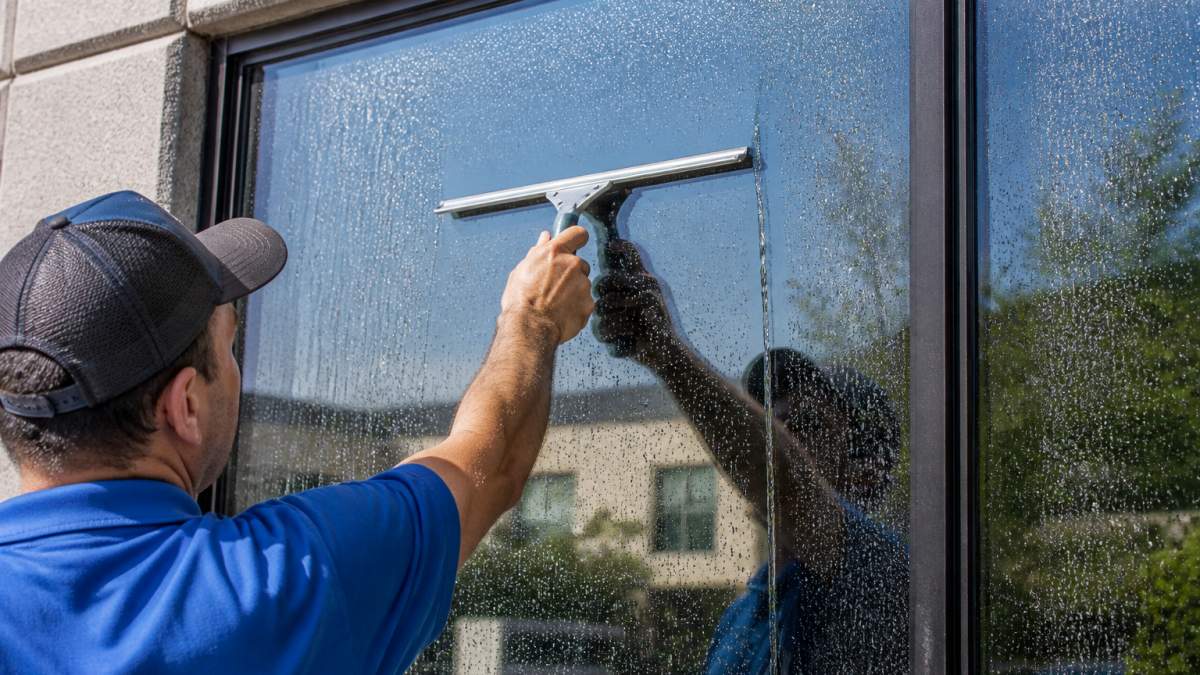
Most DIY cleaning causes scratches. Using the wrong tools, abrasive materials, or harsh scrubbing techniques damages the glass. Here’s how to clean without causing harm:
Use the right tools:
- Soft-bristle brushes instead of stiff ones
- Microfiber cloths instead of paper towels or old rags
- Squeegees with rubber blades instead of metal scrapers
- Water-fed poles for reaching high windows safely
Avoid these mistakes:
- Don’t use steel wool or scouring pads
- Don’t scrub hard or use aggressive pressure
- Don’t use newspaper or rough fabrics
- Don’t apply abrasive cleaning powders directly to glass
Use gentle technique:
- Wet the glass first with clean water
- Apply mild cleaning solution
- Let it sit for a moment to soften deposits
- Use light, even strokes with your squeegee
- Wipe edges with a soft cloth
The difference between professional cleaning and DIY is technique, pressure, and tools. Professionals know how much force to apply and which materials won’t damage the surface. They clean without scratching because they’ve been trained to do it safely.
Window Cleaning Tools and Equipment That Protect Glass
The tools you use determine whether your windows stay protected or get damaged.
Water-fed poles are essential for safety and protection.
Squeegees with quality rubber blades matter more than most people realize.
Purified or distilled water is critical. Tap water contains minerals that leave spots.
Soft-bristle brushes designed for glass cleaning are gentler than general-purpose brushes.
Mild cleaning solutions are formulated specifically for glass. They break down grease and grime without etching or damaging the surface.
Professional equipment is built to protect glass. Cheap tools save money upfront but can cause damage.
How Often to Clean Windows for Long-Term Glass Protection
Cleaning frequency depends on your environment, water quality, and building type. Regular cleaning prevents damage from accumulating, but the right schedule is not one-size-fits-all.
In areas with hard water: Windows need cleaning every 4-6 weeks. Mineral deposits form quickly, and frequent removal prevents etching. If you see white spots returning within days of cleaning, increase frequency.
In areas with acid rain or high pollution: Every 6-8 weeks is typical. Environmental contaminants build up and damage the surface over time. Urban and industrial areas often require the shorter end of this range.
In normal conditions: Every 8-12 weeks maintains glass integrity. This prevents dirt, dust, and grime from becoming embedded in the surface.
For high-rise or difficult-to-access windows: Professional cleaning every 3-4 months is practical and safe. DIY attempts at height create fall hazards and often result in missed spots and damage.
Frequency by Building Type and Exposure
- Single-family homes with mature trees: Every 8-12 weeks; pollen and sap season may require extra cleanings.
- Commercial storefronts: Every 4-6 weeks to maintain appearance and prevent contaminant buildup from traffic and exhaust.
- Coastal properties: Every 4-6 weeks; salt spray accelerates mineral deposition and corrosion.
- Industrial or near-highway buildings: Every 6-8 weeks; airborne particulates and acidic pollutants are higher.
Documented Maintenance Plans and Measurable Outcomes
A professional maintenance plan goes beyond a cleaning schedule. It includes:
- Initial inspection: Record existing damage (scratches, etching, seal failure) with photos and notes.
- Cleaning frequency tied to exposure: Adjust based on seasonal changes and observed deposit return rates.
- Before-and-after criteria: Define what “clean” means, no visible spots, no streaks, clear glass, and verify after each visit.
- Inspection records: Note any new damage or changes over time, so you can catch problems early.
This documentation turns glass care from a guessing game into a measurable process. It also helps you compare DIY versus professional results objectively. The key is consistency. One cleaning every year won’t protect your glass. Regular maintenance prevents damage from starting.
Professional window cleaning glass lasts longer than DIY because professionals use better water, better techniques, and better tools. Learn more about why professional window cleaning lasts longer to understand the science behind lasting results.
Cleaning frequency depends on your environment and water quality to prevent glass damage from accumulating.
| Environment | Recommended Frequency | Reason |
|---|---|---|
| Hard water areas | Every 4-6 weeks | Mineral deposits form quickly and cause etching |
| Acid rain or high pollution | Every 6-8 weeks | Environmental contaminants build up and damage surface |
| Normal conditions | Every 8-12 weeks | Prevents dirt and grime from embedding in surface |
| High-rise or difficult-to-access | Every 3-4 months | Professional cleaning is practical and safe |
| Coastal properties | Every 4-6 weeks | Salt spray accelerates mineral deposition and corrosion |
| Commercial storefronts | Every 4-6 weeks | Maintains appearance and prevents contaminant buildup |
| Industrial or near-highway | Every 6-8 weeks | Airborne particulates and acidic pollutants are higher |
Professional Window Cleaning Versus DIY: Why Glass Integrity Matters
This is where the real difference shows. DIY cleaning and professional cleaning produce different outcomes for glass.
DIY risks:
- Falls from ladders cause injuries and deaths
- Wrong tools scratch and damage glass
- Harsh chemicals etch surfaces
- Tap water leaves mineral deposits
- Inconsistent technique creates streaks and spots
- High windows are unreachable and unsafe
Professional advantages:
- Trained technicians use proper safety equipment
- Professional tools protect glass from damage
- Pure water prevents mineral buildup
- Consistent technique produces streak-free results
- High windows are cleaned safely with proper equipment
- Regular maintenance prevents damage before it starts
The cost of professional cleaning is an investment in protecting your glass. Learn what to expect from professional window washing so you understand the process and value. Replacing damaged windows can be expensive.
At Simply Superior Window Cleaning, our technicians undergo rigorous training to ensure every window is cleaned safely without damage. We offer professional exterior cleaning service with virtual quote options, so you know exactly what to expect before we arrive.
The choice between DIY and professional cleaning isn’t just about convenience, it’s about protecting your property. Glass damage is permanent. Once it happens, you’re paying to replace the glass.
Conclusion
Professional window cleaning protects glass integrity by removing harmful deposits before they cause permanent damage. Hard water minerals, acid rain, and environmental contaminants etch and weaken glass surfaces. DIY cleaning can cause damage through scratching, wrong tools, and harsh chemicals. Professional cleaning uses proper equipment, pure water, and trained technique to keep your glass clear and protected.
Simply Superior Window Cleaning provides expert cleaning services with technicians trained to protect glass integrity. We use professional-grade equipment and purified water. Schedule a free quote today and protect your windows with the care they deserve.
Frequently Asked Questions
Can improper window cleaning scratch or damage glass?
Yes. Using abrasive materials, harsh chemicals, or incorrect squeegee techniques can scratch and etch glass surfaces permanently. Professional window cleaners use soft-bristle brushes, mild detergents, and proper water quality to prevent damage. DIY methods that involve steel wool, scouring pads, or acidic cleaners on sensitive glass coatings risk significant harm. Professional window cleaning protects glass integrity by following manufacturer guidelines and using tested, safe methods.
What is the best way to remove hard water stains on windows?
Hard water stains form when mineral-rich water dries on glass. Professional cleaners use purified or distilled water to prevent new deposits and apply specialized solutions to dissolve existing mineral buildup without etching. Squeegee techniques ensure complete water removal, preventing spot formation. Vinegar-based solutions can work for light stains but may damage certain glass coatings. For stubborn hard water stains, professional equipment and expertise prevent the glass surface damage that aggressive scrubbing causes.
How often should windows be professionally cleaned?
Most homes benefit from professional window cleaning two to four times per year, depending on climate and environment. Coastal areas, high-pollen regions, and properties near construction sites need more frequent cleaning. Regular maintenance prevents mineral deposits, acid rain residue, and grime from bonding permanently to glass. Consistent cleaning schedules protect glass integrity by removing damaging substances before they etch or scratch the surface. Schedule a free quote to determine the right cleaning frequency for your property.
What tools do professional window cleaners use to avoid scratching glass?
Professional window cleaners use soft-bristle brushes, microfiber cloths, squeegees with rubber blades, and water-fed poles designed to protect glass surfaces. They avoid abrasive pads and steel wool that scratch or etch glass. Purified water systems reduce mineral deposits that require aggressive scrubbing. Professional equipment and techniques ensure streak-free, spot-free results while preserving glass clarity and integrity. DIY tools often lack the precision and materials needed to prevent accidental damage.