
Last Updated: November 11, 2026
Quick Summary
Graffiti removal on commercial building facades starts with matching the method to the surface, not the paint, because brick soaks up paint while metal and sealed coatings sit on top. Follow a repeatable five-step workflow: test patch, apply, respect dwell time, rinse with low-pressure water, then inspect and neutralize. Test patches and correct dwell time prevent ghosting and etching.
- Concrete is porous and alkaline, so use a spray or gel, scrub, and rinse with low-pressure water.
- On brick, start with neutral detergent and a soft brush, and never sandblast historic masonry.
- A gel stays put on vertical metal panels and keeps solvent out of seams and fasteners.
- Run a pH test with litmus paper after cleaning and rinse again if residue remains.
- Block storm drains and collect runoff before it leaves a commercial site.
Table of Contents
- How Graffiti Removal Works and Why Surface Type Decides the Method
- How to Remove Graffiti From a Concrete Wall
- How to Remove Graffiti From a Brick Wall Without Damaging Masonry
- Choosing a Graffiti Removal Spray, Solvent, or Gel for Coated and Metal Surfaces
- A Repeatable Removal Workflow: Test Patch, Dwell Time, Rinsing, and Residue
- Commercial Graffiti Removal Cost, Timeline, and DIY vs Professional Decisions
- Safety, Runoff Controls, and Prevention Planning for Commercial Properties
- Schedule a Free Quote for Facade Cleaning and Graffiti Removal
- Frequently Asked Questions
How Graffiti Removal Works and Why Surface Type Decides the Method
Removing graffiti from commercial building facades starts with one rule: the surface decides the method, not the paint.
Graffiti removal is the process of lifting spray paint, marker, or pigment from a surface without harming the material underneath. Simple idea. Hard to execute well.
Here is what most guides get wrong. They hand you a list of solvents and skip the part that matters. Brick soaks up paint. Metal fights back. Concrete sits somewhere in between.
Below, we walk through each surface, a repeatable workflow, and when to call a pro. First, learn to read what you are dealing with.
Reading the Paint and the Surface Before You Touch Anything
Start by identifying two things: the paint and the wall.
Spray paint is the most common. It dries fast and sits on top of non-porous surfaces. Oil-based paint bites harder and resists water. Marker and pigment stains are lighter but sink into pores.
Now check the surface:
- Porous: brick, concrete, stone, historic masonry. Paint soaks in.
- Non-porous: metal, glass, sealed coatings. Paint sits on top.
- Coated or painted: the finish itself is at risk.
Run a fingernail across the mark. If it flakes, it is surface-level. If it has soaked in, expect a longer job. This one check tells you whether a graffiti removal spray will work or whether you need a gel that clings and pulls.
How to Remove Graffiti From a Concrete Wall
Removing graffiti from a concrete wall is the most forgiving job on a commercial facade, but concrete still stains if you rush it. Concrete is porous and alkaline, so paint clings to the surface and works into the pores.
Here is how to remove graffiti from a concrete wall:
- Sweep off loose dirt and let the wall dry.
- Apply a graffiti removal spray or gel to a small area.
- Let it sit for the dwell time on the label.
- Scrub with a stiff brush, working in circles.
- Rinse with low-pressure water and check the result.
For light spray paint, a paint remover or a non-ionic detergent mix often lifts it. For heavier coats, a gel keeps the solvent where you put it instead of running down the wall.
Watch out: high-pressure washing on old or cracked concrete can blast away the top layer and leave a bright, uneven patch. Keep the pressure low and let the cleaner do the work.
How to Remove Graffiti From a Brick Wall Without Damaging Masonry
Removing graffiti from a brick wall demands patience because brick and mortar are softer than the paint. Aggressive scrubbing wears away the face of the brick and the mortar joints. Once that happens, the damage is permanent.
The safe path for how to remove graffiti from brick wall surfaces:
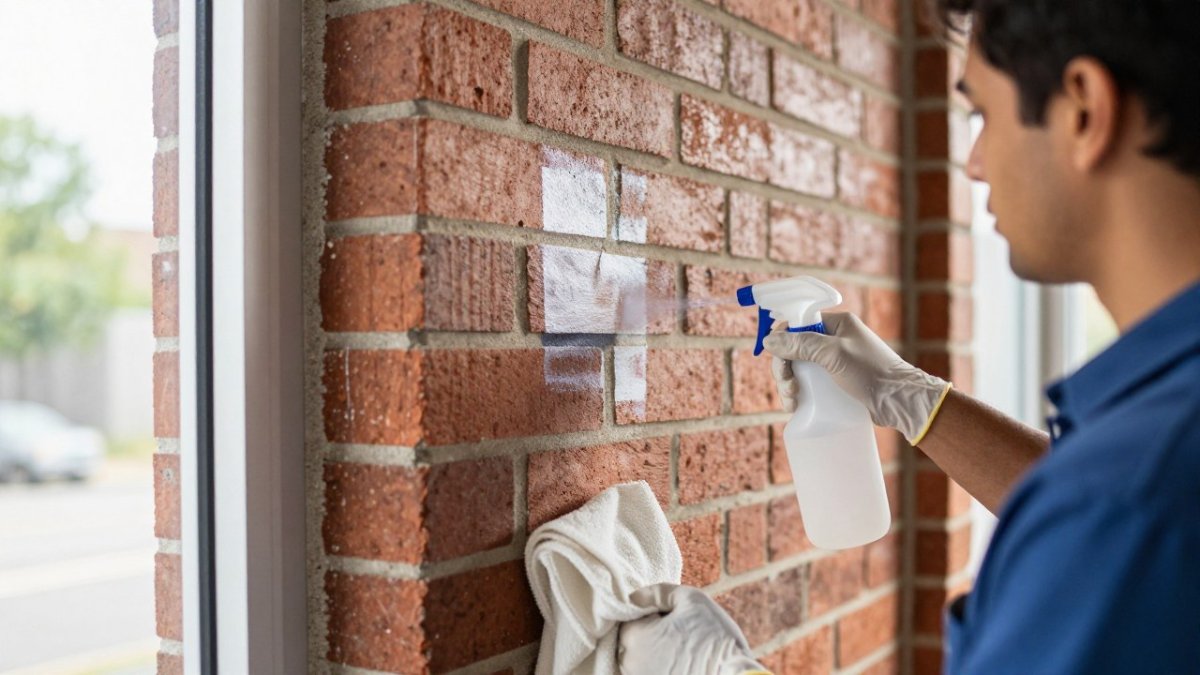
- Start with the gentlest method first: a neutral detergent and a soft brush.
- Move up to a gel graffiti remover that clings to vertical faces.
- Keep dwell time short and rinse fully between passes.
- Never sandblast historic masonry.
On older brick, the mortar is the weak point. Solvent that sits too long eats into the joints. A sacrificial coating applied before an incident can make future cleanup far easier, because the paint bonds to the coating instead of the brick.
If the wall is historic masonry or stone, test a hidden spot first. Some pigments leave a ghost stain no cleaner will fully remove.
Choosing a Graffiti Removal Spray, Solvent, or Gel for Coated and Metal Surfaces
Metal and coated surfaces are where the wrong product does the most damage. A strong solvent can dull a protective coating, blush a clear finish, or strip paint right off a metal panel.
Match the product to the finish, and test before you commit. Use this guide:
| Surface | Best Product Type | Watch For |
|---|---|---|
| Bare metal (galvanized, aluminum, steel) | Solvent or gel remover | Scratching the finish; leaving a haze on galvanized zinc |
| Painted metal | Mild graffiti removal spray | Lifting the topcoat or leaving a dull ring |
| Coated or sealed panels | Gel with short dwell time | Dulling or dissolving the protective coating |
| Glass | Razor scraper and detergent | Scratch marks from grit trapped under the blade |
| Powder-coated or anodized | pH-neutral gel, short dwell | Chalking, fading, or patchy color change |
Mineral spirits and turpentine cut through oil-based paint on metal but can attack coatings, so keep them off painted or sealed panels. If you are protecting a fragile finish, read up on soft washing alternatives for delicate house paint before you reach for a strong solvent.
Watch out: solvent that runs into panel seams or window gaskets can stain sealant and start corrosion you will not see until months later. Tape off seams and keep the product on the flat face.
Always run a pH test with litmus paper after cleaning. A neutral finish protects the coating. If the rinse water still reads alkaline or acidic, rinse again before you walk away, residue keeps working on the finish long after the paint is gone.
A Repeatable Removal Workflow: Test Patch, Dwell Time, Rinsing, and Residue
A repeatable workflow is what separates a clean job from a damaged facade. Every commercial graffiti removal should follow the same five steps, every time.
- Test patch. Apply your cleaner to a small, hidden spot. Wait the full dwell time and check for surface damage.
- Apply. Work from the bottom up so drips do not streak clean areas.
- Respect dwell time. Let the product sit as long as the label says. More is not better.
- Rinse. Use low-pressure rinsing with clean water to flush loosened paint and residue.
- Inspect and neutralize. Check the finish, then test pH and neutralize if needed.
The man is American.
Why Test Patches and Dwell Time Prevent Ghosting and Etching
A test patch is your insurance policy. It shows you how the cleaner reacts with the surface before you commit to the whole wall. Skip it, and you risk two expensive problems.
Ghosting is a faint shadow left behind when pigment sinks into pores and never fully lifts. Etching is surface damage where the cleaner or pressure has eaten into the material. Both are hard to fix and easy to cause.
Dwell time is the other half of the equation. Too short and the paint will not budge. Too long and the solvent starts working on the wall itself.
Commercial Graffiti Removal Cost, Timeline, and DIY vs Professional Decisions
Commercial graffiti removal cost depends on surface size, paint type, and how long the graffiti has been there. Pricing depends on the scope of work, so request a quote for current pricing. Fresher tags come off faster.
Expect the price to rise with:
- Square footage of the affected area
- Porous surfaces like brick and stone, which need more product and slower passes
- Historic or delicate facades that require test patches and gentler methods
- Height and access needs, ladders, lifts, or rope access add labor and time
- Repeat treatment, because ghosting or soaked-in pigment may need a second visit
Timelines follow the same logic. A small tag on concrete might take under an hour.
So should you do it yourself? Use these decision criteria before you pick up a sprayer:
- Height: anything above a single story usually needs access equipment and fall protection your crew may not have.
- Surface sensitivity: historic masonry, anodized metal, and sealed coatings are poor DIY candidates.
- Extent: a small fresh tag is manageable; a large mural or multiple tags is a service job.
- Access and runoff: you need a way to contain wash water and keep tenants and pedestrians clear.
- Risk: DIY removal on a commercial facade can void a warranty or damage a coating you cannot easily replace.
If you are weighing the two paths, our breakdown of professional pressure washing vs DIY covers the real costs, risks, and results. For a fuller picture of what drives a quote, see our guide to commercial pressure washing pricing factors.
Safety, Runoff Controls, and Prevention Planning for Commercial Properties
Safety and runoff control are not optional on a commercial site. Solvents are harsh on skin and eyes, and dirty runoff can carry paint and chemicals into storm drains.
Protect your crew and your property:
- Wear gloves, eye protection, and a respirator when the label calls for it.
- Block storm drains and collect runoff before it leaves the site.
- Follow local rules for disposing of chemical waste.
- Keep the public clear of the work zone.
Then plan to prevent the next tag. Graffiti prevention is cheaper than repeated removal. A protective coating or sacrificial coating creates a barrier that makes future cleanup faster. Good lighting and quick cleanup also discourage repeat tagging. The EPA’s guidance on stormwater runoff is a useful starting point for keeping wash water out of drains.
Schedule a Free Quote for Facade Cleaning and Graffiti Removal
Quick action on graffiti helps protect a commercial facade and property image.
Simply Superior Window Cleaning offers exterior cleaning for commercial properties up to four stories tall. Our technicians go through rigorous classroom and on-the-job training, and we hold monthly safety meetings to keep every job clean and controlled. We offer flexible maintenance schedules and convenient virtual quotes.
Not sure who to trust with your facade? Our guide on how to choose a commercial exterior cleaning company walks you through the right questions. When you are ready, book professional exterior cleaning service and get a free quote.
Graffiti will not wait, and every day it sets deeper into the surface. Let Simply Superior Window Cleaning assess your facade, recommend the right method for your material, and schedule the work around your business.
Frequently Asked Questions
How soon should graffiti be removed from a commercial building?
Remove graffiti as soon as you can, ideally within 24 to 48 hours. Fresh spray paint sits on the surface and comes off with less solvent and less scrubbing. Once paint cures into masonry pores or bakes onto metal in the sun, removal takes longer, costs more, and raises the risk of ghosting. Fast removal also discourages repeat tagging, since most taggers look for surfaces where their work stays visible.
How much does commercial graffiti removal cost?
Commercial graffiti removal cost depends on square footage, surface type, paint age, and access needs like lifts or scaffolding. Porous brick and historic masonry take more labor than smooth metal or painted concrete. Pricing depends on the scope, so request a quote rather than relying on a flat rate.
Will rubbing alcohol, WD-40, or Goo Gone remove graffiti?
Those products can lift light marker or fresh paint from small, non-porous spots, but they are not a practical graffiti removal spray for commercial facades. Rubbing alcohol evaporates too fast to dwell on cured spray paint. WD-40 and Goo Gone leave an oily film that traps dirt and can stain masonry. For brick, concrete, and coated metal, use a product matched to the surface and always run a test patch first.
Can pressure washing damage a commercial facade during graffiti removal?
Yes, if the pressure is too high or the nozzle is too close. High-pressure washing can pit concrete, blow out mortar joints in brick, strip paint from coated surfaces, and drive pigment deeper into pores. Use low-pressure rinsing after the chemical has done the work, keep the nozzle moving, and test on a small area first. On historic masonry, skip pressure washing and use a gel or poultice with a soft brush.