
Table of Contents
- Is Pressure Washing Your Driveway Worth It? The Honest Answer
- Pressure Washing Driveway Pros and Cons
- Driveway Pressure Washing Cost: DIY vs Professional
- How to Pressure Wash a Concrete Driveway
- How Often to Pressure Wash a Driveway
- When Pressure Washing Is Not the Right Solution
- Conclusion: Making the Call for Your Driveway
- Frequently Asked Questions
Last Updated: October 6, 2026
Is Pressure Washing Your Driveway Worth It? The Honest Answer
Yes, pressure washing a driveway is usually worth it, but not always.
Pressure washing driveway cleaning is worth it when the concrete is structurally sound and the problem is surface-level buildup. It is not worth it when the slab is cracked, crumbling, or coated with a failing sealer.
Here is what most guides get wrong. They treat pressure washing as a single service with one price and one result.
Below, we break down the real pros and cons, the cost difference between DIY and professional work, and the exact steps to do it safely.
Pressure Washing Driveway Pros and Cons
The main benefit is fast, visible results on dirt, algae, and light stains. The main drawback is risk: too much pressure etches concrete, strips sealant, and can force water into cracks.
What Pressure Washing Does Well
Pressure washing removes the layer of grime that makes a driveway look old.
It handles:
- Dirt and grime buildup from foot traffic and tires
- Green and black algae, mold, and mildew
- Light oil and grease films
- General surface staining on concrete and asphalt
It also improves safety. Algae and mildew make concrete slippery, especially in shaded areas or after rain. Removing that film cuts the slip risk for anyone walking to your door.
Where Pressure Washing Falls Short
Pressure washing does not fix everything, and pretending otherwise costs homeowners money.
It will not:
- Remove deep-set rust stains without a dedicated treatment
- Repair cracks, pitting, or spalling
- Restore a driveway with a worn-out or peeling sealer
- Fix oil stains that have soaked deep into the concrete
High pressure can also etch the surface, leaving permanent swirl marks. On older or softer concrete, that damage is easy to cause and hard to undo.
The most common mistake is holding the wand too close and using a narrow tip on concrete. That combination etches the surface and leaves visible stripes that never wash out. Keep the tip moving and start with the widest fan pattern your surface can handle.
Driveway Pressure Washing Cost: DIY vs Professional
DIY is cheaper on paper, but the gap narrows once you factor in equipment, detergent, water, time, and the risk of etching a slab you cannot un-etch. Professional pricing depends on driveway size, stain severity, and access, so a quote beats a guess every time.
Here is how the two paths actually compare.
| Factor | DIY | Professional |
|---|---|---|
| Equipment | Rent or buy a pressure washer plus a surface cleaner attachment | Included |
| Detergent and degreaser | You buy separately | Included |
| Time | Half a day or more for a two-car slab | A few hours |
| Water use | You manage runoff | Managed to local rules |
| Risk of surface damage | Higher | Lower with trained techs |
| Best for | Light dirt, small slabs | Tough stains, large or delicate surfaces |
The Real Cost of Renting or Buying Equipment
The sticker price is not the whole story. A consumer electric pressure washer typically runs a few hundred dollars, and a gas unit with enough pressure to drive a surface cleaner often runs several hundred more.
A common pattern: a homeowner rents a gas unit for a weekend, buys a gallon of concrete detergent and a bottle of degreaser, and spends most of a Saturday on a two-car slab.
What Drives a Professional Quote
Professional pricing is not one number. It moves with:
- Square footage. A single-car slab and a long, wide driveway are different jobs.
- Stain severity. Light algae and dirt wash off. Oil, rust, and deep organic staining need pre-treatment and dwell time.
- Surface type. Concrete is forgiving. Asphalt, pavers, and sealed or stamped concrete need lower pressure and different chemistry.
- Access and setup. Gated yards, tight side yards, and long hose runs add labor.
- Runoff handling. Managing water and detergent so it does not reach storm drains or landscaping takes time and equipment.
For most homeowners, DIY makes sense on a small, lightly soiled slab. For anything large, stained, or delicate, professional cleaning service pricing is easier to justify than the cost of a mistake.
Ask any pressure washing provider how they handle runoff and which detergent they use on concrete. A pro who can answer both questions clearly is usually the one who will not etch your slab or wash oil into your storm drain.
DIY vs Professional: A Quick Decision Rule
- DIY if: the slab is small, the soil is light, the surface is plain concrete, and you are comfortable controlling pressure.
- Hire if: the driveway is large, the stains are oil or rust, the surface is asphalt, pavers, or sealed, or you have already seen etching from a previous attempt.
- Repair first if: the concrete is cracked, spalling, or has a failing sealer. Cleaning a failing slab wastes money.
If you are on the fence, get one quote and compare it against your rental-plus-chemicals-plus-time estimate. That side-by-side is the honest answer to whether pressure washing is worth it for your driveway.
How to Pressure Wash a Concrete Driveway
Concrete is the most common driveway surface, and it is also the easiest to damage. The right method is slower and gentler than most people expect. This is the preparation-to-rinsing workflow that keeps the slab intact and the runoff out of your landscaping and storm drains.
Total Time: 3-5 hours for an average two-car driveway
Difficulty: Intermediate
What You’ll Need
- Pressure washer with adjustable pressure
- Surface cleaner attachment
- Concrete-safe detergent or degreaser
- Rust remover or oxalic-acid-based treatment for rust stains
- Stiff brush for spot treatment
- Garden hose and water source
- Safety glasses, closed-toe shoes, and hearing protection
- Plastic sheeting or sandbags to block storm drains
Step 1: Clear and Prep the Surface
Remove cars, mats, and debris. Sweep the whole slab. Pre-treat oil and grease spots with degreaser and let it sit for the dwell time on the label. For rust stains, apply a dedicated rust remover and keep it off the surrounding concrete until you are ready to rinse.
Step 2: Protect Runoff and Landscaping
Before you start, block storm drains with plastic sheeting or sandbags so detergent and oil residue do not flow into them. Wet down adjacent grass, plants, and mulch so they are less likely to absorb overspray. Many municipalities restrict what can enter storm drains, and detergent-laden runoff is a common violation. If you are unsure, check your local water-use and runoff rules before you start.
Step 3: Wet the Concrete
Soak the surface first. Dry concrete can pull detergent in unevenly and leave streaks.
Step 4: Apply Detergent
Use a concrete-safe detergent. Let it dwell for the time on the label, then move on. Do not let it dry. Work in sections so the detergent stays active.
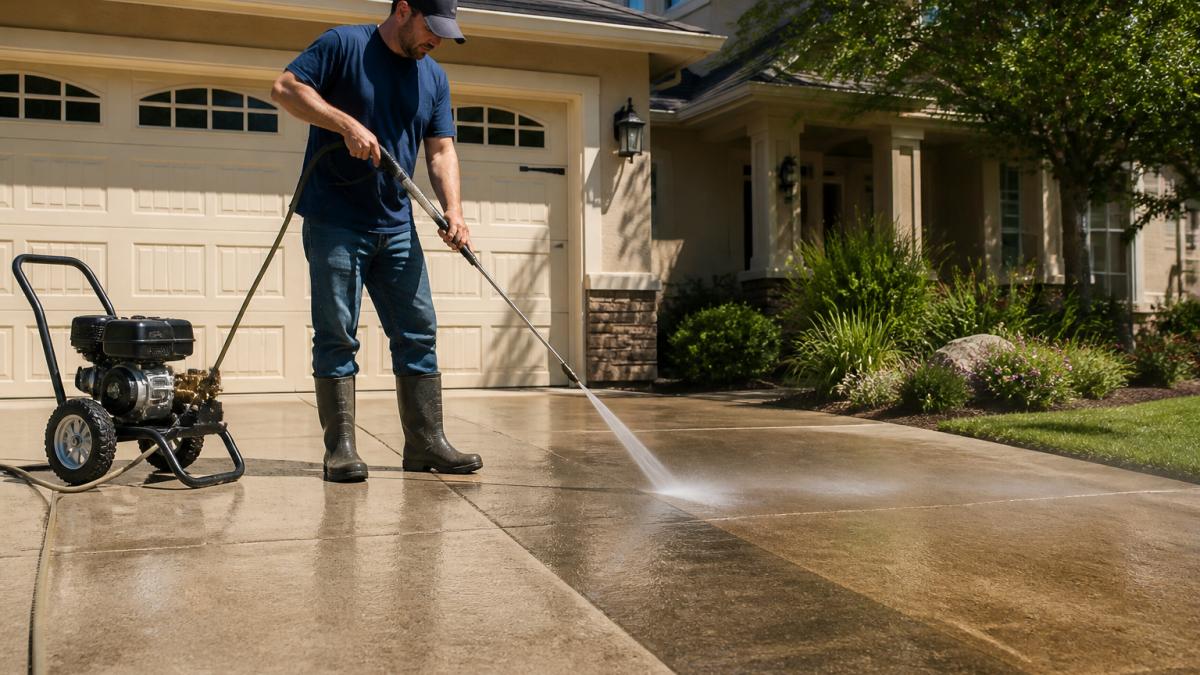
Step 5: Wash With the Right Pressure
Start with a wide fan tip and keep the wand moving. Work in sections and overlap each pass. For concrete, stay at a moderate pressure setting and let the detergent do the work. A surface cleaner attachment gives more even results than a wand and reduces the risk of wand stripes.
Step 6: Rinse and Check
Rinse the whole slab with clean water. Look for missed spots and re-treat them before the surface dries. Remove your drain barriers only after the rinse water has cleared.
Expected Result: An even, brighter surface with no wand stripes or etched patches.
Surface-Specific Pressure Guidance
Pressure and technique change with the surface. Match the setting to the material, not to the stain.
- Plain concrete: Moderate pressure with a wide fan tip or surface cleaner. Keep the tip moving and overlap passes. This is the most forgiving surface.
- Asphalt: Lower pressure and a wider fan. High pressure gouges asphalt and loosens aggregate. Use a detergent and let it dwell longer instead of pushing harder.
- Pavers: Lower pressure and a wide fan. High pressure blows out joint sand and can shift the pavers. Plan to re-sand joints after cleaning.
- Sealed or stamped concrete: Lowest pressure. High pressure strips sealant and can dull the finish. If the sealer is already peeling, clean gently and plan to reseal rather than blast it off.
The single biggest factor in a safe driveway wash is pressure control, not detergent or technique. Match the pressure setting to the surface, keep the tip moving, and you avoid almost every common concrete etching problem.
How Often to Pressure Wash a Driveway
Most driveways need a wash once a year, with a second pass in shady or damp areas. Driveway maintenance is about timing, not just cleaning.
Signs it is time:
- Green or black film forming in shaded spots
- Slippery patches after rain
- Visible tire tracks and grime that will not rinse off
- Stains spreading rather than fading
In wetter climates or under heavy tree cover, algae returns fast. Twice a year keeps it under control. In dry, sunny areas, one annual clean is often enough.
Regular cleaning also protects the surface. Algae and mildew hold moisture against concrete, which speeds up wear over time.
When Pressure Washing Is Not the Right Solution
Pressure washing is the wrong call when the surface cannot take it. Using it anyway causes damage that costs more to fix than the cleaning would have.
Skip pressure washing if:
- The concrete is cracked, spalling, or crumbling
- The sealer is peeling or worn thin
- You have deep rust stains that need a chemical treatment, not pressure
- The surface is delicate pavers or stamped concrete with a soft finish
- Oil has soaked deep into the slab and needs a poultice, not a rinse
In these cases, a gentler method, a targeted stain treatment, or a full reseal is the better path. A good provider will tell you when to say no.
Homeowners with sound concrete and surface-level dirt, algae, or light stains who want fast, visible results without replacing the slab.
Conclusion: Making the Call for Your Driveway
The honest answer is that driveway pressure washing pays off when your concrete is solid and your problem is on the surface. It restores appearance, improves safety, and protects the slab from moisture-holding algae.
If you would rather not risk etching your own concrete, Simply Superior Window Cleaning can help. Our technicians go through rigorous classroom and on-the-job training, and we hold monthly safety meetings to keep our methods sharp.
Schedule a free quote with Simply Superior Window Cleaning and get a driveway that looks new again.
Frequently Asked Questions
What is the average cost of power washing a driveway?
Driveway pressure washing cost depends on square footage, stain severity, and whether you hire a pro or rent equipment. Most companies price by square foot, and pricing varies by region and driveway size. Renting a pressure washer typically runs a modest daily rate, while buying one ranges from budget electric models to higher-end gas units. For an accurate figure on your property, request a quote, since factors like oil stains or heavy mold can change the scope of work.
Can pressure washing damage a concrete driveway?
Yes, if the pressure setting is too high or the wand is held too close to the surface. Too much water pressure can etch concrete, strip sealant, and widen existing cracks. For most concrete driveways, staying in the 2,500 to 3,000 PSI range with a 25-degree or 40-degree nozzle is safer. Asphalt is softer and generally should not be pressure washed at all. Test a small hidden area first, and keep the wand moving to avoid leaving stripes or gouges.
Is it better to pressure wash a driveway yourself or hire a professional?
It depends on your time, equipment, and comfort level. DIY cleaning saves labor costs but requires renting or buying a pressure washer, buying detergent, and setting aside several hours. Professional cleaning brings commercial-grade equipment, surface cleaners, and stain-specific treatments, which matters for oil, rust, or mildew. If your driveway has stubborn stains, delicate surfaces, or you want before-and-after results without the risk of damage, hiring a pro is usually the safer choice.
How often should you pressure wash a driveway?
Most driveways benefit from a cleaning every 12 to 24 months. Homes with heavy tree cover, frequent rain, or visible mold and algae may need it annually. In drier climates, stretching to every two years is often fine. Watch for slippery buildup, dark streaks, or embedded dirt as your cue. Regular driveway maintenance, including sweeping and prompt stain cleanup, can extend the time between full pressure washing sessions.