
Table of Contents
- Interior vs Exterior Window Cleaning Process: Key Differences
- Which Side First: The Cleaning Order That Works
- Window Cleaning Tools and Equipment for Each Side
- How to Clean Windows Inside and Out: Step-by-Step
- Safety and Access for Exterior Window Cleaning
- How Often to Clean Windows: A Practical Schedule
- Window Cleaning Time per Window and Job Planning
- Troubleshooting Streaks, Residue, and Hard Water Spots
- Frequently Asked Questions
Last Updated: October 19, 2026
Interior vs Exterior Window Cleaning Process: Key Differences
The interior vs exterior window cleaning process differs in three main ways: the dirt you face, the tools you can safely use, and the access you have.
At Simply Superior Window Cleaning, we train technicians on both sides separately: habits that protect interior glass slow you down outside, and outdoor tools can damage interior frames and sills.
The differences that matter most:
- Dirt type: Inside film is oily. Outside grime is gritty and mineral-heavy.
- Water control: Inside, you protect floors and electronics. Outside, runoff is expected.
- Access: Inside is reachable by hand. Outside may need a ladder or extension pole.
- Sun exposure: Outside glass dries fast and streaks. Inside glass dries slowly.
Get these four right and both sides come out clean. Below: the full window cleaning process for each side, plus tools, timing, and fixes for stubborn spots.
Which Side First: The Cleaning Order That Works
Clean the inside first, then the outside. You can spot outside streaks through clean inside glass; clean outside first and interior film hides the flaws, so you redo work.
Interior work is also fussier, furniture, drop cloths, drips, so doing it first puts the messy part behind you and the outside wash becomes a fast finish.
A common mistake is cleaning in direct sun: the solution dries before you can squeegee it, and you get streaks on both sides. Work in shade or on a cloudy day.
So the order is:
- Clear and prep the interior
- Wash, squeegee, and detail inside glass
- Remove and wash screens
- Wash and squeegee outside glass
- Check both sides in daylight and fix any spots
That sequence is the backbone of any reliable window cleaning process.
Window Cleaning Tools and Equipment for Each Side
Most window cleaning tools and equipment work on both sides.
| Tool | Interior Use | Exterior Use | Why the Split |
|---|---|---|---|
| Squeegee | Yes, 6-12 in. blades | Yes, 12-18 in. blades | Wider blades cover more glass per pass outside; narrow blades fit interior divided panes and tight corners |
| Microfiber cloth | Yes, detail and edge work | Yes, sills, frames, and screen channels | Outside cloths pick up grit that scratches interior glass if reused |
| Scrubber or sponge | Yes, soft scrubber | Yes, scrubber on a pole | Abrasive pads can dull low-E and tinted coatings |
| Spray bottle | Yes, low-water application | Rarely | Outside volume makes a bucket faster; inside, spray keeps drips off floors and electronics |
| Bucket and solution | Small amounts | Full wash | Interior runoff is a liability; exterior runoff is expected |
| Extension pole | No | Yes, for high glass | Poles let you reach upper panes from the ground and avoid ladder time |
| Ladder | No | Yes, with a spotter | Interior work never justifies height; exterior access is the main fall risk |
| Drop cloths | Required | Optional | Interior floors, furniture, and sills need protection from drips |
| Screen removal tool | No | Yes | Screens are an exterior component and should be washed separately |
| Detail scraper | Rarely | Yes, for paint, sticker residue, and hardened spots | Scrapers risk scratching interior glass if angled wrong; outside glass tolerates more |
Squeegee sizing. Match blade width to pane width: too narrow means overlapping passes and edge lines, too wide catches frame corners. Interior work lands in the 6-12 inch range; exterior in the 12-18 inch range.
Blade condition. A nicked or hardened blade is the most common cause of streaks and the cheapest thing to replace.
Scrubber material. Soft scrubbers and microfiber sleeves are safe on coated glass.
Water-fed poles. For high exterior glass, a water-fed pole with a purified-water rinse lets you clean from the ground and skip the ladder.
Keep two sets of microfiber cloths, one for inside and one for outside. Outside cloths pick up grit that can scratch interior glass if you reuse them. Color-code them so the split is automatic.
Never use the same scraper blade on exterior and interior glass without cleaning it. A single grain of grit trapped under the blade can leave a scratch that no polish will remove.
How to Clean Windows Inside and Out: Step-by-Step
Both sides follow the same basic window cleaning process: prep, wash, squeegee, detail. Here is the shared method, then the side-specific tweaks.
Step 1: Prep and Clear the Area
Remove screens, blinds, and anything blocking the glass. Inside, move furniture back and lay drop cloths. Outside, check the weather and start on a shaded window.
Dust the sills and tracks before you wet anything; dry dust turns to mud fast. A vacuum with a brush attachment handles tracks well.
Mix your cleaning solution in the bucket: a few drops of dish soap in warm water. Too much soap leaves residue, so go light.
Step 2: Wash, Squeegee, and Detail
Wet the glass with your scrubber or spray bottle, working top to bottom, and loosen the film with a few passes. Then pull the squeegee in overlapping strokes, wiping the blade after each pass.
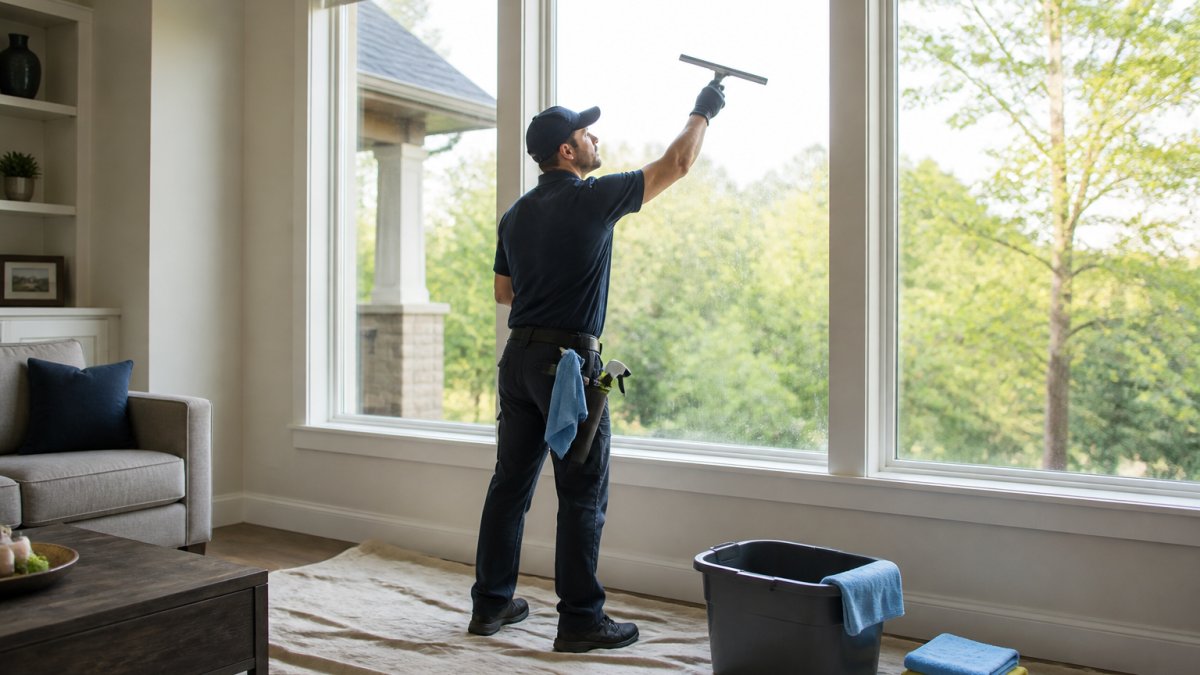
Detail the edges with a dry microfiber cloth. Edges hold the most water, and water left there dries into spots. Inside, check the frame and sill for drips. Outside, check the screen channel.
The main differences in practice:
- Inside: Use less water, work in shade, and dry edges right away.
- Outside: Expect runoff, wash screens separately, and squeegee before the sun dries the glass.
Safety and Access for Exterior Window Cleaning
Exterior access is where DIY cleaning goes wrong. Ground-floor windows are easy. Second-story glass, high transoms, and windows above landscaping need planning.
Follow these basics:
- Keep ladders on firm, level ground and use a spotter
- Never lean out a window to reach glass beside it
- Use an extension pole for high panes instead of stretching
- Keep metal tools away from power lines
- Skip exterior work in wind, rain, or icy conditions
Ladder safety is not optional, falls from height are a leading cause of home injury. If a window is above your safe reach, leave it to a professional crew.
Never stand on the top rung of a ladder or on a windowsill to reach a high pane. A short fall onto hardscape can cause serious injury, and the repair bill for a cracked window adds to it.
How Often to Clean Windows: A Practical Schedule
How often to clean windows depends on where you live and what is outside the glass:
- Urban or dusty areas: every 2 to 3 months
- Coastal or windy areas: every 3 to 4 months, more if salt spray hits the glass
- Wooded lots with pollen: a spring cleaning and a fall cleaning at minimum
- Storefronts: monthly to keep the brand image sharp
- Before listing a home: a full inside-and-out clean
Most homes land on two to four cleanings a year. Spring cleaning removes pollen and winter grime. Fall cleaning clears dust before the rainy season.
If you can see a film on the glass when the sun hits it at an angle, it is time to clean. Film dulls the view and traps more dirt with each week.
Window Cleaning Time per Window and Job Planning
Window cleaning time per window runs about 2 to 5 minutes for a standard pane once you are set up. Interior glass takes longer because of furniture, drop cloths, and detail work, and high or divided windows take longer still.
What actually changes the job length:
- Access. Ground-floor exterior glass is fast. Second-story glass adds ladder setup, spotting, and repositioning time; a water-fed pole cuts that time, but only after the filter and hose are set up.
- Pane count and divided panes. A single large pane is one squeegee pass. A divided window with six small panes is six passes, six edge details, and six chances for drips. Count panes, not windows.
- Soil type. Pollen and dust rinse off. Hard-water deposits, paint overspray, sticker residue, and cooking film need dwell time, a second pass, or a scraper, each adds minutes per pane.
- Interior obstacles. Furniture, blinds, and electronics slow the interior pass. A room you can clear in two minutes is a room you can clean in ten; a room packed with shelving is a different job.
- Screens and tracks. Screens are washed separately and tracks need vacuuming before wet work. Both are frequently underestimated.
A realistic block plan for a single-story home:
- Setup: 10 to 15 minutes for tools, solution, and drop cloths
- Interior pass: about 3 to 5 minutes per window
- Screens: 1 to 2 minutes each
- Exterior pass: about 2 to 4 minutes per window at ground level
- Final check: 5 to 10 minutes
A typical single-story home with 15 to 20 windows takes a few hours for a careful DIY job. Two-story homes with high glass take longer and carry more risk, and risk does not show up in a time estimate.
DIY versus professional: the decision logic.
Ground-level exterior glass, single-story homes, and windows you can reach from a step stool are reasonable DIY territory.
Estimate the job in panes, not windows, and add time for every ladder setup and every pane that needs a second pass. If the estimate climbs past a comfortable afternoon, or if any window needs a ladder, price the professional option before you commit.
Troubleshooting Streaks, Residue, and Hard Water Spots
Streaks come from four causes: too much soap, drying in sun, a dirty squeegee blade, or skipped edge detail. Fix each one and the streaks stop.
- Soap residue: rinse the glass with clean water and re-squeegee
- Sun-dried solution: work in shade or clean early in the day
- Dirty blade: wipe the squeegee after every pass
- Edge water: dry the edges with a lint-free cloth
Hard-water spots need a different approach. These mineral deposits bond to the glass and resist normal washing. A vinegar-and-water mix can loosen light spots. Stubborn spots or etched glass may need a specialist cleaner.
A final tip on glass coatings. Some modern windows carry a low-E or tinted coating, and abrasive pads or strong chemicals can damage it. Use soft scrubbers and mild dish soap on coated glass.
When spots keep coming back, the cause is often the sprinkler system hitting the glass. Adjust the heads, and the problem fades.
Cleaning both sides of your windows well takes the right order, the right tools, and a safe plan for high glass. We also handle pressure washing, solar panel cleaning, and gutter maintenance on flexible schedules, with virtual quotes to keep things simple.
Frequently Asked Questions
Should you clean the inside or outside of windows first?
Clean the inside first, then the outside. Interior cleaning stirs up dust and can leave smudges on the glass that you will see from outside. Working inside first also lets you spot any drips or residue before you head outdoors. On exterior jobs, start at the top and work down so dirty water does not run over clean panes. If you are cleaning both sides on the same day, finish the interior, then move outside for a streak-free finish.
What tools are used for interior and exterior window cleaning?
Interior work typically calls for a spray bottle with cleaning solution, a microfiber cloth, a scrubber, and a squeegee. Exterior work often adds an extension pole, a bucket with warm water and dish soap, a scraper for hard-water spots, and ladder safety gear. A lint-free cloth is useful for edge detailing on both sides. Professional window cleaners may use purified water systems and specialized equipment for tall or hard-to-reach glass.
How often should interior and exterior windows be cleaned?
Most homes benefit from exterior window cleaning two to four times a year, depending on dust, pollen, and weather conditions. Interior windows usually need cleaning two to three times a year, or more often in kitchens and high-traffic rooms. Spring cleaning and fall cleaning are common times to schedule both. Commercial storefronts may need monthly service to maintain brand image. Adjust frequency based on visible dirt, smudges, and hard-water spots.
How long does it take to clean windows inside and out?
Window cleaning time per window varies with size, grime level, and access. A typical double-hung window takes about 5 to 10 minutes per side for a DIY clean, so a full house can run several hours. Exterior work adds time for ladder setup and rinsing. Professional crews often work faster because they carry the right tools and follow a set window-cleaning process. For a precise estimate on your property, request a free quote.