
Last Updated: November 2, 2026
Quick Summary
Keep clean siding looking fresh by walking the perimeter monthly, rinsing shaded and tree-heavy walls every two to four months, and matching cleaning methods to your siding material. Trim back shrubs, fix sprinkler overspray, and keep gutters clear to limit the damp conditions that let dirt and mildew return.
- Walk the perimeter monthly, starting with north and east walls and the lower four feet.
- Rinse vinyl and wood siding every three to four months, more often if shaded.
- Never use a pressure washer on wood siding or painted surfaces.
- Trim back shrubs and clear gutters so air, sunlight and water can move freely.
- Fix sprinkler heads that spray the wall to stop soil splash and mildew growth.
Table of Contents
- Why Siding Gets Dirty Again Within Months of a Professional Wash
- How Often to Clean House Siding After a Professional Wash
- Telling Residue, Oxidation and New Growth Apart
- How to Clean Vinyl Siding Without Scrubbing
- How to Prevent Mildew on Siding Between Washes
- Fixing Streaks on Siding After Cleaning
- Scheduling Your Next Professional Wash and Keeping Siding Clean
- Frequently Asked Questions
Why Siding Gets Dirty Again Within Months of a Professional Wash
Your siding looked great the day the crew finished. Then, a few months later, dark streaks and a greenish tint are back. This is one of the most common complaints homeowners have after a professional wash, and it is not a sign the job was done poorly. Knowing why keeps expectations realistic when you schedule the next round of clean siding work.
Siding gets dirty again for a few predictable reasons. Rain carries dust and pollen down the wall. Sprinklers splash soil onto the lower panels. Shaded north-facing walls stay damp longer, which gives mildew and algae a place to grow. A professional wash removes what is already there, but it does not stop the next layer from forming.
Keeping siding clean after a wash means managing these causes. Start by looking at your house to spot where clean siding is most likely to get dirty again:
- Shaded sides: Expect buildup first on north and east walls.
- Ground contact: Splashed soil and mulch leave brown marks near the base.
- Downspout runoff: Streaks often run straight below gutters.
- Overhanging trees: Leaves and sap drip onto specific spots.
Knowing where your siding collects dirt tells you where to focus your upkeep.
How Often to Clean House Siding After a Professional Wash
A professional wash resets the clock, but how fast that clock runs depends on your siding material, your landscaping, and how the house sheds water. Instead of a single interval, build a maintenance calendar around three tiers of activity: monthly inspections, seasonal rinses, and annual professional washes.
Monthly walk-around (15 minutes). Walk the perimeter with the sun at your back so shadows reveal streaks. Check the north and east walls first, then the lower four feet where splash-back collects. Look under downspouts, at gutter end caps, and where the roofline meets the siding. Note any green or black spotting, chalky film, or brown drip marks. If dirt is visible from the ground, schedule a rinse within the week rather than waiting for the next seasonal slot.
Seasonal rinse cadence by material. Vinyl and aluminum siding can usually handle a garden-hose rinse periodically, with more frequent rinses in shaded or tree-heavy yards. Fiber cement holds paint well but can trap chalky oxidation; rinse every three to four months and inspect paint film for cracking. Wood siding needs the gentlest schedule: rinse every three to four months, but never with high pressure, and recheck caulk and paint at each rinse. Painted surfaces of any material should be rinsed less aggressively in the first 30 days after painting.
Annual professional wash. Many homeowners schedule one professional wash per year, timed for spring after pollen drops or early fall before winter damp. Homes under heavy tree canopy or on the shaded side of a hill may need more frequent visits, and your contractor can recommend an interval based on your home’s exposure.
A simple decision guide:
- Every 2-3 months: Shaded walls, trees within 15 feet, visible green growth, or sprinkler overspray
- Every 3-4 months: Average exposure with some dust, pollen, and rain marks
- Every 6 months: Open, sunny walls with little landscaping nearby and good gutter drainage
Watch out: rinsing more often than every two months on wood or painted fiber cement can drive moisture into seams and shorten paint life, so match frequency to material rather than to appearance alone.
Telling Residue, Oxidation and New Growth Apart
Not every mark on siding is the same, and treating them all the same way wastes time. Look closely before you grab a cleaner.
- Surface residue: Dusty, chalky, or streaky film that wipes off with a damp cloth. Usually from rain runoff or cleaning solution left to dry.
- Oxidation: A faded, chalky look on older vinyl, especially on darker colors. It feels rough and does not wipe clean. Cleaning helps only a little.
- New biological growth: Green, black, or gray spots that feel slightly fuzzy or spread in patches. This is mildew or algae and needs a cleaning solution, not just a rinse.
If a mark returns quickly after a wash, it is probably biological growth. If it stays after cleaning and feels rough, it is likely oxidation. Simple residue should come off with mild soap and water. For gentler alternatives suited to delicate house paint, see soft washing alternatives for delicate house paint.
How to Clean Vinyl Siding Without Scrubbing
Vinyl is generally considered easy to maintain, but a careful method still matters. The goal is to lift dirt and biological growth without abrading the surface or forcing water behind the panels. The same principles adapt to fiber cement, wood, and painted surfaces with a few material-specific adjustments.
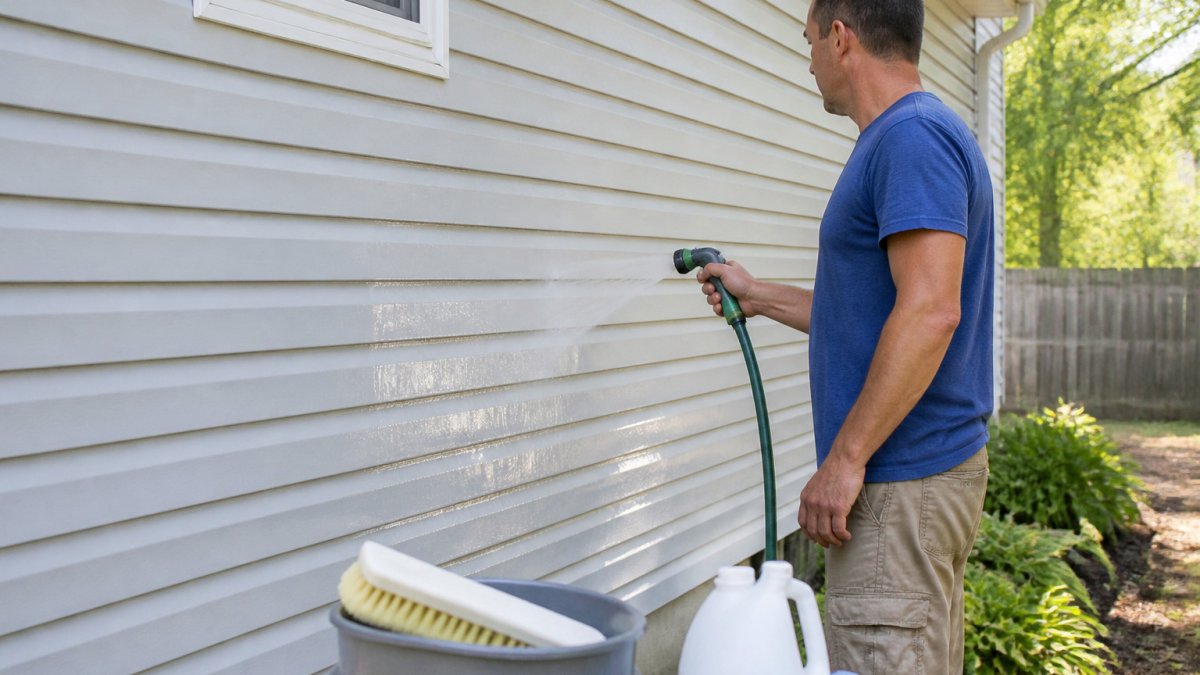
Vinyl siding.
- Rinse first, bottom up. Wet the wall from the bottom upward with a garden hose to soften dust and pollen before it becomes a film.
- Mix a mild solution. Combine a small amount of mild dish soap with water, or use diluted white vinegar for light staining. Avoid abrasive cleaners and bleach-heavy mixes on colored vinyl, which can dull the finish.
- Apply and keep wet. Spread the solution with a soft brush or sponge, starting at the bottom. Keep the surface wet while it works, about five to ten minutes. Work in small sections so the solution never dries.
- Rinse downward. Rinse from top to bottom, following the lap of the panels, until no soap remains. Never rinse upward into the laps.
Fiber cement. Fiber cement holds paint well but can chalk as it ages. Use the same mild soap solution, but keep pressure low and avoid soaking seams. Rinse thoroughly and let the wall dry fully before inspecting; chalky oxidation will look like dirt but will not rinse away. If paint is cracked or peeling, stop and address the paint film before washing, because water can wick behind failing paint.
Wood siding. Wood needs the gentlest approach. Use a soft brush and a mild soap solution, rinse with a hose on low flow, and never use a pressure washer on bare or painted wood. Keep water out of horizontal seams and end grain. Recheck caulk and paint at each rinse, and plan to repaint on the manufacturer’s recommended interval rather than washing more aggressively.
Safe limits and when not to DIY. Skip DIY cleaning and call a professional when you see: persistent stains that survive a mild wash and rinse; chalky oxidation on older vinyl or painted surfaces; green or black growth that returns within weeks; water intrusion signs such as soft spots, bubbling paint, or moisture behind panels; or delicate finishes such as stained wood, stucco with elastomeric paint, and historic cladding. High pressure can force water behind panels and damage siding, so if you are not sure about pressure levels, a gentle hose rinse is the safer choice.
The right method depends on your siding material, and the article’s guidance is summarised below.
| Siding material | Cleaning approach | Key caution |
|---|---|---|
| Vinyl | Mild soap or diluted vinegar, rinse top to bottom | Avoid abrasive cleaners and bleach-heavy mixes |
| Fiber cement | Mild soap, low pressure, dry fully before inspecting | Stop if paint is cracked or peeling |
| Wood | Soft brush, mild soap, low-flow hose | Never use a pressure washer on wood |
| Any painted surface | Rinse less aggressively for 30 days after painting | Avoid driving water into seams |
How to Prevent Mildew on Siding Between Washes
Mildew thrives in damp, shaded spots. Prevention is far easier than removal.
- Trim back shrubs and branches so air and sunlight reach the siding.
- Fix sprinkler heads that spray the wall.
- Clear gutters so water does not overflow down the face of the house.
- Clean debris off ledges and sills where moisture sits.
A quick hose rinse every few weeks in damp seasons can help slow growth between professional washes.
Fixing Streaks on Siding After Cleaning
Streaks usually come from one of three mistakes: letting the cleaning solution dry on the siding, rinsing with too little water, or using a dirty brush.
To fix streaks:
- Rinse again from top to bottom, using plenty of water.
- Work in small sections so the solution never dries.
- Use clean water and rinse your brush often.
- Avoid hot sun when you clean. Early morning or late afternoon works best.
If streaks remain after a thorough rinse, they may be oxidation or mineral deposits. Repeat the mild cleaning process once, and if they persist, ask your washing contractor to take a second look.
Scheduling Your Next Professional Wash and Keeping Siding Clean
A professional wash works best as part of a routine. Plan it for the same season each year, usually spring or early fall, and use the monthly walk-around and quick rinses in between. If you want help with the next visit, Book Professional Exterior Cleaning Service to get a quote and schedule a time that fits your home.
When your results do not match what was promised, talk to the contractor right away. Describe exactly where the marks are, take photos, and ask them to return to correct the problem. A good crew will want to fix it.
Simply Superior Window Cleaning works with homeowners across Ventura and North LA Counties to keep siding, windows, and gutters in good shape year-round. Reach out for a free quote and a maintenance plan that fits your home.
Frequently Asked Questions
What do professionals use to clean vinyl siding?
Most professional siding washers use a low-pressure rinse combined with a mild, diluted cleaning solution, applied from the bottom up and rinsed from the top down so no soap dries on the panels. Many pros rely on soft washing, which uses gentle pressure and a surfactant-based solution rather than high-pressure spraying. Ask your contractor which products they use and whether they are safe for your siding brand, since harsh chemicals can dull the finish or leave streaks.
Can power washing damage vinyl siding?
Yes. High pressure can force water behind panels, crack locking tabs, chip the finish and push panels out of alignment. Keeping the nozzle at a safe distance, using a wide spray pattern and working downward with the laps helps prevent damage. If you are unsure of the pressure your siding can handle, have a professional set the washing parameters or use a low-pressure method instead.
How often should you clean house siding?
Cleaning frequency depends on climate, nearby trees, and how quickly dirt accumulates, so your contractor can recommend a schedule for your home. Shaded or north-facing walls and areas near gutters or landscaping often need more frequent attention. A simple hose rinse every few months keeps loose dirt from bonding to the surface and extends the time between deeper cleanings.