
Table of Contents
- Why Professional Window Cleaning Matters for Home Maintenance
- How Professional Window Cleaning Protects Your Glass and Window Seals
- Energy Efficiency and Indoor Air Quality: The Hidden Benefits
- Curb Appeal, Home Value, and the Real Estate Advantage
- How Often to Clean Windows: A Seasonal Maintenance Schedule
- Professional Window Cleaning Cost: What Affects Your Quote
- DIY vs. Professional Window Cleaning: Safety, Equipment, and Risk
- Frequently Asked Questions
Last Updated: September 15, 2026
Why Professional Window Cleaning Matters for Home Maintenance
Professional window cleaning is the scheduled removal of dirt, mineral deposits, and environmental contaminants from glass, frames, and tracks using specialized equipment and trained technique. For homeowners, it is one of the few exterior maintenance tasks that pays back in several directions at once: clearer glass, lower energy costs, and better protection for the window itself.
At Simply Superior Window Cleaning, we understand how quickly glass degrades when it’s ignored. A window that goes two or three seasons without attention doesn’t just look dull. The contaminants on the surface start bonding with the glass itself.
Below, we’ll break down what regular cleaning actually protects, how often to schedule it, and how to tell when a DIY approach stops being worth the risk.
How Professional Window Cleaning Protects Your Glass and Window Seals
Glass is more vulnerable than most people assume. Rain carries airborne pollutants that settle on the pane, and when that moisture evaporates, it leaves behind hard water deposits and mineral residue. Over time, those deposits etch into the glass surface, a process called glass etching. Once etching sets in, no amount of scrubbing reverses it. The glass has to be replaced.
Window seals face a similar threat. Debris accumulation in the tracks and frames traps moisture against the seal, and that moisture breaks down the rubber or vinyl over time. A failing seal means drafts, fogging between panes, and eventually a full window repair.
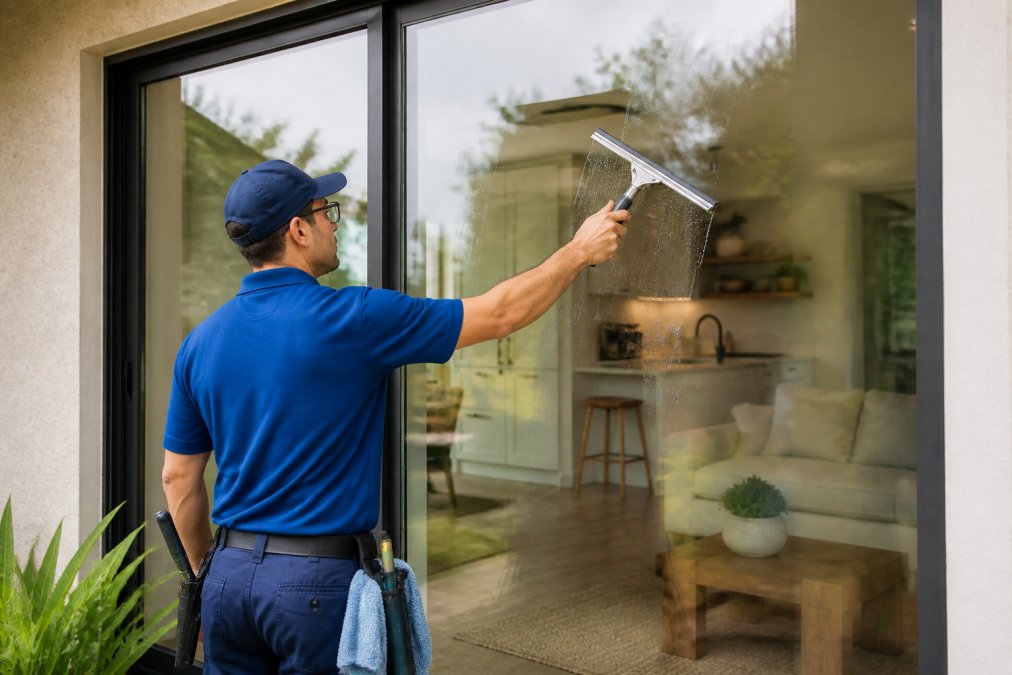
Professional-grade equipment matters here. Trained technicians use deionized water and proper squeegee technique to lift contaminants without scratching the glass, and they clear the tracks and weep holes that let your windows drain correctly.
Skipping the tracks and weep holes is the most common DIY mistake. If those channels stay clogged, water backs up against the seal and frame, and that’s where rot and mold start.
Energy Efficiency and Indoor Air Quality: The Hidden Benefits
Clean glass does more than look better. It changes how much solar energy and visible light actually reach the interior of the home, and that has downstream effects on both your utility bill and the air you breathe.
The energy mechanism. A window’s energy performance is described by two ratings you’ll find on the NFRC label: the U-factor (how fast heat escapes) and the Solar Heat Gain Coefficient, or SHGC (how much solar heat passes through) (Independently Tested and Certified Energy Performance). Those ratings are measured on clean glass. A film of dust, pollen, and hard water mineral deposits scatters incoming light and absorbs solar heat before it reaches the pane, which effectively lowers the SHGC and reduces the free solar gain a south- or west-facing window is supposed to deliver in winter. In summer, the same film can trap heat against the glass and raise the interior surface temperature, nudging your air conditioner to work harder. The effect is small per pane, but a whole house of filmed-over glass adds up, and it’s the one variable in your window’s performance you can actually control without replacing anything.
The air-quality mechanism. Window tracks, weep holes, and the channel between sash and frame are the dampest, most debris-prone spots on the exterior envelope. That’s exactly where mold and mildew colonize. When a window opens, when a draft moves through a failing seal, or when the HVAC system pulls return air past a leaky frame, spores and dust from those tracks can be drawn into the living space. Cleaning the tracks and weep holes removes the growth at the source rather than asking a filter to catch it downstream. This matters most for households with allergy or asthma sufferers, where indoor allergen load is a daily concern.
Screens are part of the system. A dust-clogged screen restricts airflow through an open window and holds pollen and allergens directly against the opening. Cleaning screens alongside the glass keeps the whole assembly, glass, track, weep hole, screen, working as designed.
If you have allergy sufferers in the home, prioritize track and weep-hole cleaning in spring and fall, when pollen and mold spore counts peak. That’s when the source-removal benefit is largest.
How to read an NFRC window energy label
Curb Appeal, Home Value, and the Real Estate Advantage
Streak-free glass is one of the cheapest curb appeal upgrades a homeowner can make. It changes how the entire exterior reads, because windows are the feature the eye lands on first.
For sellers, the timing matters. Dirty windows make a well-maintained home look neglected, and buyers notice. Clean windows signal that the property has been cared for, which supports the home valuation conversation before anyone walks through the door.
For sellers, the timing matters. Dirty windows make a well-maintained home look neglected, and buyers notice. Clean windows signal that the property has been cared for, which supports the home valuation conversation before anyone walks through the door. The results need to hold up through an open house and a closing period, not just for a single afternoon, so the work has to be done properly the first time.
How Often to Clean Windows: A Seasonal Maintenance Schedule
Most homes need exterior window cleaning two to four times a year and interior cleaning once or twice (extension.psu.edu). But “two to four” is a range, not an answer. The right interval depends on your climate zone and what’s landing on your glass, and the failure modes you’re preventing differ by season. Here’s how to build a schedule that actually fits your home.
Start with your climate zone. The country spans several distinct window-care environments, and each one shortens or lengthens the interval:
- Coastal and salt-air zones. Salt spray bonds to glass and accelerates corrosion on frames and hardware. Homes within a few miles of the coast generally sit at the top of the range, three to four exterior cleanings a year, with a rinse after any major storm.
- Humid subtropical zones. High humidity plus heavy pollen and mold seasons means tracks and weep holes need attention more often, not just the glass. Two to three exterior cleanings, with track detailing every time.
- Arid and desert zones. Hard water from sprinkler overspray and irrigation runoff is the dominant threat. Mineral deposits etch fast in direct sun, so spot-rinsing glass after irrigation and cleaning two to three times a year prevents the worst of it.
- Cold and continental zones. Road salt, sand, and de-icing spray thrown onto lower panes during winter are abrasive and corrosive. A spring wash is essential to remove winter residue before it bakes on in the first warm weeks.
- Four-season temperate zones. The default two-to-four schedule applies, with spring and fall as the anchor cleanings.
Then layer in local conditions. Regardless of zone, shorten the interval if any of these apply: mature trees overhanging the roofline (sap, pollen, bird droppings), active construction within a few blocks (cement dust and silica), a nearby highway or industrial corridor (particulate film), or a home with large south- and west-facing glass (more solar baking of deposits).
A working seasonal calendar.
| Season | Focus | Why It Matters |
|---|---|---|
| Spring | Full exterior wash, pollen and winter residue removal | Clears the heaviest buildup of the year before sun bakes it onto the glass |
| Summer | Glass and screen cleaning, track and weep-hole clearing | Peak natural light season; screens collect the most dust and pollen |
| Fall | Exterior wash, gutter and awning check | Removes debris before rainy season backs it up against seals and frames |
| Winter | Spot cleaning, interior glass, salt and storm residue rinse | Keeps abrasive winter residue from sitting on lower panes |
The tell-tale signs you’re overdue. You don’t need a calendar to know it’s time. If you can see a visible film when the sun hits the glass at an angle, if water spots remain after rain dries, if the tracks feel gritty when you run a finger along them, or if you can’t remember the last cleaning, you’re past due. Start now and set the schedule from there.
Hard water deposits and pollen that sit through a full summer can etch into the glass permanently. Once etching sets in, no cleaning reverses it, the pane has to be replaced. The schedule exists to prevent that, not just to keep glass looking good.
Professional Window Cleaning Cost: What Affects Your Quote
Professional window cleaning cost depends on several variables, not a flat rate.
Ask what’s included before you compare quotes. Two bids can look identical until you find out one covers tracks and screens and the other charges extra for both.
DIY vs. Professional Window Cleaning: Safety, Equipment, and Risk
The dividing line is simple: if the window is reachable from the ground with both feet planted, DIY is reasonable. Anything above that, or any surface with specific handling requirements, is worth handing to a trained crew.
Frequently Asked Questions
Is it worth it to get windows professionally cleaned?
Yes. Professional window cleaning removes hard water deposits, acid rain residue, and environmental contaminants that regular cleaning misses. It protects glass from etching, extends window seal life, and improves energy efficiency. For homes in Ventura and North LA Counties, where coastal moisture and debris accumulate quickly, routine professional cleaning also preserves curb appeal and supports home valuation.
How often should you have windows professionally cleaned?
Most homes benefit from professional window cleaning two to four times per year. Coastal properties exposed to salt air, pollen, or heavy debris may need quarterly service. If you are preparing a home for sale, schedule a cleaning within two weeks of listing. A professional can assess your home’s specific exposure and recommend a seasonal maintenance schedule.
Does professional window cleaning prevent glass damage?
It does. Mineral deposits from hard water, acid rain, and environmental contaminants bond to glass over time and cause etching, a permanent form of glass degradation. Professionals use purified water and professional-grade equipment to remove these deposits without scratching. Regular cleaning prevents the buildup that leads to expensive window repair or replacement.
What are the risks of DIY window cleaning compared to professional services?
DIY cleaning carries safety risks, especially on second-story windows and above, and often leaves chemical residue or streaks. Without proper equipment, you may scratch glass or damage window seals. Professionals follow safety protocols, use certified technicians, and carry insurance. They also clean window tracks and screens, which most homeowners skip.