Quick Summary
Roof cleaning cost for asphalt shingles depends on roof area, contamination level, pitch, and access, so there is no fixed price. Providers usually measure the sloped roof area and adjust for moss, algae, and difficulty. Get a quote based on your roof’s actual condition before comparing numbers.
- Roof area is measured as the sloped surface, which is usually larger than the home’s floor footprint.
- Heavier moss and lichen growth needs longer treatment and can require multiple visits.
- Soft washing is the widely used method for asphalt shingles, while high-pressure washing can strip granules.
- Confirm whether a quote includes treatment, rinsing, plant protection, and cleanup before comparing prices.
- Online calculators give only a rough range and cannot account for hidden conditions or access problems.
Table of Contents
- Roof Cleaning Cost for Asphalt Shingles: The Short Answer
- Roof Cleaning Cost Per Square Foot and How Roof Area Is Measured
- Factors That Change the Price: Condition, Pitch, Access and Contamination
- Asphalt Shingle Roof Cleaning Methods: Soft Washing Versus Pressure Washing
- Professional Cleaning Versus DIY: Costs, Risks and Trade-Offs
- Using a Roof Cleaning Cost Calculator and What a Roof Cleaning Estimate Should Include
- Booking a Free Roof Cleaning Estimate From Simply Superior Window Cleaning
- Frequently Asked Questions
Roof Cleaning Cost for Asphalt Shingles: The Short Answer
Last Updated: November 16, 2026
Most homeowners asking about roof cleaning cost for asphalt shingles want a number first, and that number depends on roof size, condition, and access. Understanding those factors can help you budget for the project.
Roof cleaning is generally priced by the size of the roof area, then adjusted for how dirty the shingles are, how steep the pitch is, and how difficult the roof is to reach.
For an accurate figure, you need a quote based on your roof’s actual measurements and condition, not a generic estimate. Ask any provider what the quote includes before you compare numbers, because two quotes for the same roof can look very different once treatment, rinsing, and plant protection are added or left out.
Roof Cleaning Cost Per Square Foot and How Roof Area Is Measured
Per-square-foot pricing is a common way providers quote asphalt shingle roof cleaning, and it is a number homeowners often misjudge. The area that gets priced is the total sloped surface of the roof, not the footprint of the house. On a typical single-family home, the roof surface runs meaningfully larger than the floor plan because pitch adds slope area and overhangs, garages, porches, and dormers add sections that never appear in the living-area square footage.
Why floor area and roof area diverge
Three things separate the two numbers:
- Pitch. A roof rises a set number of inches per 12 inches of horizontal run. A low-slope roof close to flat has an area only slightly larger than its footprint. As pitch increases, the sloped surface grows faster than the plan view suggests. A steep roof can carry substantially more cleanable area than the same footprint at a shallow pitch.
- Overhangs and eaves. Roof edges extend past the walls, and that overhang is cleanable surface that the floor plan does not count.
- Complexity. Valleys, hips, dormers, and multiple roof planes add surface area and cut lines that slow a crew down even when the total square footage looks modest.
A worked example
Start with the footprint. Pitch and overhangs typically make the sloped roof area larger than the footprint, and the exact difference depends on the roof’s shape. Add a two-car garage under the same roof line and the cleanable area climbs again. The exact multiplier depends on the pitch and the roof’s shape, which is why a provider measures rather than guesses.
If you want a planning number before you call anyone, pull your home’s footprint from your property records or a recent appraisal, then ask the provider to confirm the sloped area during the quote. Many roofing and measurement reports already list total roof area, and that figure saves time on both sides.
What per-square-foot pricing does and does not cover
A per-square-foot rate is a useful comparison tool only when you know what sits inside it. Confirm whether the rate covers:
- Chemical treatment for algae, moss, or lichen, or washing only
- Rinsing and runoff management
- Plant and landscaping protection
- Access setup for multi-story or steep roofs
A low per-square-foot rate that excludes treatment is not cheaper than a higher rate that includes it. Compare the scope, then compare the number.
Watch out: a quote built from floor area rather than measured roof area can understate the job, so ask how the roof area was determined.
Factors That Change the Price: Condition, Pitch, Access and Contamination
Most broad roof cleaning guides stop at naming the factors. For asphalt shingles specifically, the useful question is how each factor moves the quote, because two roofs of identical size can land at very different prices. Here is how the variables actually play out on shingle roofs.
Condition and contamination tiers
Shingle roofs generally fall into three treatment tiers, and the tier drives labor and chemical cost more than any other single factor:
- Light algae and atmospheric staining. Thin black streaking, usually on north- and west-facing slopes, with no moss growth. This is the shortest job: one treatment application, a dwell period, and a rinse. It sits at the low end of the range for a roof of that size.
- Moderate growth with moss in shaded areas. Moss holds moisture against the shingles and roots into the gaps between them. Treatment takes longer, moss may need a second application or manual removal, and debris has to be cleared from valleys and gutters. Expect a step up from the light tier.
- Neglected or heavily contaminated roofs. Thick moss mats, lichen, and years of accumulated organic material. These jobs can require multiple visits, longer dwell times, and careful debris removal so the rinse does not push material into gutters or downspouts. This is the top of the range and the tier most likely to need a follow-up inspection.
The tier is set by what is growing and how long it has been there, not by how dark the roof looks from the street. A provider who quotes without asking about moss, shade, and prior cleaning history is guessing.
Pitch and access
Steep roofs slow crews down because every step and every hose movement takes more care, and fall protection adds setup time. Access matters just as much: a single-story roof reached from the ground or a short ladder is faster to service than a multi-story roof that needs extension ladders, staging, or lift equipment. Tight side yards, steep driveways, and landscaping that blocks ladder placement all add time, and time is what the quote is really pricing.
Roof complexity and shingle condition
Valleys, dormers, skylights, and multiple roof planes create cut lines and edges that need individual attention. Age matters too: older, brittle shingles require gentler handling, and a roof near the end of its service life may not be a good candidate for cleaning at all. A provider should tell you when cleaning is not worth the money.
What a professional quote should include
Use this checklist to compare bids on the same scope:
- Measured or verified roof area
- Cleaning method, with low-pressure soft washing named for shingles
- Treatment product and dwell plan, including moss handling
- Rinsing and runoff management
- Plant, landscaping, and gutter protection
- Access plan and any equipment charges
- Cleanup and debris removal
- Insurance and liability coverage
- Follow-up visit or warranty terms
Two quotes that look far apart usually differ on one of these lines. Ask each provider to fill in the checklist before you decide.
Watch out: a bid that prices only the visible staining and skips moss removal or gutter clearing can leave you paying for a second visit within the same season.
The table below summarises how the main contamination tiers affect the size of the job, as described in the article.
| Condition tier | What it looks like | Effect on the job |
|---|---|---|
| Light algae and atmospheric staining | Thin black streaking, mostly north- and west-facing slopes, no moss | Shortest job: one treatment, a dwell period and a rinse; low end of the range |
| Moderate growth with moss | Moss in shaded areas, moss roots into shingle gaps | Longer treatment; may need a second application or manual removal; step up in price |
| Neglected or heavily contaminated | Thick moss mats, lichen, years of organic material | Multiple visits, longer dwell times, careful debris removal; top of the range |
Asphalt Shingle Roof Cleaning Methods: Soft Washing Versus Pressure Washing
The method used has a large effect on both cost and the health of your shingles. Soft washing applies a low-pressure cleaning solution that kills algae and organic growth gradually, while pressure washing uses high-pressure water to blast material off the surface. For asphalt shingles, high pressure can strip granules, shorten roof life, and void some manufacturer warranties, so soft washing is the widely used approach for shingle roofs.
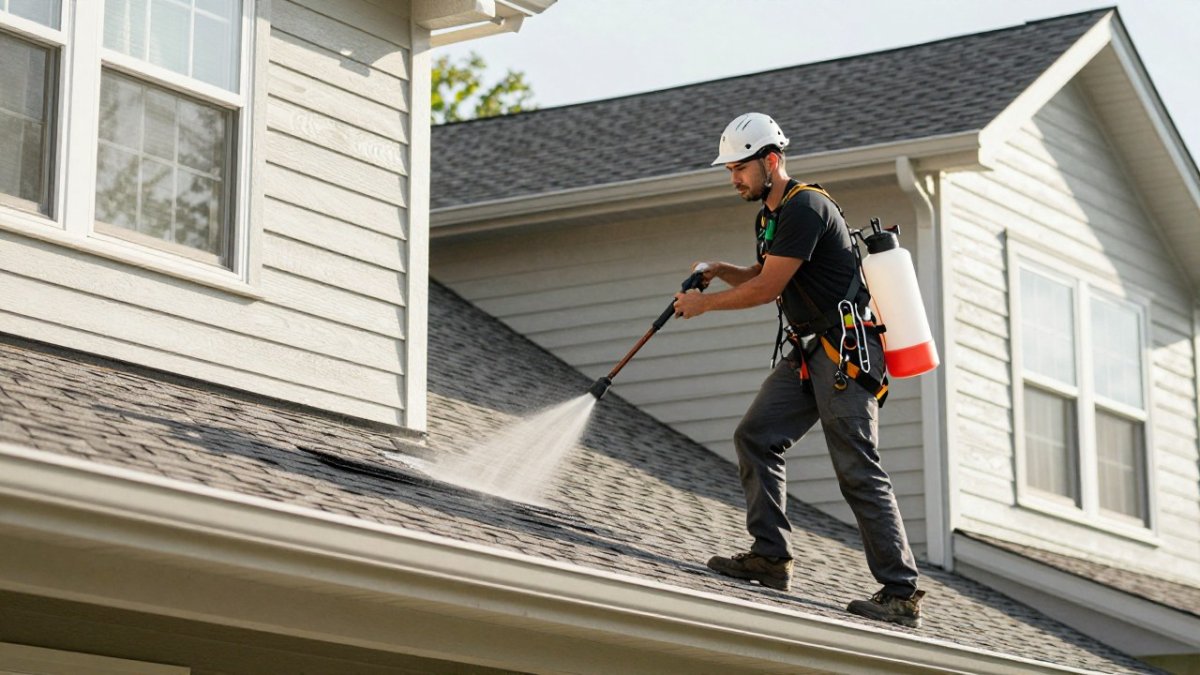
Soft washing usually takes more time because the solution needs to dwell on the shingles before rinsing. Ask any provider which method they plan to use and why it suits your roof.
Professional Cleaning Versus DIY: Costs, Risks and Trade-Offs
DIY roof cleaning can appear cheaper because you avoid labor charges, but the trade-offs are significant. Working on a roof carries fall risk, and using the wrong pressure or chemicals can damage shingles, gutters, siding, and landscaping.
Professional cleaning advantages:
- Trained crews can handle roof work with appropriate safety practices.
DIY advantages:
- Lower out-of-pocket cost for simple, low-slope, single-story roofs.
- Control over timing and products.
Watch out: Pressure washing an asphalt shingle roof at home is one of the most common ways homeowners strip granules and shorten roof life. If you are unsure, hire a professional.
Using a Roof Cleaning Cost Calculator and What a Roof Cleaning Estimate Should Include
Online roof cleaning cost calculators can give a rough range by entering roof area, pitch, and stories. They are useful for planning, but they cannot account for hidden conditions, access problems, or the specific treatment your roof needs. Treat any calculator result as a starting point, not a final price.
A complete roof cleaning estimate should list:
- The roof area measured or verified
- The cleaning method (soft washing or other)
- The cleaning solution and treatment plan
- Whether rinsing and plant protection are included
- Access requirements and any additional charges
- The warranty or follow-up terms
If a quote does not explain these items, ask for clarification before you accept it.
Booking a Free Roof Cleaning Estimate From Simply Superior Window Cleaning
Simply Superior Window Cleaning serves Ventura and North LA Counties with residential and commercial window cleaning and related exterior services. Because roof cleaning prices depend on your roof’s size, condition, and access, a quote tailored to your property is the most accurate way to get a price.
You can request a free estimate, and we offer virtual quote options that let you start the process without a site visit. Share your roof details, photos, and any concerns about staining or growth, and our team will explain what the quote covers. To get a quote for your property, schedule a free quote with Simply Superior Window Cleaning today.
Frequently Asked Questions
How much does it cost to have asphalt shingles cleaned?
Costs vary with roof size, pitch, condition and the cleaning method used, so no single figure applies to every home. Pricing is usually quoted per square foot of roof area or as a flat project fee after an on-site inspection. Simply Superior Window Cleaning does not publish set prices for roof cleaning, so the most accurate figure comes from a free estimate. Ask for the quote to list the cleaning method, the treatment products and the scope of work so you can compare it directly with other bids.
Is soft washing safe for asphalt shingles?
Soft washing is generally the safer choice for asphalt shingles because it uses low pressure and a diluted cleaning solution to remove algae, moss and black streaks without stripping granules. High-pressure washing can loosen granules and shorten shingle life, so it is usually avoided on asphalt roofs. A reputable contractor should explain the method, the solution and how runoff and nearby plants will be protected before work begins.
Can pressure washing damage asphalt shingles?
Yes. High pressure can strip protective granules, dislodge shingles and void some manufacturer warranties, and the damage may not show until shingles age. Homeowners who have had siding or shingles damaged by an earlier wash should ask a provider about pressure settings, technician training and liability coverage before booking. Soft-wash methods are usually recommended for asphalt roofs.
Is professional roof cleaning worth the cost?
For many homeowners it is, especially when the roof is stained with algae or moss and the work requires safe access and proper chemicals. Professionals bring equipment, insurance and experience with asphalt shingles, which reduces the risk of costly damage. Doing it yourself may cost less upfront but carries fall and property-damage risks. Whether the expense is justified depends on the roof’s condition, your comfort on a ladder and how long you expect the cleaning to last.