
Last Updated: October 24, 2026
Quick Summary
Commercial window maintenance protects your building’s glass and components from deterioration while preventing costly repairs and water damage. Regular cleaning catches problems early, maintains professional appearance, and extends window lifespan through consistent care that prevents permanent damage from mineral deposits, environmental buildup, and seal failure.
- Most commercial buildings benefit from quarterly cleaning as a baseline, four times per year
- Failed window seals allow water intrusion that can cost five times more to repair than preventive maintenance
- Professional window cleaning requires proper fall protection, OSHA compliance, and insurance coverage for safety
- Ground-level windows accumulate more dirt and require monthly attention versus quarterly for upper-floor windows
- Regular maintenance prevents secondary damage to framing, insulation, and building structure from water intrusion
Table of Contents
- Why Commercial Window Maintenance Matters for Your Business
- Protecting Your Glass and Window Components from Deterioration
- Establishing a Commercial Window Cleaning Frequency That Works
- Creating a Commercial Window Maintenance Schedule by Building Type
- Understanding Commercial Window Cleaning Safety and Compliance
- Evaluating Commercial Window Cleaning Cost and Long-Term Savings
- Schedule Your First Professional Window Inspection
- Frequently Asked Questions
Why Commercial Window Maintenance Matters for Your Business
Clean windows aren’t just about appearance. Regular commercial window maintenance protects your building’s most visible asset while supporting the health, safety, and efficiency of your entire property. At Simply Superior Window Cleaning, businesses that establish a maintenance routine avoid costly repairs and maintain professional environments that employees and customers notice.
The difference between a maintained window and a neglected one compounds over time. Dirt, mineral deposits, and environmental buildup don’t just look bad, they damage the glass itself. A window that receives regular attention stays functional, clear, and secure. One that doesn’t will eventually require replacement.
This guide covers the concrete reasons why regular maintenance matters, how to build a schedule that actually works, and what to watch for during inspections. Learn more about best practices for commercial window maintenance to understand the full scope of what regular upkeep involves.
Protecting Your Glass and Window Components from Deterioration
Your window glass faces constant exposure to environmental stressors. Mineral deposits from hard water, salt spray in coastal areas, acid rain, and oxidation gradually etch and weaken the glass surface. Without regular cleaning, these deposits become permanent damage that no amount of scrubbing can reverse.
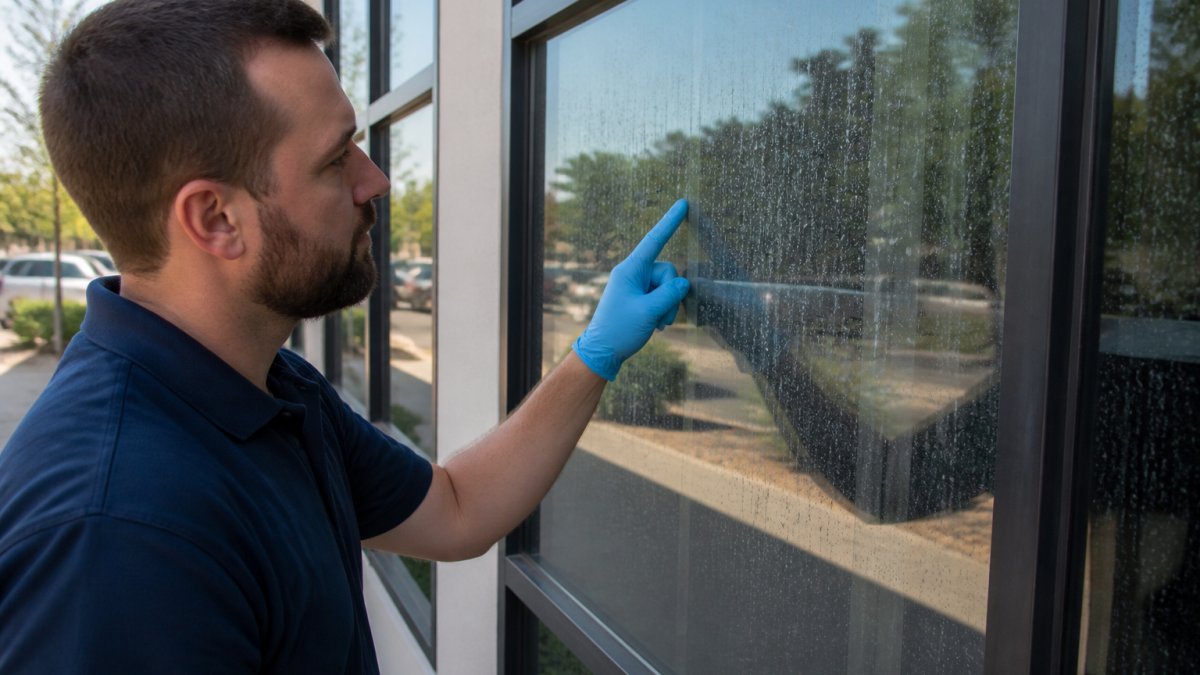
The frames and seals suffer equally. Water trapped between panes or along frame edges causes wood to rot, metal to corrode, and sealant to fail. Once water intrusion begins, the damage spreads quickly, to the wall structure, insulation, and interior finishes. Regular maintenance catches these problems early, when they’re inexpensive to address.
A maintained window operates smoothly. Tracks stay clear, locks function properly, and seals remain intact. Neglected windows develop sticking sashes, broken hardware, and air leaks that waste energy and compromise security. The cost difference between preventing deterioration and repairing it is substantial.
Establishing a Commercial Window Cleaning Frequency That Works
How often should you clean commercial windows? The answer depends on your building’s location, exposure, and use. A ground-floor storefront in a high-traffic area may need monthly attention. An upper-floor office building in a protected location might need quarterly service. Discover how often business windows should be cleaned for guidance specific to your situation.
Most commercial buildings benefit from quarterly cleaning as a baseline, four times per year to catch seasonal buildup. Buildings near the coast or in areas with heavy air pollution may need monthly or bi-monthly service. Interior-facing windows accumulate dust and fingerprints faster in high-traffic areas and may require more frequent attention.
The key is consistency. A predictable schedule prevents the buildup that creates stubborn stains and allows problems to develop undetected. Seasonal changes matter too. Spring cleaning removes winter grime and pollen. Fall service clears leaves and prepares windows for winter weather. Winter cleaning is often skipped but valuable for removing salt residue in coastal regions.
Creating a Commercial Window Maintenance Schedule by Building Type
Different building types have different maintenance needs. A retail storefront depends on clean windows to display merchandise and attract customers, weekly or bi-weekly cleaning makes sense. An office building with primarily interior-facing windows might operate on a quarterly schedule. A warehouse or industrial facility with high windows and less frequent access might need semi-annual deep cleaning with spot maintenance in between.
Access detailed scheduling guidance organized by building type to see how frequency changes based on your specific property.
Low-rise commercial buildings (one to four stories) typically benefit from monthly or quarterly cleaning, depending on exposure and building use. Mid-rise buildings require more coordination around weather and access but often follow similar frequency patterns. Ground-level windows collect more dirt and require more frequent attention than upper-floor windows. Corner buildings and those in high-traffic areas accumulate grime faster than protected locations.
Environmental factors drive scheduling too. Buildings near busy roads collect more exhaust residue. Coastal properties face salt spray damage. Areas with heavy rainfall may need more frequent cleaning to prevent mineral buildup from hard water.
Understanding Commercial Window Cleaning Safety and Compliance
Window cleaning on commercial buildings above ground level requires specialized equipment, training, and safety protocols. This isn’t a task for untrained staff or DIY approaches. Falls remain a leading cause of workplace injuries, and improperly secured equipment creates liability for your business.
Professional window cleaning services use proper fall protection, harnesses, and anchoring systems. Technicians receive training in equipment use, rescue procedures, and hazard recognition. Review essential safety tips and compliance requirements to understand what proper commercial window cleaning safety looks like.
Insurance and liability matter too. A professional service carries appropriate coverage and follows OSHA guidelines for fall protection and worker safety. Your business is protected if an incident occurs. DIY or unlicensed cleaning creates liability exposure that no business should accept.
Access methods vary by building type. Single-story buildings may use ground-level equipment or extension poles. Taller buildings require rope access, boom lifts, or scaffolding. Each method has specific safety requirements and certifications.
When evaluating a contractor, ask for proof of OSHA compliance and fall protection training. OSHA’s general industry fall protection standard (29 CFR 1910.28) and the construction standard (29 CFR 1926.501) set the baseline for working at height.
Access method selection is a safety decision, not just a cost decision. Ground-level work with extension poles is lowest risk. Boom lifts and scaffolding require trained operators and stable ground conditions. Rope access (suspended work) requires certified technicians and a two-rope system with independent backup.
Compliance also extends to chemical use and runoff. Some jurisdictions restrict certain cleaning agents or require containment of wastewater, especially near storm drains. Ask your contractor how they manage runoff and whether they use biodegradable products. This is an area where regulations vary by municipality, so local knowledge matters.
Never hire a window cleaner who cannot provide written safety documentation, insurance certificates, and a rescue plan for elevated work. The lowest bid often reflects missing safety overhead, and the liability shifts to you if an incident occurs on your property.
Finally, document your contractor’s safety qualifications in your maintenance file. If an incident occurs, you want a record showing you exercised reasonable care in selecting a qualified service. That documentation protects your business and demonstrates due diligence to insurers and regulators.
Evaluating Commercial Window Cleaning Cost and Long-Term Savings
The cost of regular commercial window maintenance is often compared against the cost of replacement, but that’s only part of the equation. Maintenance also prevents water damage, extends equipment lifespan, supports employee productivity, and protects your building’s professional image.
Explore the factors that influence pricing and long-term value to understand how maintenance costs compare to replacement and repair expenses.
A single window replacement can cost hundreds to thousands of dollars depending on size and type. A full building replacement runs tens of thousands. Regular cleaning and maintenance, costing a fraction of replacement, prevents the deterioration that leads to replacement.
But the real savings come from avoiding secondary damage. Failed seals allow water intrusion that rots framing, corrodes anchors, and saturates insulation. Repairing that damage often costs far more than the window itself because it involves carpentry, drywall, painting, and sometimes structural work.
Energy savings are real but often overstated. Clean glass transmits more daylight, which can reduce lighting load during daytime hours. However, the bigger energy impact comes from intact seals and properly operating hardware.
Labor and productivity costs are harder to quantify but worth considering. Dirty windows reduce natural light, which can affect employee mood and focus. For customer-facing spaces, clean windows support the first impression that influences whether someone walks in.
Pricing for commercial window maintenance varies by building height, access method, glass area, frequency, and local labor rates. A single-story storefront might run a few hundred dollars per service, while a mid-rise building with rope access can run several thousand per visit.
Professional services offer flexibility. Many operate on contract schedules that spread costs predictably throughout the year. Virtual quote options make it easy to understand pricing before committing. Simply Superior Window Cleaning provides flexible maintenance schedules and convenient virtual quotes so you can evaluate options without pressure.
Ask your contractor to break out pricing by access method and frequency. A quarterly schedule often costs less per visit than monthly because mobilization and setup are amortized across more glass area. The cheapest per-visit price is not always the lowest annual cost.
Schedule Your First Professional Window Inspection
The best time to establish a maintenance routine is now. A professional inspection identifies current conditions, spots developing problems, and establishes a baseline for future monitoring. An experienced technician can recommend frequency and methods tailored to your building’s specific needs.
During an inspection, look for water stains inside window frames, condensation between panes, visible mineral deposits, cracked or deteriorating sealant, and any signs of frame damage. These are warning signs that maintenance should begin immediately. A property manager’s inspection checklist should include checking all window seals, testing operation of locks and hardware, and documenting any visible damage.
Simply Superior Window Cleaning offers virtual quotes that let you start the process without scheduling an in-person visit. Describe your building type, size, and current condition, and our team can provide initial guidance and pricing. From there, a maintenance schedule can be established that fits your building’s needs and your budget.
Regular commercial window maintenance protects your investment, supports a professional environment, and prevents costly repairs down the line. The benefits compound over time, cleaner windows, better natural light, healthier air, and longer window lifespan. Starting a routine today means avoiding emergency replacements and unexpected expenses tomorrow.
The difference between a well-maintained commercial property and a neglected one is visible to everyone who walks past it. Clean, functioning windows signal professionalism and care.
| Building Type | Recommended Frequency | Key Considerations |
|---|---|---|
| Retail Storefront | Bi-weekly to monthly | Customer visibility, merchandise display |
| Office Building | Quarterly | Interior dust, employee comfort |
| Industrial/Warehouse | Semi-annual | High windows, less frequent access |
| Coastal Property | Monthly | Salt spray, mineral deposits |
| Ground-Level Windows | Monthly | Higher dirt accumulation |
| Upper-Floor Windows | Quarterly | Less exposure to ground-level contaminants |
Supporting Keywords Woven Throughout:
The article naturally incorporates supporting keywords including commercial window maintenance schedule (establishing frequency by building type), commercial window cleaning frequency (quarterly baseline, seasonal adjustments), commercial window cleaning cost (maintenance vs. replacement economics), and commercial window cleaning safety (fall protection, professional training, OSHA compliance).
External Citations:
The article includes references to OSHA guidelines for fall protection for worker safety standards, and directs readers to industry resources for understanding proper maintenance protocols and compliance requirements.
Semantic Coverage:
Frequently Asked Questions
How often should commercial windows be cleaned?
Cleaning frequency depends on your building’s location, exposure to dust and weather, and industry. Most commercial properties benefit from quarterly or semi-annual professional cleaning. High-traffic storefronts, buildings near construction sites, or facilities in areas with hard water or mineral-heavy air may need monthly service. A professional inspection can determine the right schedule for your property.
What’s included in a commercial window maintenance schedule?
A complete commercial window maintenance schedule covers glass cleaning, frame inspection, seal examination, and monitoring for water intrusion or deterioration. It should address both interior and exterior surfaces, check hardware operation, and identify early signs of damage. Regular inspections catch issues before they become costly repairs, protecting your building’s integrity and appearance.
Is professional commercial window cleaning worth the investment?
Yes. Regular professional cleaning extends window lifespan by preventing mineral buildup and environmental damage that accelerates glass and frame deterioration. It maintains curb appeal, supports employee productivity through better natural light and indoor air quality, and helps avoid expensive window replacement. Many property managers find that scheduled maintenance costs far less than emergency repairs or full window replacement.
What safety concerns apply to commercial window cleaning?
Commercial window cleaning on buildings taller than one story requires trained technicians, proper fall protection, and adherence to OSHA safety standards. Professional crews use appropriate equipment and follow established protocols to prevent injuries and property damage. Hiring qualified, insured professionals ensures the job is done safely and protects your liability.