
Table of Contents
- Why Hard Water Leaves Spots on Glass
- Tools and Materials for Streak-Free Windows
- Step-by-Step: How to Get Streak-Free Windows with Hard Water
- The Best Hard Water Stain Remover for Glass
- How to Prevent Hard Water Spots on Windows
- When to Consider Hiring Professional Window Cleaners
- Frequently Asked Questions
Last Updated: October 1, 2026
Why Hard Water Leaves Spots on Glass
Hard water spots appear because your water carries dissolved minerals, mostly calcium and magnesium. When that water dries on glass, the minerals stay behind.
The spot is not dirt, it is mineral residue bonded to the surface.
Rain and sprinkler overspray make this worse. Sprinklers throw fine droplets that dry fast in the sun, which leaves concentrated mineral deposits on exterior glass.
Surface Deposits vs. Permanent Glass Etching
Most homeowners assume every white spot will scrub off. That mistake is expensive.
A surface deposit sits on top of the glass and can be removed. Etching happens when minerals bond with the silica in the glass itself, physically damaging the surface. No cleaner fixes that.
Here is how to tell them apart:
- Surface deposit: white or chalky, fades slightly when wet, feels rough under a fingernail
- Etching: cloudy or gray, unchanged when wet, feels smooth but looks permanently hazy
If you catch deposits early, they come off. If you wait through a full dry season, you may be looking at permanent damage.
Tools and Materials for Streak-Free Windows
You do not need a truck full of gear, just the right few items.
The core kit:
- Distilled vinegar or a dedicated hard water cleaner for mineral breakdown
- Distilled water for the final rinse, because tap water puts minerals right back
- A microfiber cloth for buffing
- A squeegee with a fresh, sharp rubber blade
- A spray bottle for controlled application
- A soft scrub pad or fine polishing compound for stubborn spots
Skip paper towels. They leave lint and drag residue around the glass.
Never use an abrasive pad or steel wool on glass. It scratches the surface and creates tiny grooves that trap minerals faster next time. Once glass is scratched, every future cleaning gets harder.
Check your water first. If you are on a well or in a hard water area, tap water can undo your work in seconds.
Step-by-Step: How to Get Streak-Free Windows with Hard Water
Here is the process, in order. Rushing any step is why most DIY attempts leave streaks.
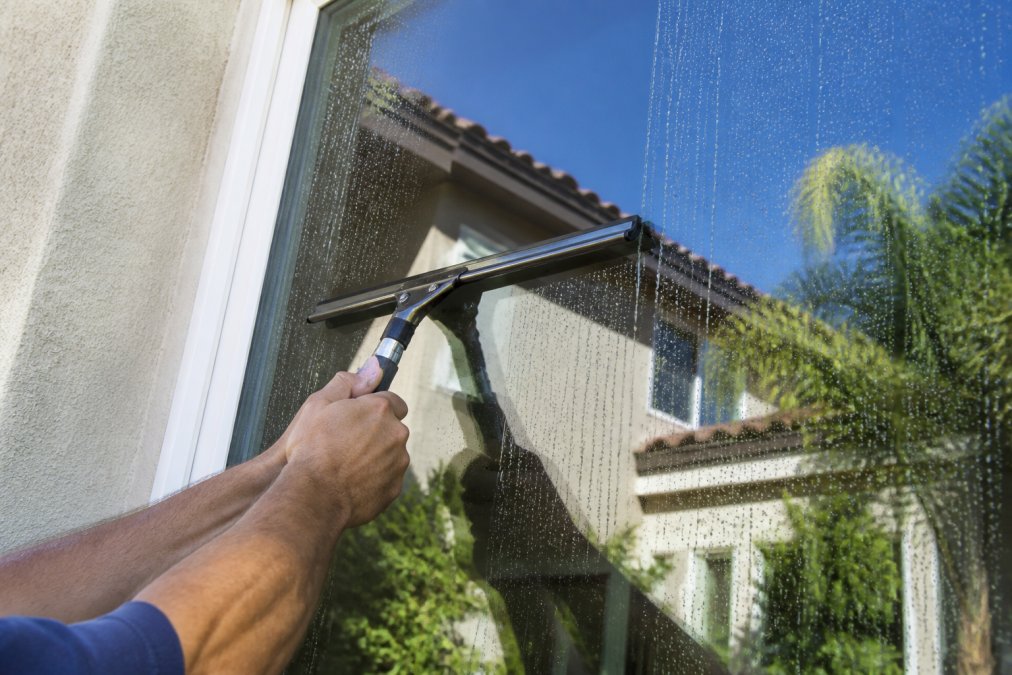
Step 1: Test Your Water Quality
Fill a clear glass with tap water and let it evaporate overnight. A white film means your water is hard, and that film is what lands on your windows.
For a real number, a water test strip or lab test gives you a hardness reading.
Step 2: Apply the Right Cleaning Solution
Mix distilled vinegar with distilled water in your spray bottle, roughly equal parts, though heavily spotted glass may need more vinegar.
- Window seals and gaskets: prolonged acid contact can dry out or degrade rubber and some synthetic seals over time. Keep the spray on the glass, not the frame channel.
- Anodized aluminum and painted frames: acid can dull the finish or leave water-spot staining of its own. Rinse frames promptly if overspray lands on them.
- Aftermarket window tint and films: acidic cleaners can cloud or lift adhesive on some films. Check the film manufacturer’s cleaning guidance first, and test a corner.
- Natural stone sills and surrounding masonry: acid etches marble, limestone, and travertine. Cover or pre-wet these surfaces before you start.
Test any cleaner on a small corner first. Some products strip window seals or leave a haze on tinted glass. A 30-second test saves a full redo.
Step 3: Agitate and Rinse
Work the solution into the spots with a microfiber cloth or soft pad. Use small circles. Do not let it dry on the glass.
Step 4: Squeegee and Buff
Pull the squeegee in overlapping strokes, top to bottom. Wipe the blade between passes.
Why Streaks Actually Form: The Evaporation Factor
Streaks are usually a drying failure, not a cleaning failure. When a film of water or cleaner evaporates unevenly, the last liquid to disappear concentrates dissolved minerals and surfactant residue into visible lines.
Three variables control how fast that happens:
- Temperature: hot glass evaporates the film faster, so the cleaner dries before you can squeegee it. Work in shade or early morning on hot days.
- Humidity: low humidity pulls moisture off the glass quickly, which is why windows streak worse on dry, windy afternoons than on humid mornings.
- Air movement: direct sun and wind both accelerate drying. A pane in full sun can flash-dry in seconds.
Streak-free results come from controlling evaporation, not from scrubbing harder. Rinse with mineral-free water, keep the glass wet until the squeegee touches it, and match your working pace to the temperature and humidity of the day.
The Best Hard Water Stain Remover for Glass
There is no single best product for every window. The right choice depends on how bad the deposit is, and whether it is still on the surface or already etched into the glass.
| Stain Level | Best Approach | Why |
|---|---|---|
| Light film | Distilled vinegar and water | Mild acid lifts fresh minerals |
| Moderate spots | Commercial hard water cleaner | Formulated to cling and break down deposits |
| Heavy buildup | Polishing compound with cerium oxide | Mild abrasive removes bonded residue |
| Etched glass | Professional assessment | Surface is damaged, not dirty |
Surface Deposit vs. Etched Glass: The Decision That Saves Your Windows
Before buying any product, confirm what you are fighting. This step determines whether polishing will help or make things worse.
- Surface deposit: sits on top of the glass. It is white or chalky, fades slightly when wet, and feels rough under a fingernail. Acid cleaners and light mechanical polishing can remove it.
- Etched glass: minerals have bonded with the silica in the glass itself and physically damaged the surface. It looks cloudy or gray, does not change when wet, and feels smooth even though it looks hazy. No cleaner removes it, and aggressive polishing can thin the glass or leave visible swirl marks.
How Cerium Oxide Polishing Actually Works
Cerium oxide is a fine abrasive polishing compound, not a cleaner. It works mechanically: the particles shear off the mineral layer bonded to the glass, and because they are extremely fine, they leave the glass smooth rather than scratched when used correctly.
It is not a spray-and-wipe product. The general process:
- Confirm the deposit is on the surface, not etched in.
- Clean the glass first so you are not polishing over dirt.
- Mix the cerium oxide powder with water into a thin slurry.
- Apply with a felt or foam polishing pad on a low-speed rotary tool, or by hand with a dedicated glass polishing pad.
- Keep the slurry wet and work in small sections. Do not let it dry.
- Wipe residue with a clean microfiber cloth and rinse with distilled water.
Cerium oxide polishing removes a microscopic layer of glass. Used with too much pressure, too high a speed, or on a dry surface, it can leave permanent swirl marks or haze that is worse than the original spots. Practice on a small, low-visibility corner first, and never polish tinted film, the abrasive will destroy it.
Why This Is a Job Most Homeowners Should Hand Off
Polishing glass is a skill, not a recipe. Slurry consistency, pad speed, pressure, dwell time, and heat buildup are learned through repetition. A professional can also tell you upfront whether the spots are removable, saving you from buying compounds and pads for glass that is already etched.
How to Prevent Hard Water Spots on Windows
Prevention beats removal every time. Once minerals bond, you are fighting a harder battle.
The habits that work:
- Rinse windows after rain or sprinkler runs
- Dry exterior glass with a squeegee instead of letting it air dry
- Clean more often in dry, sunny seasons
- Add a water softener if your whole home runs hard
Sprinkler Positioning and Seasonal Timing
Aim sprinkler heads away from the house. Overspray on glass is the number one cause of repeat spotting.
When to Consider Hiring Professional Window Cleaners
Some jobs are worth handing off: high windows, heavy buildup, and etched glass.
Hiring professional window cleaners makes sense when:
- Windows are above the first floor and unsafe to reach
- Spots have resisted every DIY method
- You need the exterior perfect for showings or a sale
- You manage a commercial property and need a set schedule
Frequently Asked Questions
What is the best hard water stain remover for glass?
For light mineral deposits, distilled vinegar mixed with water works well. For tougher calcium buildup, look for commercial removers containing acetic acid or a specialized polishing compound like cerium oxide. Always test on a small area first. If stains persist after several attempts, the glass may be etched and require professional restoration.
Can hard water permanently damage window glass?
Yes. When minerals like calcium and magnesium sit on glass for months, they can bond with the silica surface and cause etching. Etching is permanent damage that no cleaner can remove. The best defense is regular cleaning and preventing sprinkler overspray from drying on the glass.
What tools do professionals use to prevent streaks on glass?
Professionals rely on a few key tools: a microfiber cloth, a professional squeegee, and purified or distilled water. Distilled water has no minerals, so it evaporates without leaving residue. They also use a rinse cycle with a water-fed pole for high windows, which avoids tap water spots entirely.
How do I prevent hard water spots on windows?
Adjust sprinkler heads so they don’t hit the glass, or water early in the morning when evaporation is slower. After rain or irrigation, rinse windows with distilled water and dry with a microfiber cloth. For long-term protection, consider a water softening system or apply a glass sealant that repels minerals.
Hard water spots are a maintenance problem, not a one-time cleaning job. Catch them early, rinse with distilled water, and keep sprinklers aimed away from the glass. For high windows, stubborn buildup, or a property that needs to look its best fast, Simply Superior Window Cleaning offers trained technicians, flexible maintenance schedules, and virtual quotes that save you a site visit. Schedule a free quote and get glass that stays clear.