
Table of Contents
- Commercial Window Cleaning vs Pressure Washing: Key Differences at a Glance
- Soft Washing vs Pressure Washing: How Each Method Treats Building Surfaces
- Commercial Window Cleaning Frequency: What Schedule Your Building Needs
- Window Cleaning Safety Standards OSHA: What Property Managers Should Verify
- Equipment, Insurance, and Liability Differences Between the Two Services
- Cross-Selling Strategy: Combining Both Services for Better Property Maintenance
- Conclusion
- Frequently Asked Questions
Last Updated: September 16, 2026
Commercial Window Cleaning vs Pressure Washing: Key Differences at a Glance
Commercial window cleaning is the process of removing dirt, grime, and mineral deposits from glass surfaces using low-pressure water, squeegees, and water-fed poles, while pressure washing uses high-PSI water to strip contaminants from concrete, brick, and other hard surfaces. Many property managers treat them as interchangeable services. They are not, and mixing them up can crack glass, etch siding, and void maintenance warranties.
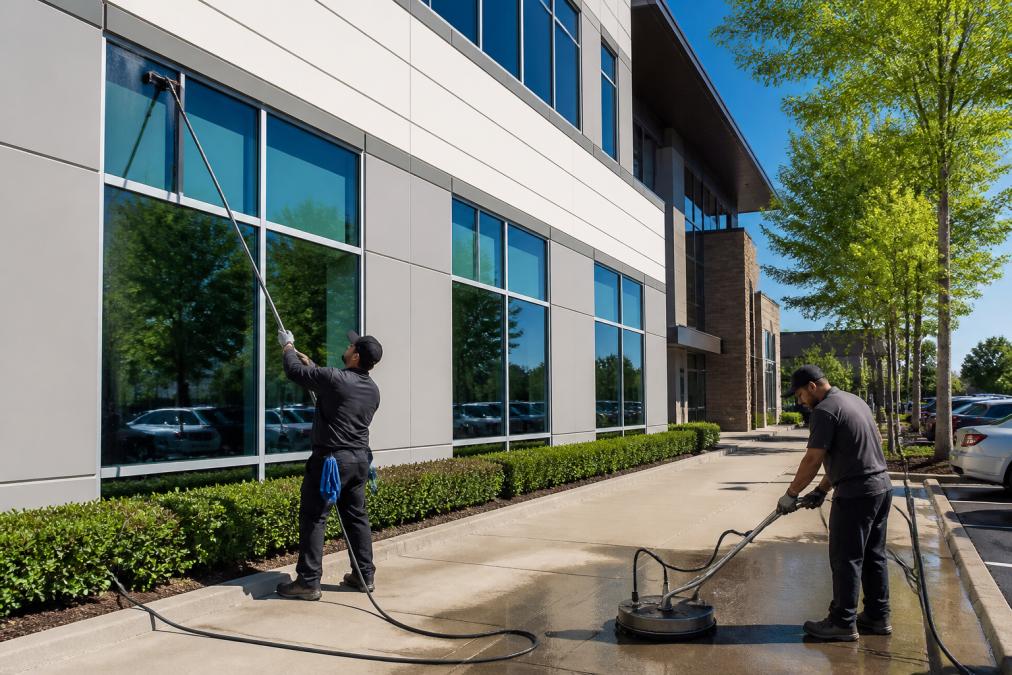
Side-by-Side Comparison Table
| Factor | Commercial Window Cleaning | Pressure Washing |
|---|---|---|
| Primary surface | Glass, frames, awnings | Concrete, brick, siding |
| Pressure range | Low-pressure systems, under 400 PSI | 1,300-4,000 PSI |
| Typical method | Squeegee, water-fed pole, detergent | Surface cleaner, nozzle tips |
| Damage risk | Low when trained | High on glass and soft substrate |
| Repeat frequency | Monthly to quarterly | Quarterly to annually |
| Best for | Curb appeal, storefronts, high-rise glass | Flatwork, dumpster pads, parking areas |
The table tells you the short version: glass needs finesse, concrete needs force, and your property almost certainly needs both on different schedules.
Soft Washing vs Pressure Washing: How Each Method Treats Building Surfaces
Soft washing is a low-pressure cleaning method that relies on specialized detergents to break down algae, mold, and grime, then rinses surfaces at pressures under 500 PSI. Pressure washing uses mechanical force, typically 1,300 PSI and up, to blast contaminants off hard surfaces.
PSI Levels and Surface Compatibility
Match PSI to the surface and the job gets safer and faster:
- Glass and frames: Under 400 PSI, ideally soft washing with detergent
- Painted siding: 1,200-1,500 PSI with a wide nozzle tip
- Concrete flatwork: 2,500-4,000 PSI with a surface cleaner
- Brick and masonry: 1,500-2,500 PSI, never concentrated on mortar joints
- Solar panels: Low-pressure only, with deionized water
The most common mistake is pointing a high-pressure wand at glass to save time. Tempered glass can shatter from thermal shock or edge stress, and scratched glass cannot be polished out. It has to be replaced.
Commercial Window Cleaning Frequency: What Schedule Your Building Needs
Most commercial properties need professional window cleaning monthly to quarterly, depending on foot traffic, tree cover, and proximity to highways or salt air. Storefronts facing heavy pedestrian traffic usually sit at the monthly end. Low-rise office buildings with mature landscaping can stretch to quarterly.
Several variables push the schedule tighter:
- Coastal exposure and salt air accelerate glass etching
- Pollen season in spring coats every horizontal surface
- Nearby construction dumps dust on glass and concrete alike
- High-traffic entrances show fingerprints and grime within days
Walk your property at the same time of day for two weeks before setting a schedule. You will spot which elevations and surfaces actually collect dirt fastest, and that observation beats any generic frequency chart.
Window Cleaning Safety Standards OSHA: What Property Managers Should Verify
Window cleaning safety standards under OSHA require fall protection for any worker exposed to a fall of six feet or more, and window cleaning operations fall squarely under those rules. Property managers should verify that any contractor carries fall protection training, uses certified anchor points, and documents equipment inspections before work begins.
The verification list is short but non-negotiable:
- Fall protection plan for every elevation above six feet
- Documented training records for each technician
- Ladder and scaffold inspection logs
- Proof of workers’ compensation and general liability coverage
Equipment, Insurance, and Liability Differences Between the Two Services
The equipment and insurance profiles for these two services diverge sharply, and that gap is where most property managers get exposed. Window cleaning rigs run water-fed poles, deionized water systems, squeegees, scrapers, and low-pressure pumps that rarely exceed a few hundred PSI. Pressure washing demands trailer- or skid-mounted units, surface cleaners, rotating nozzles, downstream chemical injectors, and, in many jurisdictions, water reclamation and containment equipment.
Where the Liability Actually Shifts
Low-pressure glass work concentrates risk on the glass itself and on fall exposure. A dropped pole, a scratched pane, or a failed anchor point are the claims that show up. High-pressure work concentrates risk on the substrate and on everything downstream of the wand: etched mortar, stripped paint, cracked siding, water forced behind a wall cavity, and runoff carrying oil, detergent, and debris into a storm drain.
- General liability: Covers accidental damage to your building, vehicles, landscaping, or a third party’s property
- Workers’ compensation: Covers injuries to the crew, which is what keeps an injury from becoming your liability
Water Reclamation and Runoff Rules
Many municipalities restrict runoff from pressure washing because the wastewater carries oil, grease, detergent, and suspended solids into storm drains that discharge to waterways. In practice, that means a compliant pressure washing contractor often needs one or more of the following:
- A vacuum recovery or reclamation system that captures wash water at the surface
- Berms, mats, or blocking to keep runoff out of drains
- Pre-treatment or disposal of captured water rather than dumping it on grade
- Documentation of where the water went and how it was handled
Equipment Maintenance Costs Over Time
The long-run cost curves for the two services look nothing alike, and this is the part most comparisons skip. Pressure washing concentrates cost in wear parts and pumps: seals, unloaders, nozzles, hoses, and eventually a pump or engine rebuild. A trailer-mounted unit that runs hard can consume a meaningful share of its purchase price in maintenance over a few seasons.
The cheapest bid usually cuts insurance, training, reclamation, or maintenance. One damaged window, one runoff violation, or one uncovered injury costs more than a year of doing it right. Verify the certificate, the class of work, and the disposal plan before you sign.
Cross-Selling Strategy: Combining Both Services for Better Property Maintenance
Bundling commercial window cleaning with pressure washing on a single contract lowers your per-service cost and eliminates scheduling gaps. One vendor, one insurance certificate, one point of contact, and a property that looks maintained from the glass down to the concrete. But the value only shows up if the two services are sequenced correctly, so here is a workflow that actually works.
A Concrete Bundling Workflow
- Walk the property and map surfaces. Separate glass, frames, awnings, and signage from concrete, brick, siding, and dumpster pads. Note elevations, access constraints, and which surfaces collect the most soil.
- Set the pressure washing date first. Flatwork, pads, and masonry should be cleaned before glass, because overspray, mist, and dislodged debris will land on windows. Cleaning glass first means cleaning it twice.
- Schedule window cleaning 24 to 72 hours after pressure washing. This gives surfaces time to dry, lets any loose debris settle or wash away, and keeps the crew from working around wet concrete.
- Sequence within the visit. If both services run the same day, pressure wash the perimeter and flatwork in the morning, then move to glass in the afternoon once overspray risk has passed and the sun angle has shifted off the hottest elevations.
- Bundle the paperwork. One scope of work, one certificate of insurance covering both classes of work, one invoice, one point of contact for scheduling and punch lists.
- Lock the cadence. Put window cleaning on a monthly-to-quarterly cycle and pressure washing on a quarterly-to-annual cycle inside the same agreement, with a single renewal date.
Why the Sequence Matters More Than the Discount
Mobilization is where a large share of any exterior cleaning budget disappears, getting the truck, water supply, and crew to the site. A crew already on site for window work can run a surface cleaner across the entryway in the same visit, which cuts that cost. But the bigger win is appearance consistency. Spotless windows above stained sidewalks look worse than either surface cleaned alone, and property managers get judged on the whole elevation, not the glass.
What to Put in the Contract
- Scope by surface: List each surface type and the method assigned to it, so there is no ambiguity about what gets pressure washed versus soft washed versus hand cleaned.
- Frequency by surface: Different cadences for glass versus flatwork, on one agreement.
- Insurance and reclamation language: Confirm the vendor carries coverage for both classes of work and, where required, handles runoff per local rules.
- Access and scheduling windows: Tenant hours, loading dock availability, and any blackout dates.
- Punch-list process: Who inspects, how quickly issues are corrected, and what triggers a re-clean.
For property managers running multiple buildings, a combined contract simplifies bid estimation and vendor management. Instead of tracking two schedules and two insurance files, you track one. Simply Superior Window Cleaning handles both services, along with solar panel cleaning and gutter maintenance, under flexible maintenance schedules and virtual quote options for buildings up to four stories.
Run a single pilot building on the bundled workflow for one full cycle before rolling it out across a portfolio. You will learn your actual soil-load patterns, which surfaces need a tighter cadence, and where the sequence breaks down, and that data makes every subsequent bid more accurate.
Conclusion
Managing a commercial property means juggling surfaces that need completely different cleaning methods, and treating glass and concrete the same way is how damage happens. Simply Superior Window Cleaning pairs low-pressure window cleaning with properly calibrated pressure washing, backed by rigorous technician training, monthly safety meetings, and 24/7 maintenance services. Get a virtual quote and put both services on one schedule.
Frequently Asked Questions
Can you use a pressure washer on commercial windows?
No. Standard pressure washers run 2,000 to 4,000 PSI, which can crack glass, strip window seals, and force water behind frames. Commercial window cleaning uses low-pressure systems, typically under 400 PSI, with water-fed poles, squeegees, and mild detergents. If your windows need exterior grime removal, soft washing at low pressure is the safe method. High-pressure equipment belongs on concrete, brick, and flatwork, not on glass or window assemblies.
How often should commercial buildings schedule window cleaning versus pressure washing?
Commercial window cleaning frequency depends on your building type and location. Storefronts near busy roads usually need cleaning every two to four weeks. Office buildings and multi-story properties often do well with monthly or quarterly service. Pressure washing handles concrete, dumpster pads, and building exteriors less often, typically two to four times per year. Buildings near the coast or with heavy foot traffic may need both services on a tighter schedule.
Is professional window cleaning worth the investment for commercial properties?
Yes, for most commercial properties. Clean windows affect curb appeal, which influences tenant satisfaction and customer perception. Professional crews also carry liability insurance, follow OSHA safety standards for working at height, and have the equipment to reach upper floors safely. Doing it yourself with a pressure washer risks glass damage and injury. A maintenance contract spreads the cost across the year and keeps the building consistently presentable.
What are the safety risks of pressure washing near glass surfaces?
High-pressure water can etch glass, break seals, and force moisture into wall cavities. Flying debris from pressure washing can also crack nearby windows. OSHA requires employers to assess these hazards and provide appropriate personal protective equipment. Professional soft washing avoids the problem entirely by using low-pressure systems and chemical application to remove algae, grime, and buildup without the force that damages glass or siding.
What type of exterior cleaning makes the most money for service providers?
Commercial window cleaning and pressure washing can both be profitable services. Many exterior cleaning companies combine both services to meet diverse client needs.
Your building’s glass and its concrete need different tools, different pressures, and different schedules. Simply Superior Window Cleaning delivers both, with trained technicians, documented safety practices, and flexible maintenance contracts sized to your property. Schedule a free quote and get one vendor handling the whole exterior.