
Table of Contents
- What to Expect From a Window Cleaning Service
- Step 1: Clear Pathways and Move Furniture Away From Windows
- Step 2: How to Remove Window Screens for Cleaning
- Step 3: Prepare Exterior Areas and Secure Pets and Children
- Step 4: Address Window Coverings, Blinds, and Sills
- How Often Should You Get Windows Professionally Cleaned?
- Specialty Glass and Multi-Story Home Checklist
- Frequently Asked Questions
Last Updated: September 26, 2026
What to Expect From a Window Cleaning Service
A professional window cleaning service handles the squeegee, ladder, and rinse work, but not your clutter. Knowing how to prepare windows for professional cleaning turns a stressful visit into a quick, smooth appointment.
Homes that are ready take half the time; homes that aren’t cost more and get less.
Crews arrive with a squeegee, mop head, and plan, and they need clear access to every pane, inside and out. They can’t move your grandmother’s vase off the sill, and they won’t move your dog out of the yard.
Preparation takes about 30 minutes for a typical home. What follows covers pathways, screens, pets, blinds, and the specialty glass most guides skip.
The single biggest factor in a fast, streak-free result is access. Clear the path, and the crew can focus on glass instead of obstacles.
Step 1: Clear Pathways and Move Furniture Away From Windows
Walk through your home and look at every window like a stranger would. What’s blocking it?
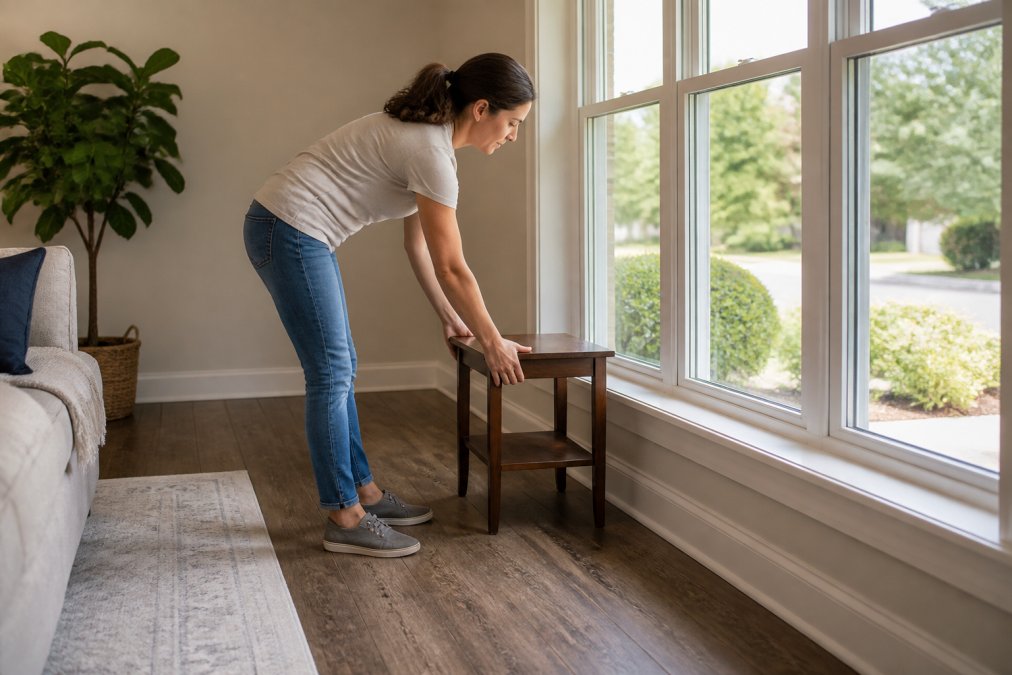
Pathway clearance is the number one thing you can do before the crew arrives.
- Sofas, chairs, and side tables
- Floor lamps and tall plants
- Rugs that could trip someone
- Pet bowls and toy bins
- Wastebaskets and recycling bins
Step 2: How to Remove Window Screens for Cleaning
Here’s the process:
- Unlock the screen frame’s tabs or latches
- Tilt the bottom of the screen inward
- Lift the screen up and out of the top track
- Set screens in a safe spot, not leaning against walls
- Label them by room if you have many identical sizes
Take a photo of each screen before you remove it. Reinstalling them is much faster when you can see which way the tabs face.
Storm windows come out the same way; store them like screens.
Step 3: Prepare Exterior Areas and Secure Pets and Children
Exterior access is where most appointments slow down. A locked gate, loose dog, or hose reel under a window can add 20 minutes and force a technician to skip a pane.
Before the crew arrives, work through this exterior checklist:
- Unlock all side gates, back doors, and fence latches, and make sure the latch actually releases (a sticky gate is a common delay)
- Move pets indoors or to a closed room away from windows
- Keep children inside during the service
- Move planters, hose reels, lawn furniture, grills, and trash bins at least three feet from the foundation
- Pick up debris, fallen branches, and dog waste near the house
- Roll up and secure garden hoses so they don’t become a trip line
- Park vehicles out of the driveway and away from ground-floor windows
Seasonal preparation differences
What blocks exterior access changes with the calendar, and most guides ignore this.
Winter appointments:
- Clear snow and ice from walkways, patios, and the base of each window so ladders sit level
- Break up ice dams at the foundation where meltwater refreezes
- Expect the crew to avoid exterior work below roughly 32°F if the cleaning solution can freeze on the glass
- Remove holiday decor, wreaths, and light clips from window frames and sills
Spring appointments:
- Rinse pollen and tree sap off exterior sills before the visit; heavy buildup can stain frames
- Clear gutters that overflow onto lower windows
- Trim back new growth from shrubs and vines that block ladder placement
Summer and fall appointments:
- Cut back branches that have grown into the ladder path
- Clear fallen leaves from window wells and basement window channels
- Move sprinklers and drip lines away from the foundation so they don’t soak the crew’s work area
Multi-story home access
For homes with a second story or higher, confirm in advance which exterior windows the crew can reach from the ground with an extension pole and which need a ladder. Anything above the second floor, or over a steep roof pitch, may need special equipment.
Walk the perimeter and note:
- Low-hanging power lines, cable drops, or satellite dishes near windows
- Tree limbs within a ladder’s reach
- Decks, awnings, or roof overhangs that block ladder placement
- Windows above a sloped roof or skylight
- Ground that is soft, sloped, or uneven under the ladder feet
Take a phone photo of each exterior wall before the appointment and text it to the scheduler. It’s the fastest way to confirm access and equipment needs before the crew rolls a truck.
Step 4: Address Window Coverings, Blinds, and Sills
Do this before the appointment:
- Raise or open all blinds and curtains
- Remove decor and valuables from sills and ledges
- Dust sills so the crew can wipe them down
- Clear window tracks of loose dirt and debris
Never leave electronics, picture frames, or collectibles on a sill during the appointment. Water drips, and a soaked laptop or a cracked frame is a cost you don’t want to pay.
Heavy drapes near a window are worth taking down for the day, giving the crew full access and protecting the fabric from splashes.
How Often Should You Get Windows Professionally Cleaned?
Most homes need professional window cleaning two to four times per year, depending on location, tree cover, and how much you care about the view.
Here’s a simple guide:
| Situation | Recommended Frequency |
|---|---|
| Coastal or dusty areas | Every 2 to 3 months |
| Homes with many trees | Every 3 months |
| Standard suburban home | Every 4 to 6 months |
| Commercial storefronts | Monthly |
Specialty Glass and Multi-Story Home Checklist
Not all glass is the same, and not all homes are one story. Both change how you prepare, and most guides skip this entirely.
Specialty glass considerations
Tinted and filmed glass: Aftermarket window film and factory tint both scratch easily. Skip abrasive pads, razor blades, and ammonia-based cleaners, which can cloud the film or break down the adhesive. Tell the crew which panes are filmed so they switch to a soft microfiber and a mild surfactant.
Security system integration
This is the step almost every guide leaves out, and it causes the most false alarms.
- Window and door sensors: Contact sensors on window frames can trip when a technician opens, tilts, or bumps a sash. Tell the crew which windows are armed and whether they should leave them closed.
- Motion sensors: Exterior motion detectors near windows will trigger when a technician walks the perimeter with a ladder. Either disarm those zones for the visit or ask the crew to approach from a specific side.
- Glass-break sensors: These listen for the frequency of shattering glass. A squeegee on a dry pane rarely trips them, but a dropped screen can. Warn the crew if you have them.
- Cameras: Exterior cameras will record the crew. That’s fine, but let the office know so no one is surprised, and confirm whether the footage is retained.
- Access codes: If the crew needs a gate code, garage code, or alarm code, share it through the scheduling system rather than a text, and change it after the visit if you’re uncomfortable leaving it active.
Multi-story home checklist
- Confirm which windows the crew can reach safely from the ground
- Note any windows above the second floor or over a roof pitch
- Clear ground-level access around the entire home
- Move vehicles out of the driveway and away from ladder zones
- Warn the crew about low-hanging wires, cable drops, or branches
- Identify any windows with aftermarket film, tint, or leaded panels
- Disarm or adjust alarm zones that cover exterior windows
Don’t assume the crew will figure out your alarm system on arrival. A false alarm can trigger a police response, a fine in some jurisdictions, and a wasted appointment. A two-minute call before the visit prevents all three.
For windows, gutters, and solar panels, a single appointment saves the hassle of multiple visits. Simply Superior Window Cleaning technicians train in classroom and on-the-job settings, with monthly safety meetings.
Homeowners with multi-story properties, specialty glass, solar panels, or a monitored alarm system who want one crew to handle everything in a single visit.
Frequently Asked Questions
Do I need to move furniture before window cleaners arrive?
Yes, moving furniture away from windows is one of the most helpful things you can do. Clear at least 2 to 3 feet of space around each window so technicians can work safely and efficiently. This prevents accidental damage to your belongings and allows unobstructed access to sills and tracks. If you have heavy pieces, focus on small items and let the crew know about anything you could not move.
Should I remove window screens before a professional cleaning?
Most professional services will remove and clean screens for you, but taking them off beforehand can save time. If you choose to remove them yourself, follow the steps in our guide: open the window, locate the release tabs, and gently lift the screen out. Label each screen with its location using painter’s tape so they go back correctly. Never force a stuck screen; let the technicians handle it to avoid damage.
How often should I get windows professionally cleaned?
Most homes benefit from professional window cleaning every 3 to 6 months. If you live near the coast, have trees close to the house, or deal with heavy pollen, aim for every 3 months. Commercial storefronts may need monthly service. Regular maintenance prevents hard water stains and debris buildup, keeping glass streak-free and extending its lifespan.
What should I do with my pets during a window cleaning service?
Secure pets in a quiet room away from the work area. This keeps them safe from open windows, equipment, and cleaning solutions, and prevents them from accidentally escaping. For dogs, a crate or a closed bedroom works well. Let the technicians know where your pets are so they can avoid that area. If your pet is anxious, consider scheduling the appointment when someone can stay home with them.
Preparing for a window cleaning doesn’t have to be complicated, but the details matter. Clear pathways, secured pets, and open blinds turn a stressful visit into a fast, streak-free result. Simply Superior Window Cleaning offers flexible maintenance schedules, virtual quote options, and trained technicians who handle windows, gutters, and solar panels for properties up to four stories. Get started with Simply Superior Window Cleaning and schedule a free quote today.