
Table of Contents
- What Happens During a Professional Window Washing Visit
- Professional Window Cleaning Tools and Techniques
- How Often to Clean Windows and Schedule Service
- Residential Window Washing Cost and Pricing Factors
- Safety Protocols, Ladder Use, and Insurance Verification
- Screens, Sills, Tracks, and Hard Water Stain Removal
- Post-Cleaning Inspection and Seasonal Preparation
- Frequently Asked Questions
Last Updated: September 30, 2026
What Happens During a Professional Window Washing Visit
Professional window washing is a structured, multi-step process, not a quick spray-and-wipe job. At Simply Superior Window Cleaning, every visit follows the same sequence: assessment, preparation, cleaning, and inspection.
The process matters because glass is fragile and expensive to replace. Skipping the walkthrough or rushing the rinse leaves streaks, scratched frames, or water spots that show up days later.
Here is the typical sequence you should see on any reputable visit:
- Walkthrough and site assessment
- Protection of floors, sills, and nearby surfaces
- Interior glass cleaning, then exterior glass cleaning
- Screen, track, and sill detailing
- Final inspection with the homeowner
The Pre-Cleaning Walkthrough and Site Assessment
The walkthrough is where a technician identifies what can be cleaned safely. Cracked panes, failed seals, painted-shut sashes, and fragile screens get flagged before any water touches the glass.
A thorough assessment covers:
- Window count and pane configuration
- Accessibility, including height and obstructions
- Existing damage such as glass oxidation or hard water stains
- Interior flooring and furniture that needs protection
- Any window a homeowner wants skipped
This is also when scope is confirmed, if you asked for exterior glass only, that should be stated before work begins.
Interior and Exterior Glass Cleaning Methods
Interior and exterior glass require different approaches. Interior cleaning uses solution, microfiber, and a squeegee with controlled water volume, because overspray damages trim, electronics, and flooring. Exterior cleaning can use more water and longer-reach tools.
Technicians scrub the full pane, then pull a squeegee in overlapping strokes, wiping the blade between each pass. Skipping the blade wipe is the most common cause of streaks.
Ask whether the crew uses drop cloths and corner guards on interior work. It is a small detail that separates a careful crew from one that leaves water rings on hardwood.
Professional Window Cleaning Tools and Techniques
Professional window cleaning tools fall into four groups: reach equipment, water purification systems, hand tools, and detailing tools. The right combination depends on building height, glass type, frame material, and local water mineral content.
Hand tools have not changed much in decades. The core kit is a brass or stainless steel squeegee, a scrubber sleeve, a detail scraper for paint and sticker residue, and microfiber cloths in two grades, plush for scrubbing, tight for buffing. Steel wool in grades 0000 and 000 is still used on tough mineral spots, but only on tempered glass.
What has changed is reach. Telescopic and water-fed pole systems let technicians clean second- and third-story glass from the ground, removing the biggest safety risk on most residential jobs. Carbon fiber poles are lighter and stiffer than aluminum or fiberglass, reducing fatigue at full extension.
Water-Fed Poles, Deionized Water, and Squeegee Work
A water-fed pole (WFP) system pushes purified water through a telescopic pole to a brush head. Water is filtered through sediment and carbon filtration, then a deionization (DI) resin bed, to strip out minerals, producing a total dissolved solids (TDS) reading near zero. Technicians verify this with a handheld TDS meter, because water above roughly 10 parts per million leaves spots as it dries.
This matters for two reasons: deionized water pulls dirt off glass and leaves nothing behind when it evaporates, so the result is streak-free without a drying pass; and the technician never leaves the ground, eliminating ladder falls.
WFP systems have trade-offs. They use more water than squeegee work, are slower on small jobs, and cannot remove heavy baked-on contamination like paint overspray or construction grout without pre-treatment. They also struggle with hydrophobic or self-cleaning coatings. A good technician knows when to switch back to traditional methods.
Squeegee work still dominates interior glass and any exterior pane within arm’s reach. The technique is simple but unforgiving: wet the glass, scrub the full pane, then pull clean strokes with a sharp blade, wiping between passes. Soft rubber suits cold weather and coated glass; firmer rubber suits warm conditions and heavy soil. A dull or nicked blade is the most common cause of streaks, so professionals replace blades frequently.
Environmental Impact of Cleaning Agents and Water Use
Traditional window cleaning solutions often contain ammonia, alcohol, or surfactants that rinse into landscaping and storm drains. Professional crews increasingly use biodegradable, pH-neutral concentrates, and many rely on deionized water alone for exterior glass, no soap at all, because pure water is an effective solvent once minerals are stripped out.
The environmental angle cuts both ways. WFP systems use more water per pane but eliminate chemical runoff entirely; squeegee work uses less water but typically requires a cleaning solution.
How Often to Clean Windows and Schedule Service
Most homes need exterior glass cleaned regularly, and interior glass less frequently. Commercial storefronts and lobbies often benefit from regular service to maintain curb appeal.
Service frequency depends on four factors:
- Local dust, pollen, and salt air
- Tree cover and bird activity
- Proximity to roads or construction
- Whether the building has hard water sprinkler overspray
Residential Window Washing Cost and Pricing Factors
Residential window washing cost depends on window count, height, accessibility, and condition, not a flat rate.
Pricing factors that move the number most:
| Factor | Why It Changes Price |
|---|---|
| Window count and pane type | More panes means more labor time |
| Building height | Second and third story work needs pole systems or lifts |
| Accessibility | Furniture, landscaping, and locked screens slow crews down |
| Condition | Hard water stains and oxidation require extra treatment |
| Interior vs. exterior | Interior work adds protection and detailing time |
| Add-ons | Screens, tracks, sills, gutters, and solar panels |
What a Service Quote Typically Includes
A complete service quote should state the scope in writing. Look for these items:
- Number and location of windows covered
- Interior, exterior, or both
- Whether screens, tracks, and sills are included
- Any add-on services such as gutter or solar panel cleaning
- Scheduling window and cancellation terms
- Whether the price is fixed or estimated
Safety Protocols, Ladder Use, and Insurance Verification
Never hire an uninsured window cleaner. If a technician falls or breaks a window and the company carries no liability insurance, the claim can land on your homeowner’s policy. Always ask for a certificate of insurance before work starts.
Insurance verification takes two minutes. Ask for the certificate of insurance, confirm the policy is current, and check that it covers general liability and workers’ compensation. Also request a workmanship guarantee stating in writing what happens if you find streaks or damage after the crew leaves.
Screens, Sills, Tracks, and Hard Water Stain Removal
Screens, sills, and window tracks collect the most dirt and get cleaned the least. A full service should include removing and rinsing screens (not scrubbing, which tears mesh), wiping frames and sills, and vacuuming or brushing out tracks. Track cleaning is where the real labor sits, debris compacts into the channel and must be loosened, and standing water left in a track causes mold and frame rot.
Post-Cleaning Inspection Checklist for Screens, Sills, and Tracks
Use this checklist during the walkthrough while the crew is still on site:
- Screens are reinstalled, seated correctly, and free of bent frames or torn mesh
- Sills are dry, no standing water that will drip onto siding or interior trim
- Tracks are clear of debris and drain freely (pour a small amount of water in the track to confirm)
- No acid or polish residue remains on frames, seals, or surrounding surfaces
- Glass shows no new scratches or swirl marks from polishing
- Any pane flagged as permanently damaged was documented before work began
Never let a crew apply acid-based mineral removers without first confirming they will test on a hidden pane and protect surrounding surfaces.
Ask specifically whether screens, tracks, and sills are included in the quote, and whether hard water stain removal is priced separately. Many low bids cover glass only, and the detailing and mineral work is where the real labor and risk sit.
Post-Cleaning Inspection and Seasonal Preparation
A post-cleaning inspection is the step most homeowners never ask for and the one that protects your money. Walk the property with the crew lead while they are still on site, check every pane in daylight, and view the glass from inside and outside.
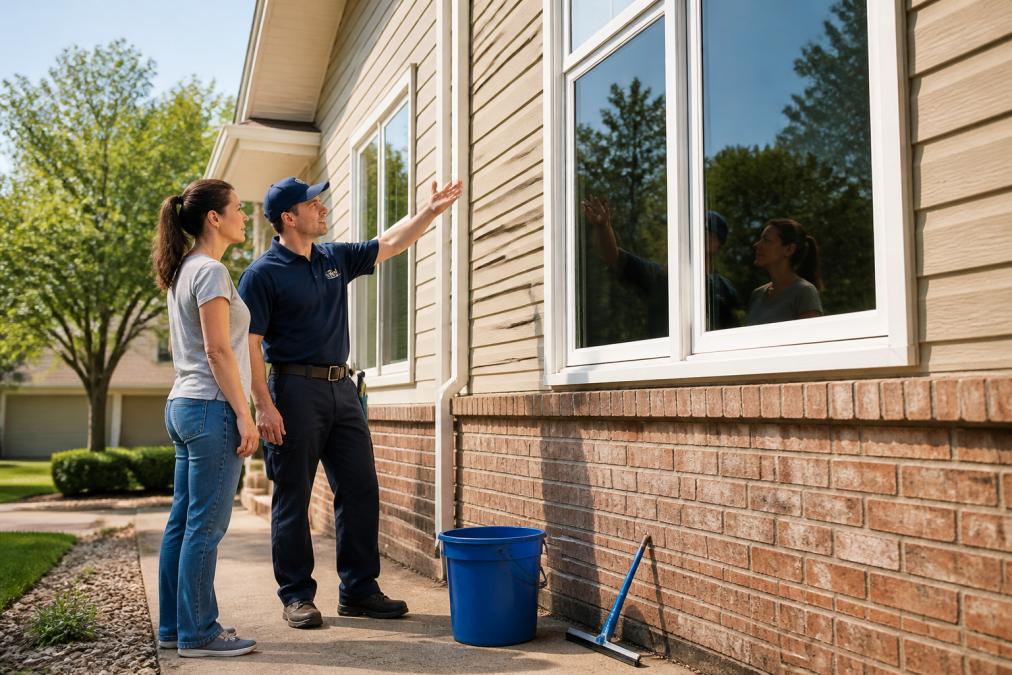
Use this checklist during the walkthrough:
- Check each pane at an angle in direct light for streaks
- Confirm no water spots remain on exterior glass
- Inspect sills and tracks for standing water or debris
- Verify screens are reinstalled and seated correctly
- Check window seals and frames for new damage
- Confirm no water reached interior flooring or trim
Frequently Asked Questions
How often should windows be professionally cleaned?
Most homes benefit from regular professional window washing, with frequency depending on factors like tree cover, dust, and coastal salt air. Commercial storefronts often schedule regular visits. A technician can recommend a custom cleaning program after a site assessment of your property.
What do professional window cleaners use in their water?
Many crews use deionized water, which has minerals stripped out so it dries without spots or streaks. It is often fed through a water-fed pole with a soft brush for upper-story glass. For interior work, technicians typically use a mild cleaning solution, a squeegee, and microfiber cloths. Deionized water also helps lift hard water stains and mineral deposits without harsh chemicals.
Do professional window cleaners remove hard water stains?
Yes, most can, though results depend on how long the stains have sat. Hard water stains and mineral deposits bond to glass over time and may need a specialized cleaning solution or a light abrasive polish. Glass oxidation and etched spots from years of buildup sometimes cannot be fully reversed. Ask about stain removal during your service quote so the technician can assess the glass first.
How long does a professional window cleaning service take?
The duration of a professional window cleaning service varies based on factors such as the size of the property, the number of windows, and the services requested. Commercial buildings and storefronts vary widely based on pane count and access. Scheduling a site assessment or virtual quote ahead of time gives you a realistic time estimate before the crew arrives.