
Table of Contents
- Why Soft Washing Fails Delicate House Paint
- Low-Pressure House Washing Techniques That Protect Paint
- Safe Exterior Cleaning Solutions for Painted Wood
- Paint-Specific Compatibility Matrix
- DIY vs. Professional Exterior Cleaning: Cost-Benefit Analysis
- Professional Exterior Maintenance Frequency for Painted Homes
- Post-Wash Maintenance for Paint Longevity
- Frequently Asked Questions
Last Updated: September 19, 2026
Why Soft Washing Fails Delicate House Paint
Soft washing alternatives for delicate house paint exist because even low-pressure cleaning can go wrong when the wrong chemistry meets an aging finish. Soft washing uses low pressure, typically under 500 PSI, plus cleaning solutions, to remove organic growth. It protects delicate surfaces, yet still damages paint when the solution is too harsh or the dwell time runs too long.
The failure usually traces back to chemistry, not pressure.
Paint Oxidation and Substrate Integrity
Paint oxidation is the chemical breakdown of a paint film’s binder, leaving a chalky residue and weakening its grip on the substrate. Once it starts, the film loses flexibility, and any cleaning method, even a garden hose at full volume, can lift chalk and expose bare wood.
Low-Pressure House Washing Techniques That Protect Paint
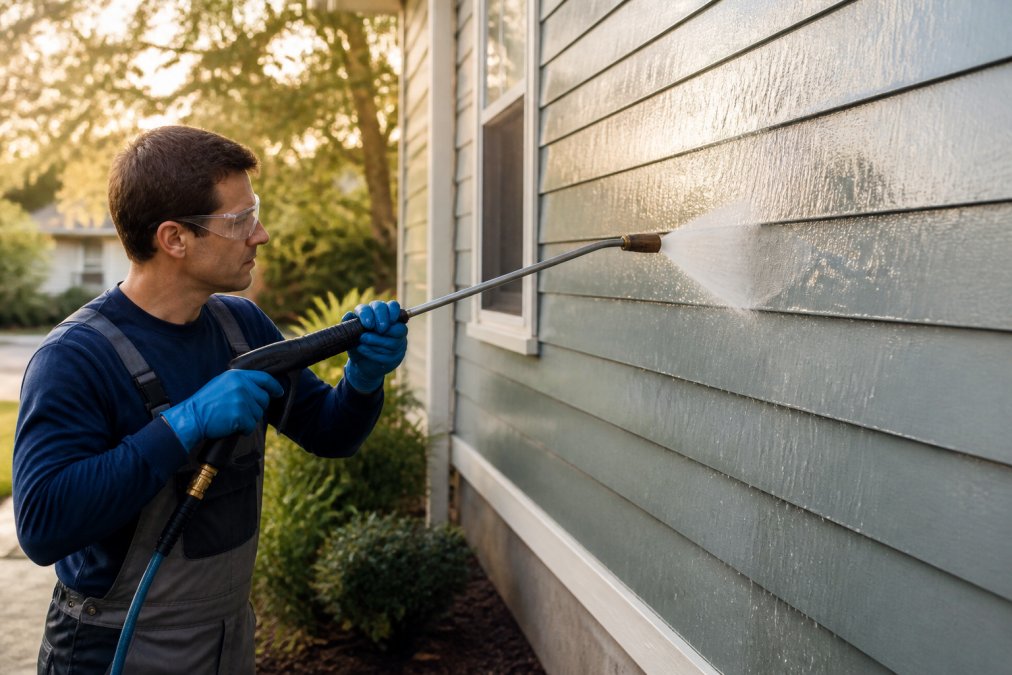
Low-pressure house washing techniques protect paint by keeping pressure under 500 PSI, using wide fan spray patterns, and letting cleaning solutions do the work instead of force. Most residential paint damage comes from too much pressure at too close a distance, not the cleaning agent.
Nozzle Tips and Fan Spray Patterns
Nozzle selection decides how water hits the surface. A 40-degree or 25-degree tip spreads water across a wide fan, lowering impact per square inch; a 0-degree tip concentrates the stream and will etch paint, wood, and stucco in seconds.
A few practical rules from years of exterior work:
- Keep the wand at least 12 to 18 inches from painted surfaces
- Work top to bottom so dirty water never runs over clean siding
- Use a 40-degree tip for paint, a 25-degree tip for concrete, and never a 0-degree tip on a house
- Test on an inconspicuous area first, especially on south-facing walls where paint oxidizes fastest
Safe Exterior Cleaning Solutions for Painted Wood
Safe exterior cleaning solutions for painted wood fall into two families: biodegradable detergents and bleach-based mixes built on sodium hypochlorite. The right choice depends on how much organic growth you’re fighting and how fragile the paint is.
Biodegradable Detergents vs. Sodium Hypochlorite
| Solution Type | How It Works | Best For | Main Drawback |
|---|---|---|---|
| Biodegradable detergent | Surfactants lift dirt and organic growth | Delicate, oxidized, or historic paint | Needs longer dwell time |
| Sodium hypochlorite mix | Oxidizes mold spores and mildew | Heavy organic growth on durable siding | Can degrade paint binder and plants |
| Citrus-based cleaner | Natural solvents break down stains | Chemically sensitive surfaces | Weaker on deep-set staining |
| pH-neutral cleaner | Gentle, balanced formula | Routine maintenance washes | Limited killing power on mildew |
Sodium hypochlorite remains the industry standard for mildew removal because it works fast and kills mold spores at the root. The catch is runoff: bleach-laden water reaching shrubs, lawns, or a koi pond causes real damage, which is where biodegradable options earn their place.
Mix your cleaning solution at half the strength you think you need, then extend dwell time instead. Stronger chemistry is the most common cause of paint damage, and it’s the easiest mistake to avoid.
Paint-Specific Compatibility Matrix
Paint type determines which cleaning method is safe, and most generic guides skip this. Acrylic latex, oil-based enamel, and lime-based or historic paints each respond differently to pressure, bleach, and surfactants.
| Paint Type | Safe Pressure | Bleach Tolerance | Best Cleaning Approach |
|---|---|---|---|
| Acrylic latex (modern) | Under 500 PSI | Moderate | Low-pressure wash with diluted detergent |
| Oil-based enamel | Under 400 PSI | Low | pH-neutral cleaner, wide fan rinse |
| Lime-based / historic | Under 300 PSI | None | Biodegradable detergent, hand agitation |
| Elastomeric coating | Under 500 PSI | Moderate | Low-pressure rinse, no abrasion |
| Chalky, oxidized paint | Under 300 PSI | None | Gentle detergent, minimal contact |
DIY vs. Professional Exterior Cleaning: Cost-Benefit Analysis
DIY exterior cleaning saves money on labor but carries real risk on delicate paint. The honest way to decide is to price both paths on the same job, line by line, rather than defaulting to whichever sounds cheaper.
- Paint damage: Stripped, etched, or lifted paint means a repaint. Exterior repainting is priced per square foot of surface area and routinely runs into the thousands for a full house, far more than any wash.
- Plant damage: Bleach runoff can kill shrubs and lawn within days. Replacing established landscaping can exceed the cost of the wash itself.
- Water intrusion: Forcing water behind siding or into window seals causes rot and mold, which is a repair-and-remediation job, not a cleaning job.
- Safety: Ladders, wet surfaces, and two-story reaches are where most injuries happen. A fall costs more than any cleaning bill.
A simple decision framework:
| Situation | Lean DIY | Lean Professional |
|---|---|---|
| Single-story, durable siding, light dirt | Yes | , |
| Two or more stories | , | Yes |
| Oxidized, chalky, or historic paint | , | Yes |
| Heavy mildew or recurring organic growth | , | Yes |
| Landscaping or a water feature nearby | , | Yes |
| You already own the equipment and have done it before | Yes | , |
Ask any pro for a written quote that states the pressure range and the cleaning solution they plan to use. A quote that won’t name either is a quote that hasn’t thought about your paint.
Professional Exterior Maintenance Frequency for Painted Homes
Professional exterior maintenance frequency for painted homes typically lands at once or twice a year, but the right interval depends on the paint system, the exposure, and what the surface is fighting. Treating every home the same means either over-washing a fragile finish or under-washing a durable one until mildew takes hold.
A sensible baseline schedule looks like this:
- Spring: Full wash to clear winter mildew and pollen before summer
- Fall: Spot cleaning of north-facing walls and gutters before the rainy season
- Annually: Inspection of caulk lines, trim, and any chalky or peeling areas
| Factor | Pushes Toward Twice a Year | Pushes Toward Once a Year |
|---|---|---|
| Tree cover | Heavy shade, leaf litter, north-facing walls | Full sun, open lot |
| Climate | High humidity, coastal salt air, frequent rain | Dry, low-humidity summers |
| Paint type | Acrylic latex, elastomeric coating | Oil-based enamel in good condition |
| Paint condition | Chalky, oxidized, or thin spots | Recently painted, intact film |
| Organic growth | Recurring mildew or algae | Light pollen and dust only |
- Chalky residue rubs off on your hand when you touch the siding
- Mildew returns within a few months of a wash
- Caulk lines are cracking or pulling away from trim
- Paint feels soft or lifts under light pressure
Skipping maintenance washes doesn’t save money. Mildew that’s left on painted wood traps moisture, and trapped moisture is what turns a small cleaning job into a full repaint.
Set the interval by paint type and exposure, not by the calendar alone, then let the surface tell you when to move it up.
Post-Wash Maintenance for Paint Longevity
Post-wash maintenance is where most homeowners stop paying attention, and exactly where paint longevity is won or lost. A clean surface is the best moment to inspect and repair, because problems are visible without grime hiding them.
After any wash, walk the exterior and check these:
- Re-caulk any joints, seams, or window frames where the seal has cracked
- Touch up bare or thin spots before moisture gets in
- Trim back vegetation that rubs against siding and holds dampness
- Clear gutters so water doesn’t overflow onto painted walls
- Note any chalky residue, which signals the paint film is breaking down
The cheapest way to extend paint life is a gentle wash, a caulk check, and a touch-up, done in that order, once a year.
Frequently Asked Questions
What are the safest ways to clean delicate exterior paint?
Use low-pressure washing under 500 PSI with a wide fan spray pattern, paired with pH-neutral or biodegradable detergents. Avoid sodium hypochlorite on older paint, as it can accelerate oxidation and cause peeling. For painted wood, apply a gentle surfactant blend, let it dwell for 5-10 minutes, then rinse with high water volume and minimal pressure. Always test a small area first to check paint adhesion and substrate integrity.
Can I use a garden hose and mild detergent on painted siding?
Yes, a standard garden hose typically delivers 40-60 PSI, which is safe for most painted siding when combined with a mild, pH-neutral detergent. Use a soft-bristle brush for stubborn spots and rinse thoroughly. This method works well for light maintenance between professional cleanings, but it may not remove deep-set mold spores or mildew without a specialized cleaning solution and proper dwell time.
Are there eco-friendly alternatives to standard soft wash solutions?
Biodegradable surfactant blends and citrus-based cleaners offer eco-friendly options that break down organic growth without harsh chemicals. These products are safe for surrounding vegetation and reduce runoff concerns. They often require longer dwell times than sodium hypochlorite, but they protect delicate house paint and are ideal for homes near sensitive landscaping or water features.
How often should painted exteriors be professionally cleaned?
Most painted exteriors benefit from professional cleaning every 12 to 18 months, depending on climate and tree coverage. Homes in humid or wooded areas may need service every 8 to 12 months to prevent organic growth. Regular maintenance preserves paint adhesion, prevents oxidation, and extends the life of the finish. A professional can assess your specific siding and recommend a schedule.
What are the risks of using high-pressure or harsh chemicals on old paint?
High pressure above 1,500 PSI can strip paint, force water behind siding, and damage substrate integrity. Harsh chemicals like sodium hypochlorite accelerate paint oxidation and can kill surrounding vegetation if runoff isn’t managed. On historic homes, these risks are magnified because replacement paint and materials are costly. Low-pressure techniques with biodegradable detergents minimize these dangers while still removing mold, mildew, and algae.